


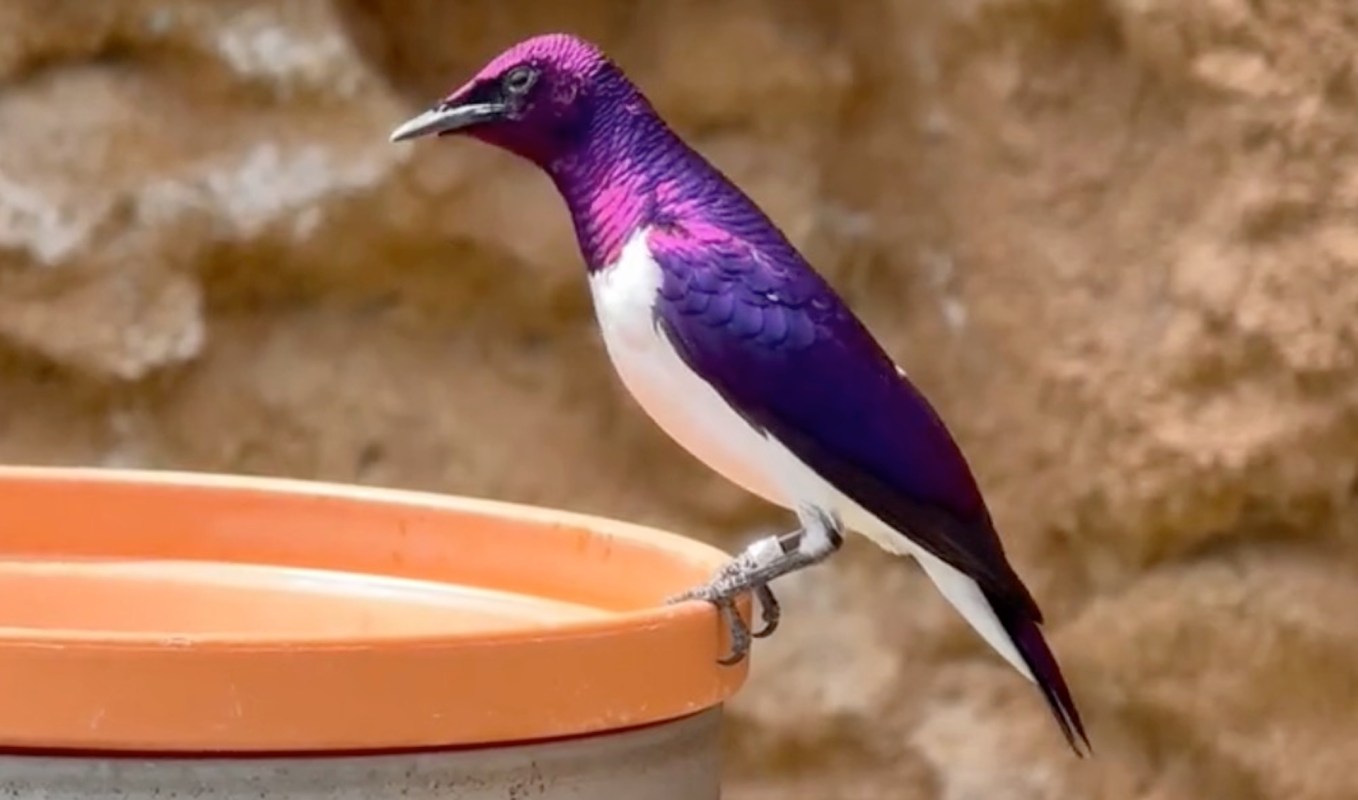
A short clip of an amethyst starling is turning heads because of the bird's stark, metallic, and purple appearance.
What happened?
In footage posted by Safari Davis (@Safari_Davis) on TikTok, the bird, native to sub-Saharan Africa, shows off vibrant purple feathers that can look almost unreal when the sun hits them.
@safari_davis Amethyst Starling (Cinnyricinclus leucogaster). The males of this African species are the purplest birds in the world. That impossible-looking violet coloration is not pigment, but structural coloration: microscopic feather nanostructures bending and reflecting light into an intensely metallic purple sheen. In direct sunlight they can appear almost unreal, like a bird made out of polished amethyst. Females look completely different, with brown upperparts and heavily streaked underparts. #AmethystStarling #VioletBackedStarling #AfricanBirds ♬ original sound - safari_davis
Also known as violet-backed starlings, these birds are found in savannas, woodland edges, gardens and areas near fruiting trees. Females are much less showy, with a more simple brown and white pattern.
Safari Davis wrote in the TikTok's caption that the bird's striking violet color comes from structural coloration instead of pigment. Structural coloration consists of microscopic structures in the feathers that bend and reflect light. In this case, it produces the amethyst starling's intense, metallic purple sheen.
Why are amethyst starlings important?
According to the Oregon Zoo, amethyst starlings mate for life. They return to the same nest every year sometimes, and they eat fruit and insects.
That might just seem like typical bird behavior. But it's that typical behavior that keeps ecosystem cycles alive and functioning.
TCD Picks » Quince Spotlight
💡These best-sellers from Quince deliver affordable, sustainable luxury for all




The IUCN Red List currently classifies amethyst starlings under the "least concern" label, and it's important to keep things that way.
The amethyst starling is an established species in many countries in Africa. They include Nigeria and South Sudan in central Africa and Angola and Zimbabwe in the south.
Allowing these birds to live in their natural habitats can let them live for a long time. They could avoid the current likely fate of other birds like the Bali starling.
What are people saying?
Viewers in the comments of Safari Davis' post were quick to express their admiration for the amethyst starling. Many marveled at the bird's appearance and vibrancy.
"That's a very beautiful bird," one user commented.
"Looks photoshopped," another added.
"Wow! I've never even heard of that bird. How incredible!" another chimed in.

Get TCD's free newsletters for easy tips, smart advice, and a chance to earn $5,000 toward home upgrades. To see more stories like this one, change your Google preferences here.






