


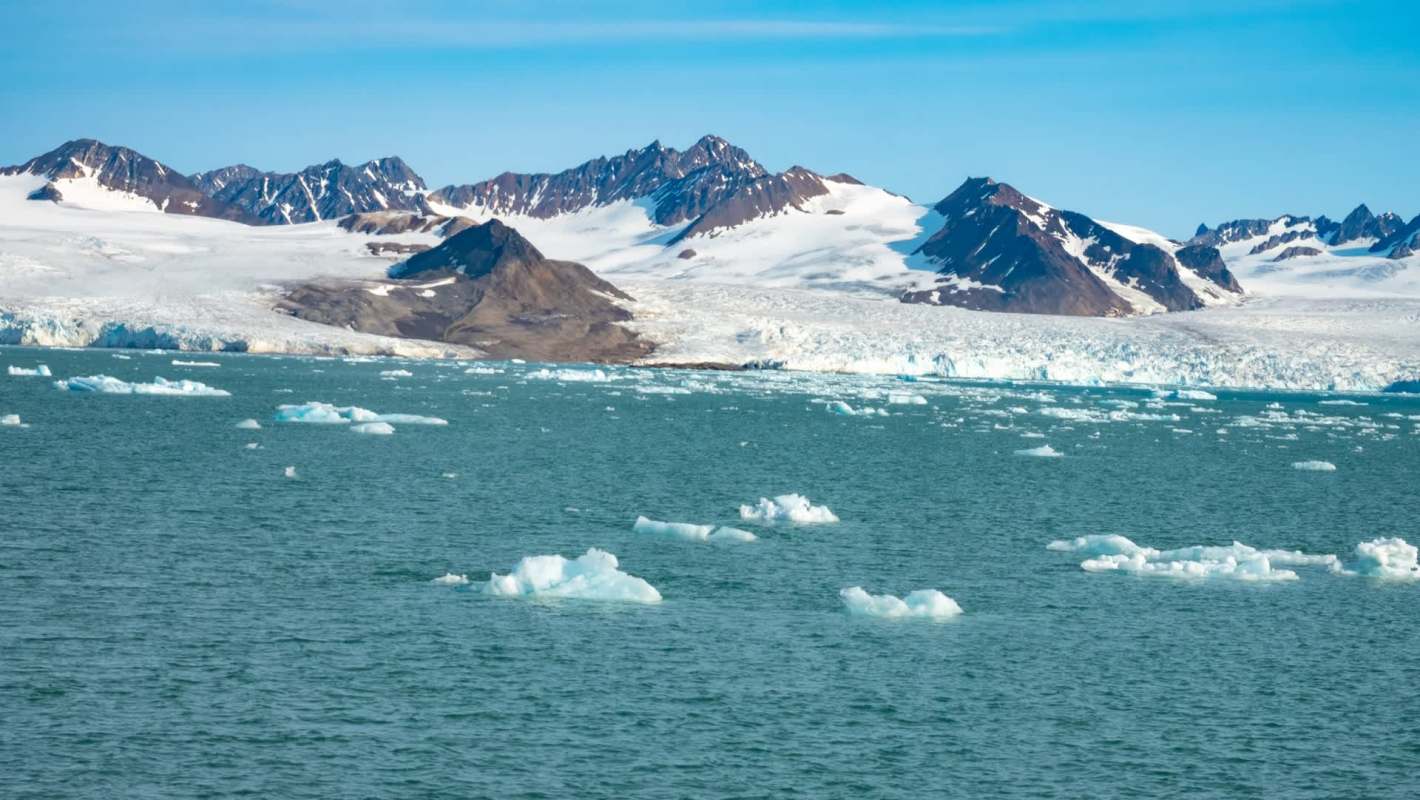
A little-known process on the Arctic seafloor is coming into focus as sea ice retreats, and scientists say it could weaken the region's broader food web.
More sunlight is now reaching shallow Arctic waters, and that change is tied to a key nutrient being converted into gas and lost from the ocean, leaving less behind for plankton.
What's happening?
Research from the University of Edinburgh links the change to shrinking sea ice over shallow Arctic shelf seas, which allows more light to penetrate the water.
With more sunlight available, surface productivity can increase, sending additional organic matter down to the seafloor. Bacteria there then break nitrate down into nitrogen gas.
That matters because nitrate is an essential nutrient for plankton, which sit at the base of the Arctic marine food chain. When seafloor bacteria remove it and release it as gas, the ocean has less available to support life ranging from microscopic organisms to fish, seabirds, and marine mammals.
"For years, sea-ice loss in the Arctic Ocean was expected to increase phytoplankton growth because more sunlight could reach surface waters," said Marta Santos-García, a Ph.D. student at Edinburgh's School of GeoSciences, who co-led the study. "Our findings suggest that this relationship has changed: The Arctic Ocean appears to have shifted from a system mainly limited by light to one increasingly limited by nitrate availability."
TCD Picks » Quince Spotlight
💡These best-sellers from Quince deliver affordable, sustainable luxury for all




Why does it matter?
Although plankton are microscopic, they help support the Arctic food web that many coastal communities depend on.
If nitrate becomes harder to access, the effects could ripple upward through fisheries and wildlife, placing greater stress on ecosystems already strained by warming waters, shifting habitats, and ocean acidification.
The research points to a chain reaction beneath the surface that removes a nutrient the system needs to function.
A less stable Arctic can disrupt fisheries, biodiversity, and ocean systems that help regulate the climate.
Scientists suggested the shift may have begun years ago.
"The changes we report suggest that the Arctic Ocean ecosystem passed a tipping point around 2009," said Raja Ganeshram from Edinburgh's School of GeoSciences, who has led the research program for the past two decades.
What's being done?
Researchers are continuing to monitor the Arctic nitrogen cycle and track how quickly these changes are unfolding.
"How this change cascades through the food chain needs to be closely monitored, as this has profound implications for us, including on commercial fishing in the North Atlantic Ocean," Ganeshram said.
Long-term observations are especially important in places like the Fram Strait.
This kind of research can help governments, fisheries managers, and Arctic communities prepare for what comes next. Better data can improve ecosystem forecasting, identify risks earlier, and shape policies aimed at protecting food supplies and marine habitats.
However, the deeper solution remains the same one scientists have warned about for years: slowing the warming that is driving sea-ice retreat in the first place.
That means reducing heat-trapping pollution, investing in cleaner energy, and protecting ocean ecosystems where possible.

Get TCD's free newsletters for easy tips, smart advice, and a chance to earn $5,000 toward home upgrades. To see more stories like this one, change your Google preferences here.






