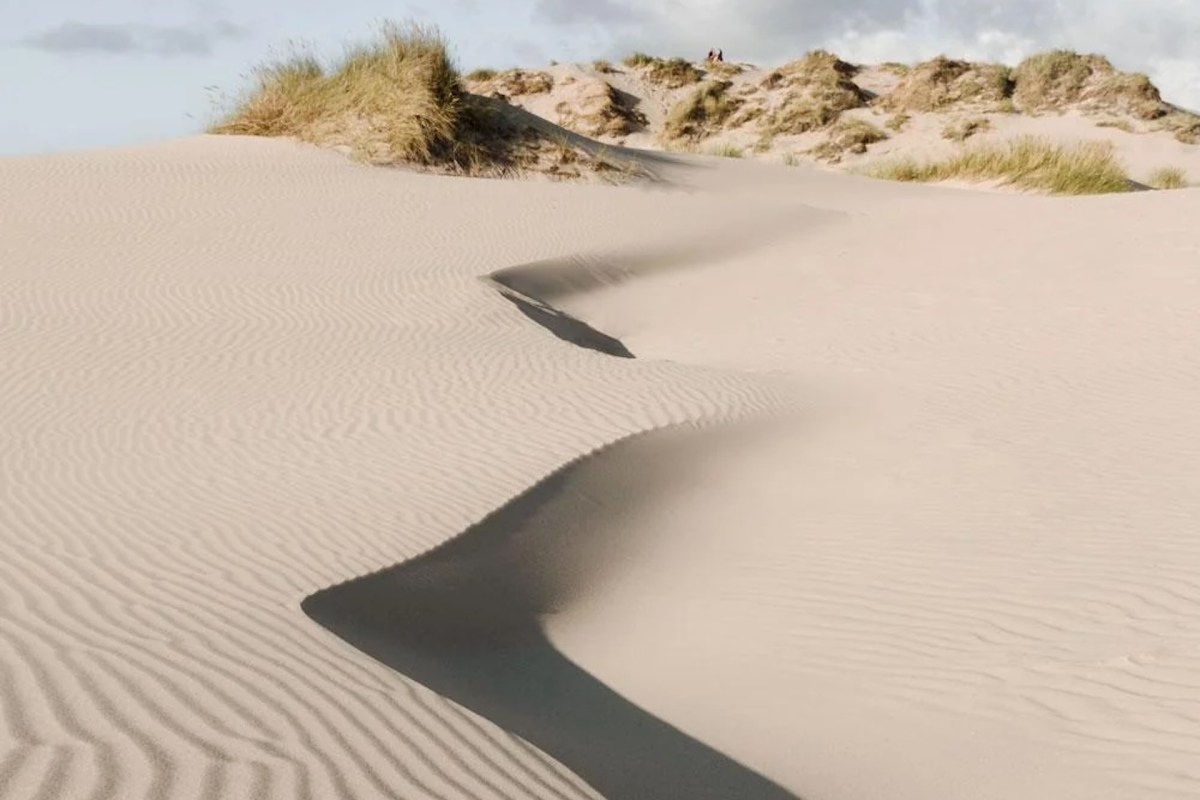
On Denmark's northern edge, one enormous dune has spent centuries quietly redrawing the map.
A Redditor took to the r/NatureIsF***ingLit subreddit to illuminate how the Råbjerg Mile's methodical drift has buried forests and overtaken low-lying lakes, and its slow march is far from over.
What's happening?
In a Reddit post about the famous dune near Skagen, the original poster cited a Medium article that described it as stretching roughly one kilometer by one kilometer.
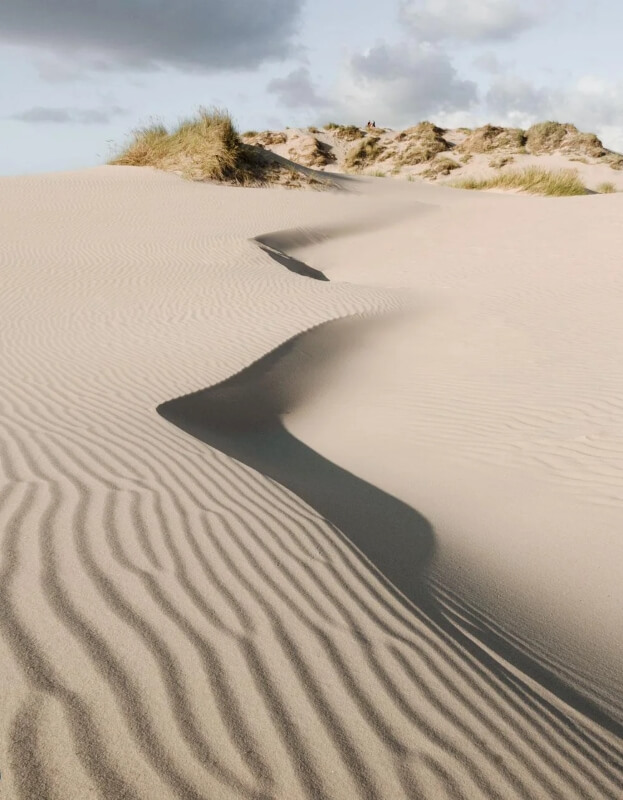
According to the author, it holds about 4 million cubic meters (~13.12 million cubic feet) of sand, reaches around 40 meters (~131 feet) above sea level, and occupies nearly two square kilometers.
Although it began forming more than 300 years ago on Denmark's west coast, it is still advancing, moving about 15 meters (~49 feet) northeast each year toward Grenen.
Over the last 110 years, that has amounted to roughly 1.5 kilometers (~0.93 miles) of eastward migration. The caption noted that attempts to stop the dune's movements fell short.
TCD Picks » Good Store Spotlight
Get 10% off your next purchase with code TCD10




"At its current pace, it is expected to reach the main road to Skagen in about 100 years and, roughly a century later, eventually return to the sea," the OP noted.
As the Medium article noted, the Dune of Råbjerg Mile is the lone migrating dune left in Denmark after the country successfully used conifers and grasses to stop all others following the 19th-century Sand Drift Act.
Why does it matter?
In Denmark, the dune has pushed coastal communities as the sand was swallowing them up; but the dunes do bring out rare wildlife like migrating raptors and the wood sandpiper.
Long after the sand has moved on, the ground it leaves behind starts out barren and nutrient-poor, and only gradually recovers as vegetation returns.
Before that recovery happens, forests in the dune's path can be swallowed up, and the buried trees could take up to four decades to return, as the Medium article noted.
Small lakes and depressions are also affected, especially those created by fluctuations in the groundwater table. Ecosystems along the dune's route can be disrupted and then rebuilt only slowly, over decades.
The dune's inexorable path is a reminder of the power of nature.
What can I do?
As it stands now, the dune is a tourist attraction where visitors can see the sparse remains of a church that was swallowed up hundreds of years ago, per the Medium piece.
The author added that a quarter of a million people visit each year, and given the dune's steady progress to the sea, time is of the essence for visitors.
"You better hurry — before the only thing left to observe are Råbjerg Mile's traces," the Medium article concluded.

Get TCD's free newsletters for easy tips, smart advice, and a chance to earn $5,000 toward home upgrades. To see more stories like this one, change your Google preferences here.