


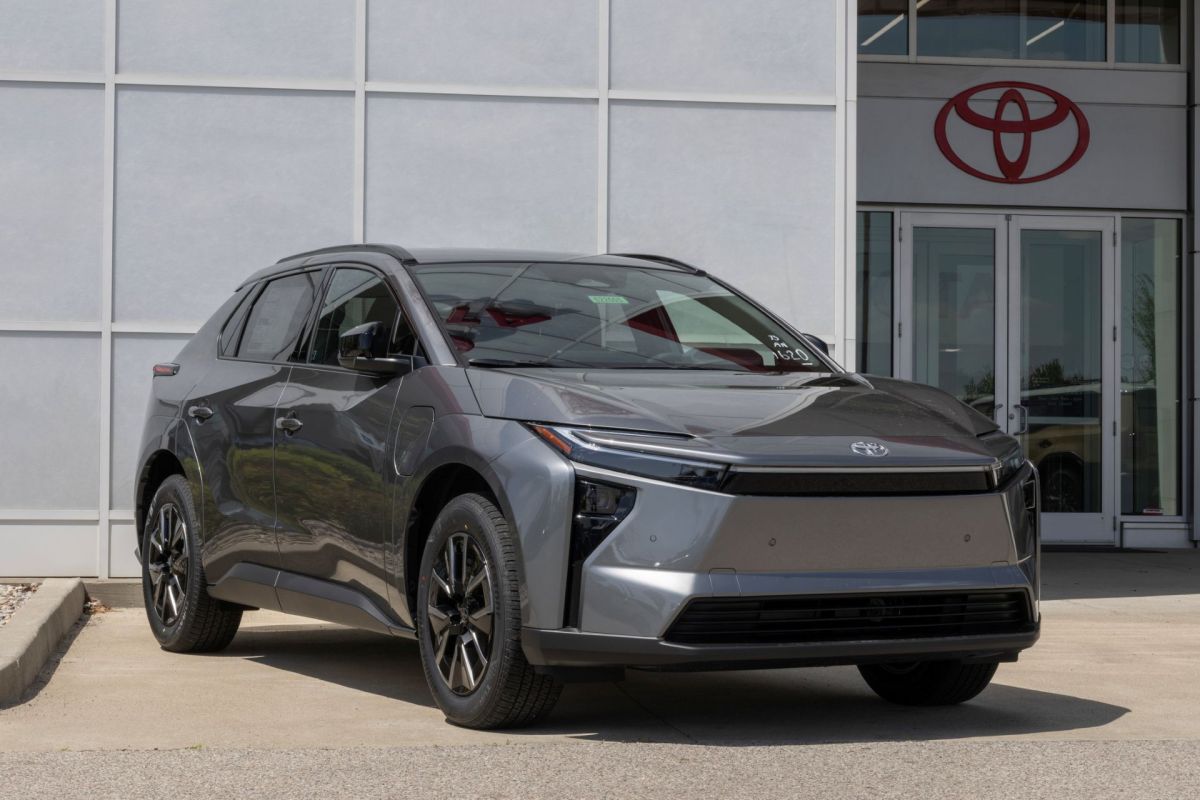
In the U.S., Toyota's electric vehicle business is beginning to show real sales progress even as the company scales back a prominent EV project.
Its battery-electric SUV range is starting to connect with shoppers, yet the company has chosen not to move forward with a marquee Lexus electric sedan.
What's happening?
One sign of that shift is the 2026 Toyota bZ, a compact to mid-size electric SUV. After the brand's slow early push into EVs, Electrek reported that the model ranked third among EVs sold in the U.S. during the first quarter of 2026, behind the Tesla Model 3 and Model Y, with more than 10,000 sales.
The gains appear to be tied to practical improvements. Electrek said the new bZ delivers up to 314 miles of range, roughly 25% more than the bZ4X it replaces, and adds a native NACS port for Tesla Supercharger access. It also starts below $35,000, making it one of the more budget-friendly EV choices.
Early demand is not limited to the bZ. Electrek reported that the C-HR sold more than 1,500 units in its first full month, and that Toyota's U.S. EV SUV lineup now includes the C-HR, the bZ, and the larger bZ Woodland, which adds cargo room and horsepower.
Despite that progress, Toyota has stopped development of the Lexus LF-ZC electric sedan. Automotive News quoted a company spokesperson citing "fluctuations in market demand and the workload associated with vehicle planning and manufacturing."
TCD Picks » Quince Spotlight
💡These best-sellers from Quince deliver affordable, sustainable luxury for all




Why does it matter?
Longer range, easier access to charging, and lower prices can make switching to an EV more practical for everyday drivers. EVs can also help owners save money over time through lower fuel costs and reduced maintenance needs, since they do not require oil changes and generally have fewer moving parts than gas-powered vehicles. When well-known brands expand their EV lineups, more consumers may be able to take advantage of those savings.
Charging at home is also significantly cheaper than relying on public chargers. Qmerit is a great place to start for those looking to add Level 2 chargers in their home. Installing solar panels can increase those savings even further, since charging with your own energy is cheaper than using public stations or drawing electricity from the grid.
Canceling a showcase EV has implications beyond a single car. Even if SUVs are where demand is strongest today, shelving a next-generation sedan could delay battery and manufacturing advances that might later improve performance and lower costs across future models, while also raising questions about how aggressively Toyota plans to compete as the market evolves.
What's being done?
Toyota is still promoting its current EV lineup with updated models and financial incentives. Electrek reported that the company is advertising up to $5,500 in lease cash on new 2026 vehicles, or 0% APR for 72 months, plus an additional $1,500 incentive to help clear inventory.
Toyota says it remains committed to battery-powered vehicles more broadly, even if this particular sedan is no longer moving ahead.
"We decided to cancel the LF-ZC development project as part of a company-wide review of vehicle development projects," Toyota's spokesperson said, but they added: "The cancellation of this specific development project does not mean we have given up on developing next-generation BEVs."

Get TCD's free newsletters for easy tips, smart advice, and a chance to earn $5,000 toward home upgrades. To see more stories like this one, change your Google preferences here.






