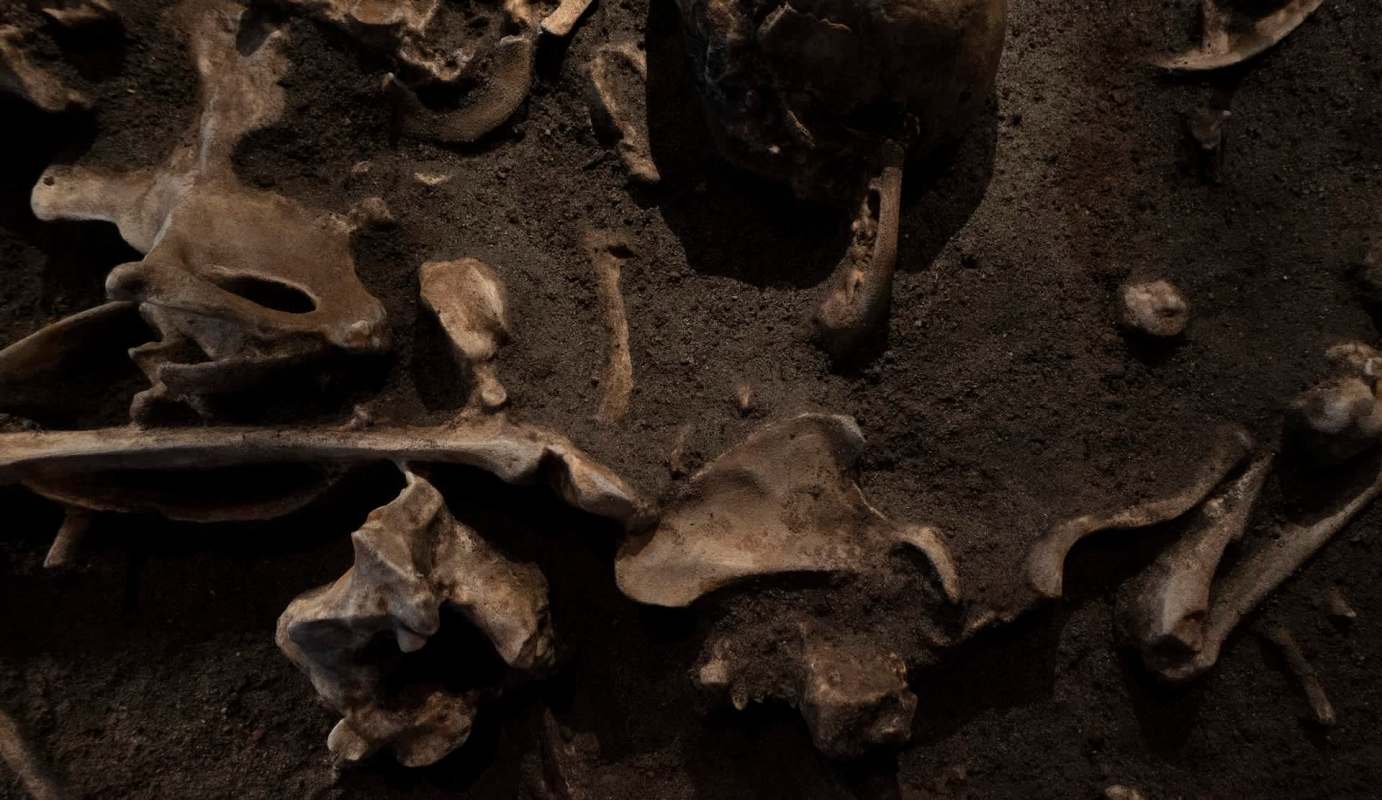
Bones marked by burning from deep within South Africa's Wonderwerk Cave are reshaping the debate over when early humans began managing fire, as Archaeology Mag details.
Dated to nearly 1.8 million years ago, the finds could place the cave among the earliest known locations associated with hominin fire use.
What happened?
A study in PLOS One points to evidence for repeated fire activity in Wonderwerk Cave deposits dated to about 1.07 million to 1.79 million years ago.
The researchers said they analyzed 161 fossil bones from small mammals in two older layers, Strata 10 and 11. Many of those animals were probably deposited in the cave over time by barn owls, which left pellets and other bone accumulations behind.
To check whether the fossils had been exposed to heat, the team used Fourier Transform Infrared Spectroscopy alongside a blue-light luminescence test, in which burned bone gives off a reddish glow. The results from both methods aligned.
The location of the bones is another major clue, Archaeology Mag notes. They were found in sediment more than 30 meters (~98 feet) inside the cave, a distance researchers said natural grassfires or brushfires would have been unlikely to reach.
TCD Picks » Good Store Spotlight
Get 10% off your next purchase with code TCD10




Why does it matter?
The timeline of humanity's relationship with fire remains one of archaeology's biggest unanswered questions, Archaeology Mag says.
Fire was more than a survival tool. It likely changed how early humans slept, protected themselves, gathered socially, and eventually prepared food.
The findings do not show that these hominins knew how to create fire themselves. Instead, the researchers suggest in the study that they may have carried it in from natural sources and then kept it alive inside the cave.
Still, that level of foresight alone would represent a major step in human development.
The way the burned bones were distributed adds to the argument. Instead of being spread randomly, they appeared in clusters, a pattern that points to separate burning events in particular places over long stretches of time.
The researchers say their association with Acheulean stone tools and the remains of larger animals ties the activity to hominins, and likely early Homo erectus. It further suggests intentional management of fire.
What's being done?
Researchers are continuing to refine ways to detect ancient burning without damaging rare archaeological material.
The luminescence method used in this study is fast and non-destructive, which could make it easier to test fossils from other archaeological sites.
As Archaeology Mag suggests, if the same methods reveal similarly old evidence elsewhere in Africa and beyond, scientists may be able to build a clearer timeline of when fire first became a controlled tool rather than a dangerous force in the surrounding environment.
New techniques can draw fresh answers from material that may have sat in museum collections or excavation archives for decades. Earlier discoveries at Wonderwerk already suggested fire use around 1 million years ago, and deeper analysis now pushes that story further back.
Wonderwerk Cave could become one of the clearest signs yet that early humans were carrying, maintaining, and benefiting from fire long before they learned how to create it on demand.

Get TCD's free newsletters for easy tips, smart advice, and a chance to earn $5,000 toward home upgrades. To see more stories like this one, change your Google preferences here.