


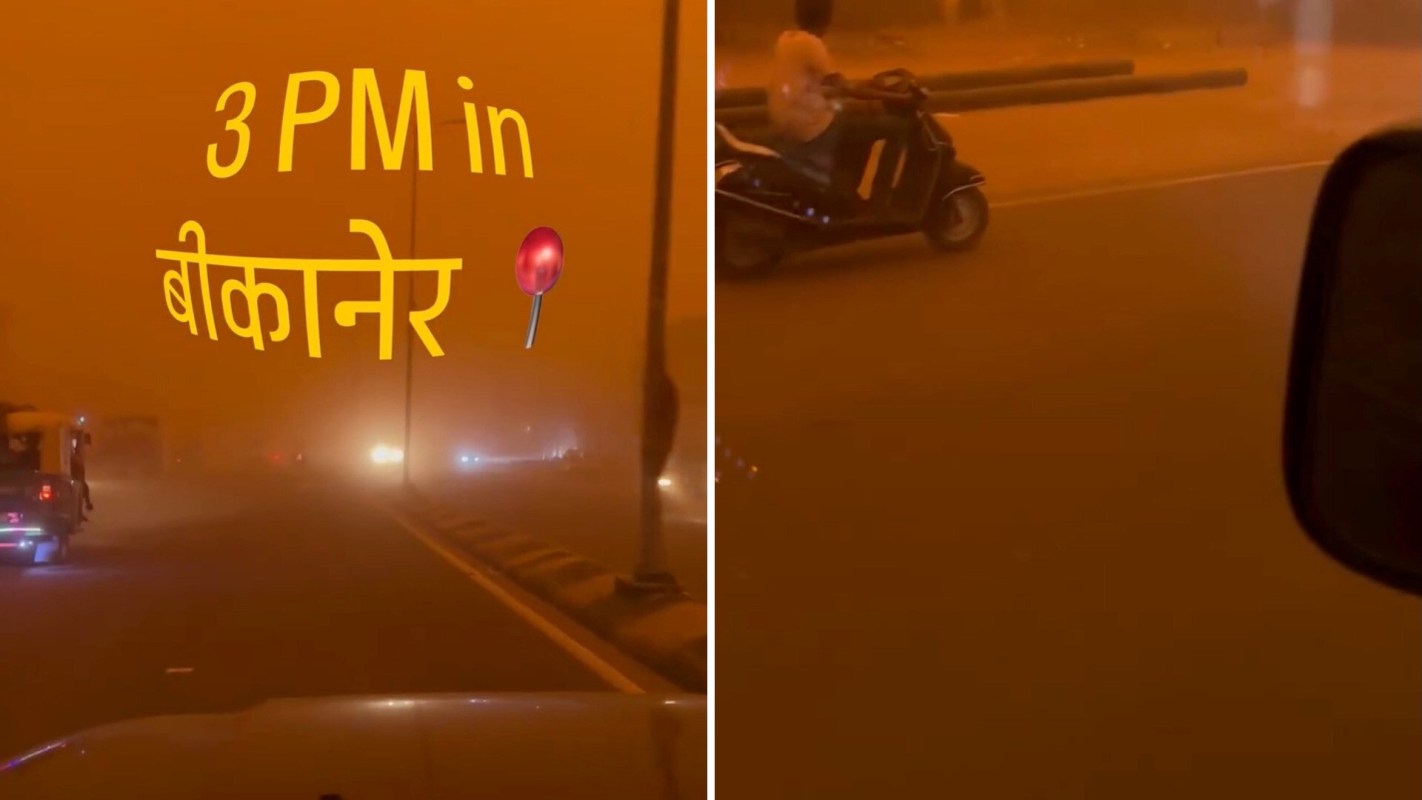
A fast-moving wall of sand tore through parts of Rajasthan, India, recently, tinting the afternoon sky orange-brown and freezing traffic as blowing dust erased entire blocks from view.
Streets in and around the Bikaner district saw visibility collapse within minutes, prompting residents to seek shelter while photos of the storm quickly circulated online.
What happened?
According to Kalinga TV, the storm swept across Bikaner district and reached neighboring areas such as Churu, Hanumangarh, Nagaur, Sikar, and Sri Ganganagar.
Images and footage shared from the region captured huge yellow plumes rolling over roads, houses, and open stretches of land.
As winds intensified, visibility dropped so dramatically that some motorists had to crawl forward or stop on the roadside.
The storm also threw markets into disarray, with shopkeepers shutting their stores and residents trying to move through the dust as quickly as possible.
TCD Picks » Quince Spotlight
💡These best-sellers from Quince deliver affordable, sustainable luxury for all




Kalinga TV reported that the Indian Meteorological Department forecasted thunderstorms, squalls, and rainfall in many areas, with winds reaching 60 to 70 kilometers per hour.
Why does it matter?
Even in a desert region where pre-monsoon dust storms are not uncommon, an event strong enough to darken the sky and stop traffic can quickly turn dangerous.
Poor visibility can sharply increase the risk of crashes, while airborne dust can aggravate breathing problems, irritate eyes, and make it harder for people to travel safely for work, get home, or seek medical care.
The storm disrupted daily life and threatened livelihoods. When roads shut down, markets empty, and businesses close without warning, families can lose income while communities face new public health and safety risks.
Those ripple effects can be especially hard in places already coping with punishing heat.
The storm also brought relief from temperatures above 45 degrees Celsius that had gripped the state for days.
People in dust-prone areas can also keep emergency essentials nearby during volatile weather, including water, a charged phone, flashlights, and masks or cloth coverings that may help reduce dust inhalation outdoors. Checking local weather alerts before heading out can also make a major difference.
Communities benefit from stronger weather forecasting, timely public alerts, and infrastructure better equipped to handle sudden, disruptive events.
While those tools cannot stop storms, they can give people more time to protect themselves, their families, and their businesses.

Get TCD's free newsletters for easy tips, smart advice, and a chance to earn $5,000 toward home upgrades. To see more stories like this one, change your Google preferences here.






