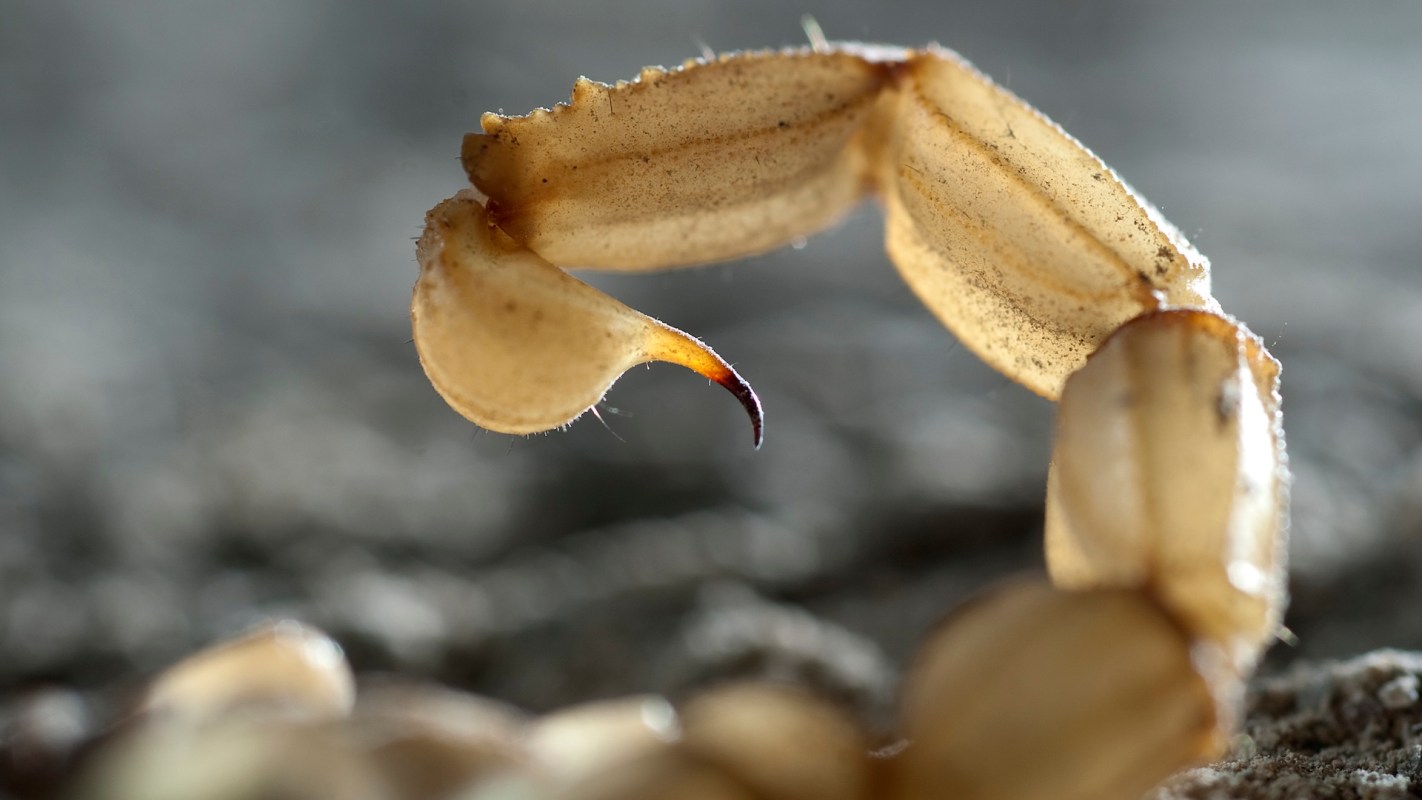
A newly reexamined fossil is giving people online a fresh dose of prehistoric nightmare fuel.
Paleontologists say a giant scorpion stalked floodplains around 415 million years ago, at a time when Earth did not even have trees.
That animal, Praearcturus gigas, measured about 3.3 feet long and had pincers stretching more than 6 inches, according to Sci.News.
Its fossils come from the UK!
— Natural History Museum (@NHM_London) June 3, 2026
The scorpion probably split its time between in and out of the water, at a time when life on land was still developing.
Find out more about this awesome scorpion 👇https://t.co/eAgwumsrxq pic.twitter.com/U7yLB5F2TV
Researchers from the Natural History Museum, London, and the University of Manchester have identified Praearcturus gigas as a scorpion after more than a century of confusion.
The fossil was initially identified as an isopod in 1871, later compared with several arthropod groups, and then, in the 1980s, described again as a giant scorpion despite sparse illustration.
Now, using updated imaging techniques and fossils gathered from several collections, the team said the case is much clearer: This was a massive, scorpion-like predator that lived during the Early Devonian, when life on land was still in its early stages.
TCD Picks » Good Store Spotlight
Get 10% off your next purchase with code TCD10




The discovery could reshape how scientists think about the evolution of giant arthropods.
For years, outsized ancient bugs were often linked to later periods with forests and higher oxygen levels. But Praearcturus gigas reached enormous size before forests emerged, suggesting something else may have been at work.
The researchers think its size may have been possible because fewer large predators were competing with it.
Fossil clues also suggest it may have lived partly in water, which could help explain how it reached such an unusual size.
Findings such as this help scientists piece together how life adapted during major environmental transitions, including the blurry boundary between land and water in Earth's early ecosystems.
Understanding those shifts gives researchers a clearer picture of how animals respond when habitats change dramatically.
Lead author Dr. Richard Howard said the fossil changes the timeline for giant scorpions in a major way.
"Confirming that this animal is a scorpion fundamentally changes our understanding of how and when these creatures evolved to such extraordinary sizes," he said.
Co-author Dr. Russell Garwood called the fossil a long-running mystery, saying Praearcturus gigas "has puzzled us paleontologists for more than a century."
And co-author Dr. Greg Edgecombe said the animal offers "a fascinating glimpse" into a world where the line between land and sea was far less defined than it is today.

Get TCD's free newsletters for easy tips, smart advice, and a chance to earn $5,000 toward home upgrades. To see more stories like this one, change your Google preferences here.