


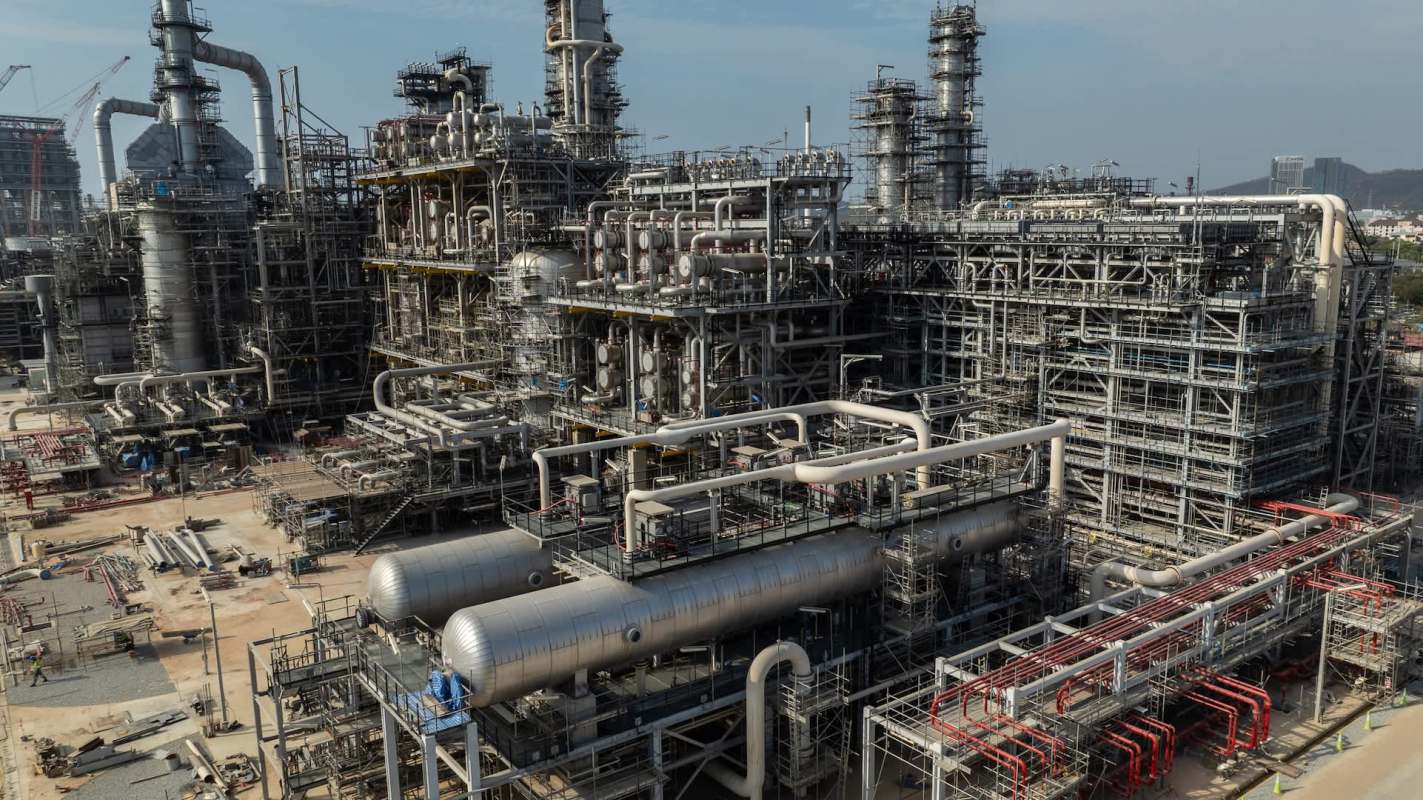
Work has begun on an additional crude processing unit at Dangote's Lekki complex near Lagos, signaling a major new phase for the site.
Already a regional powerhouse, Africa's biggest refinery is now attracting attention well beyond Nigeria as the expansion could make it one of the world's most influential refining hubs.
What happened?
If the newly started 700,000-barrel-per-day crude processing unit is completed on schedule, the Lekki site would have a total capacity of about 1.4 million barrels per day by the end of 2028.
That would push the sprawling refinery complex into competition with the world's largest refining site and give billionaire owner Aliko Dangote greater influence in global fuel markets. The current 650,000-barrel-per-day refinery has already become one of the world's most closely watched refining assets after reaching near-full utilization this spring.
Running at those high levels helped Nigeria become a net exporter of gasoline for the first time. The facility also shipped large amounts of jet fuel to Europe during a stretch of refinery outages, low inventories, and war-linked supply disruptions, and at one point Dangote was exporting close to 100,000 barrels per day of jet fuel, with roughly half going to Europe.
Why does it matter?
The expansion could improve Nigeria's fuel security and reduce its exposure to price shocks when international supplies tighten. That was evident during the recent Middle East supply crisis, when many fuel-importing countries were scrambling to secure barrels but Nigeria was more insulated because of its growing domestic refining capacity.
TCD Picks » Quince Spotlight
💡These best-sellers from Quince deliver affordable, sustainable luxury for all




That said, the fossil fuel industry continues to harm people and communities around the world. Oil and gas extraction, refining, and combustion drive extreme weather disasters that destroy homes, livelihoods, and local economies.
These activities also contribute to air and water pollution linked to asthma, heart disease, cancer, and premature death, while keeping energy costs high for families even as corporate profits soar.
Industry lobbying has also slowed the adoption of cleaner, cheaper energy solutions that could better protect public health and lower utility bills.
A larger refinery may strengthen short-term supply and trade leverage while expanding the health, pollution, and climate costs tied to fossil fuels.

Get TCD's free newsletters for easy tips, smart advice, and a chance to earn $5,000 toward home upgrades. To see more stories like this one, change your Google preferences here.






