


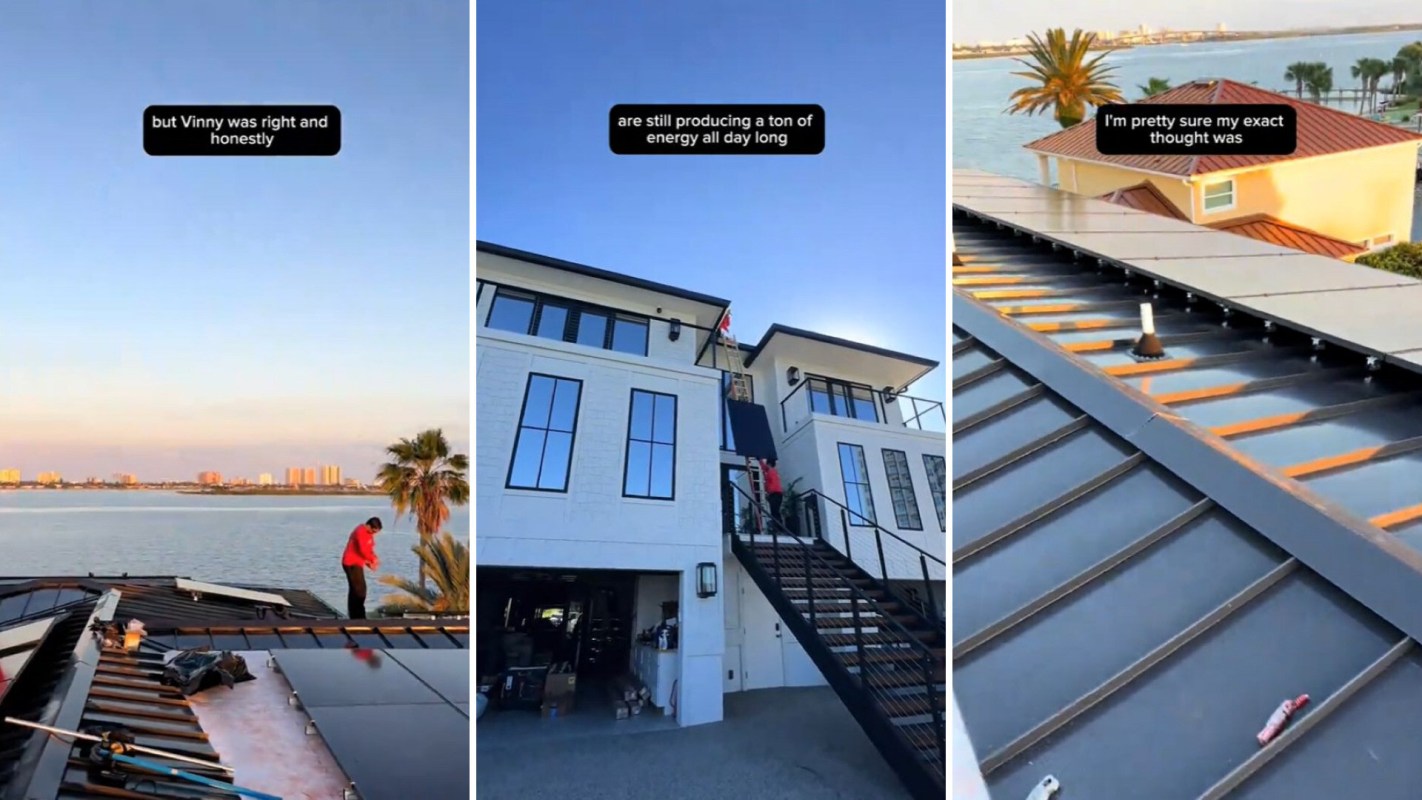
A Florida homeowner said she went from dreading the power bill to seeing a negative balance after finally deciding to install rooftop solar.
In a recent TikTok, creator East Coast DIY (@eastcoastdiy) said her household's electric bill had once averaged about $800 a month — but this time, the account showed a credit of more than $300.
"You'll probably never hear me say this again … but Vinny was right," she wrote in the caption, joking that she had resisted the idea at first.
In the clip, she says her family's power costs used to soar during Florida summers, when air conditioning "basically becomes a full-time employee."
Now, she said that cooler weather has reduced their electricity use while the rooftop panels keep producing, sending surplus power back to the grid through Florida Power & Light and allowing net-metering credits to build up.
That's what turned their latest statement into a credit instead of a charge.
TCD Picks » Quince Spotlight
💡These best-sellers from Quince deliver affordable, sustainable luxury for all




She said that the system cost about $48,000 and should be paid off in roughly five years.
She also tagged Eli SolarEnergy (@solarenergywitheli), saying the installer had run the numbers to make sure solar made financial sense for their home.
@eastcoastdiy You'll probably never hear me say this again… but Vinny was right 😂☀️ Our electric bill used to average around $800/month and now we're sitting on over a $300 CREDIT thanks to solar and Florida finally cooling down a little. Guess I owe him this one 🤦🏼♀️ @Eli_SolarEnergy is who did all our calculations and made sure it was worth it for us! #solar #floridaliving #electricbill #homeprojects #solarpanel ♬ original sound - East Coast DIY
Solar can dramatically cut monthly costs, especially in sunny states and in homes with heavy cooling loads.
Net metering can allow households to build bill credits during lower-usage months that help offset higher summer demand later. That can make seasonal spikes easier to manage, rather than forcing families to absorb the full hit all at once.
One person wrote that they found it "hard to believe" she got a credit, while others asked how panels hold up in hurricane-force winds and whether roof attachments could cause damage.
Another commenter said they had trouble getting solar companies to respond at all, while someone else worried about scams and high upfront prices.
There are lower-barrier options for homeowners who can't pay up front.
Solar leasing programs may appeal to homeowners seeking savings without a major initial expense. Solar can be even more effective when paired with efficient electric appliances, which can further reduce utility costs.
As the Florida creator put it: "I can definitely admit he convinced me to make the right decision on this one."

Get TCD's free newsletters for easy tips, smart advice, and a chance to earn $5,000 toward home upgrades. To see more stories like this one, change your Google preferences here.






