


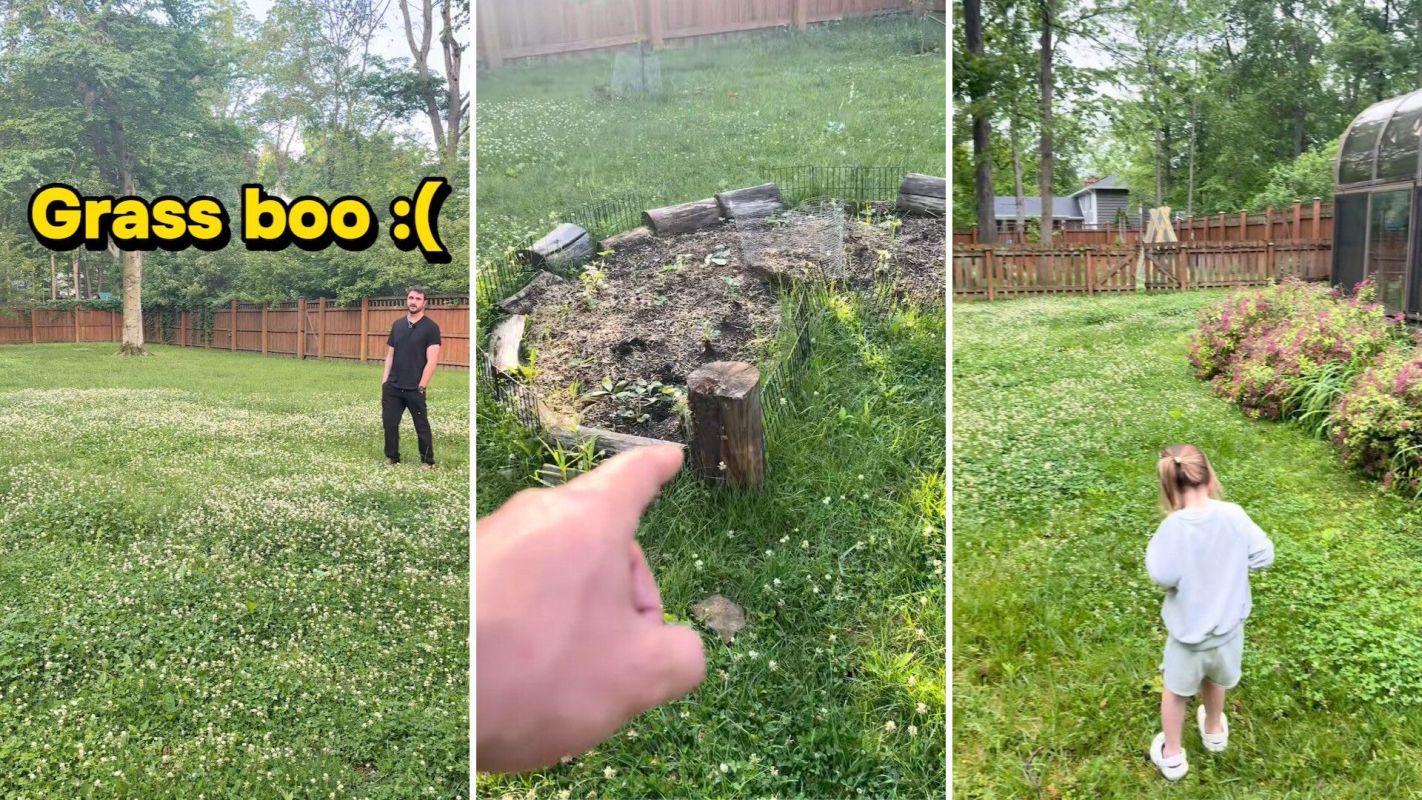
After weeks of rain kept the mower parked, one suburban father found his backyard filled with flowers and bees — and came away even less fond of his standard grass lawn.
In a TikTok, permaculture creator Nick Mayhew (@nick.mayhew418) said the weather-driven pause in lawn care turned into a no-mow test, and his yard ended up far more active with bees.
What happened?
The video documents what Mayhew called an "accidental experiment": repeated rain left the lawn uncut for weeks. Rather than immediately mowing it down, he let it keep growing and began to notice a clear change.
@nick.mayhew418 I don't like grass. I'd like my grass to not be grass. I can't eat my grass (probably). #lawntok #cloverlawn #permaculture #foodforest ♬ original sound - Nick Mayhew
With flowering white clover spreading across the yard instead of a closely trimmed stretch of turf, Mayhew said he was seeing more bees there than usual for that time of year.
In the clip, he showed pollinators visiting raspberry plants, the clover, and other blooming areas around the yard.
He also said the space has wild strawberries, creeping ivy, and other flowers. Looking ahead, Mayhew said he wants to replace more of the grass with native plants, fruit tree plantings, and possibly keyhole-style gardens.
TCD Picks » Quince Spotlight
💡These best-sellers from Quince deliver affordable, sustainable luxury for all




Why does it matter?
Mayhew's backyard experiment reflects a growing shift away from water-intensive, high-maintenance lawns and toward landscapes that better support local ecosystems. Traditional turf often requires frequent mowing, watering, and upkeep, while natural lawns can reduce the need for all three.
That can mean real savings for homeowners: less time spent mowing, less money spent on maintenance, and lower water bills, especially during hot, dry months.
Flowering ground covers such as clover can provide nectar for pollinators, while native plants are often better adapted to local conditions and typically require less irrigation and fewer additional inputs once established.
What can I do?
Even a partial lawn replacement can offer benefits, whether that means converting a side yard, adding pollinator-friendly borders, or letting clover fill in where grass struggles.
Low-maintenance options include native plants and clover lawns that reduce watering needs while still looking intentional and attractive. Some commenters on Mayhew's post also suggested options like yarrow and violets for areas with lighter foot traffic.
As Mayhew put it, "I do believe it's possible to be a suburban dad and also not enjoy the idea of giving my lawn a haircut once a week for about 50 more years."

Get TCD's free newsletters for easy tips, smart advice, and a chance to earn $5,000 toward home upgrades. To see more stories like this one, change your Google preferences here.






