


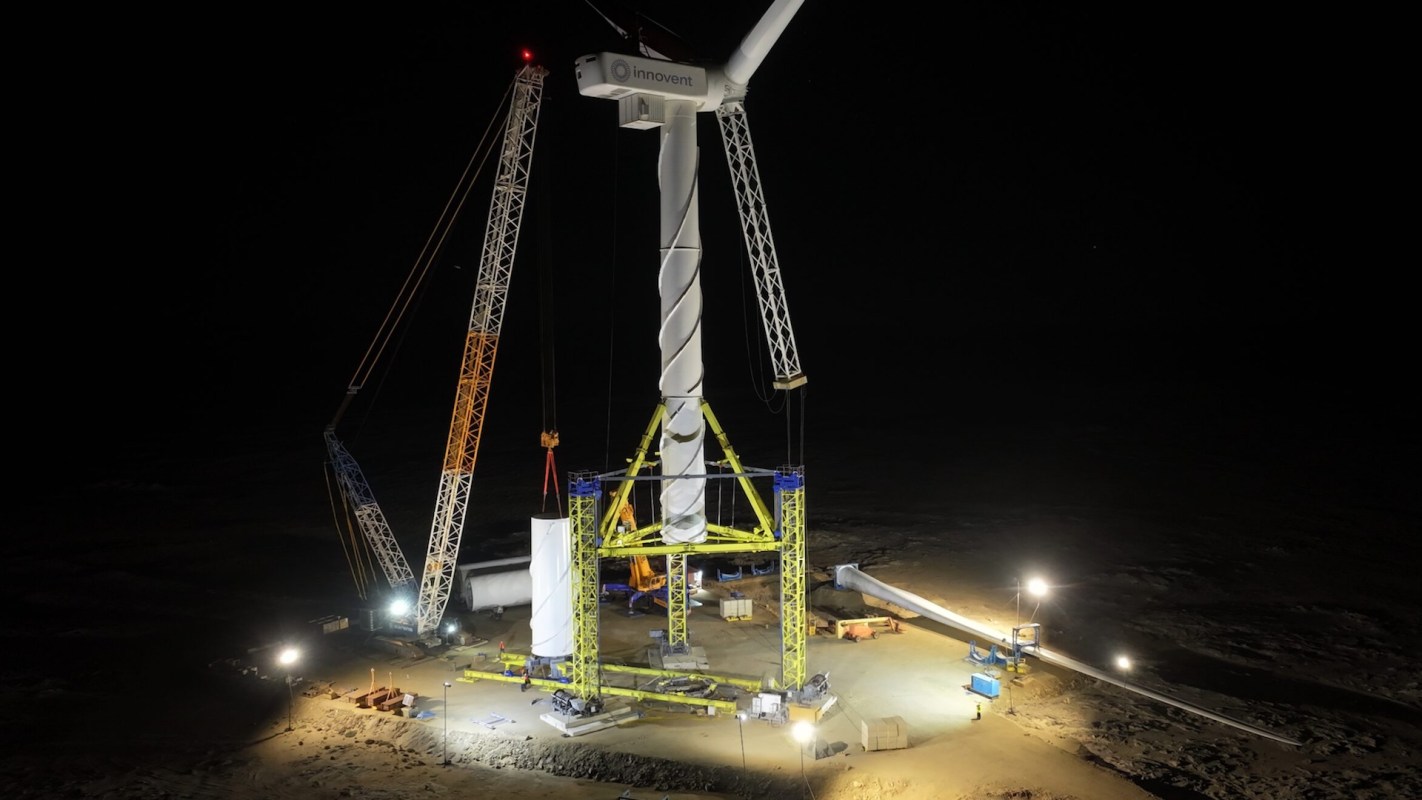
Fortescue subsidiary Nabrawind erected a utility-scale turbine already producing electricity in remote Namibian conditions without relying on a giant crane.
The approach could have major implications for making clean energy cheaper, faster, and easier to build in some of the windiest places on Earth.
Electrek reported that Fortescue's recently acquired turbine subsidiary, Nabrawind, installed its first Goldwind GW165/6000 turbine at Namibia's InnoVent Diaz wind farm using what it calls its Total Self Erecting System and Skylift technology.
In the project images, a backup crane can be seen off to the side "just in case," but Nabrawind said the installation itself was carried out using its crane-less deployment process.
Remote, extremely windy sites are often ideal locations for wind farms. They're also among the most difficult places to bring in the massive cranes typically required to assemble turbines.
The system can function in unstable winds of around 15 meters per second, or about 33 miles per hour, with gusts reaching 20 m/s, or about 45 mph. Conventional cranes, by comparison, may be limited to roughly six to eight m/s (13 to about 18 mph) during some key installation steps.
TCD Picks » Quince Spotlight
💡These best-sellers from Quince deliver affordable, sustainable luxury for all




The company also said the technology can work with multiple existing turbine and tower types, rather than just a single custom design.
If the method proves repeatable, it could help solve one of the biggest logistical challenges in wind development: transporting enormous equipment to remote sites and then waiting for perfect weather conditions to use it.
Less downtime and less heavy transport could translate into lower project costs, shorter construction timelines, and more dependable deployment.
When wind farms become easier and more affordable to build, utilities, cities, and companies can add more clean electricity to the grid without facing the same logistical barriers. That can help stabilize energy prices, reduce fossil-fuel pollution, and improve air quality and public health.
The Namibia project is a real-world test for the technology. The InnoVent Diaz wind farm sits in one of the world's richest wind zones, and Nabrawind plans to install seven turbines there using the same approach.
The goal is to cut the net installation cycle to about one week by the seventh turbine without bringing a massive crane to the site each time.
Electrek described the achievement as a win not only for Fortescue's net-zero ambitions, but also for broader efforts to add wind to renewable energy mixes "quickly, efficiently, and affordably."

Get TCD's free newsletters for easy tips, smart advice, and a chance to earn $5,000 toward home upgrades. To see more stories like this one, change your Google preferences here.






