


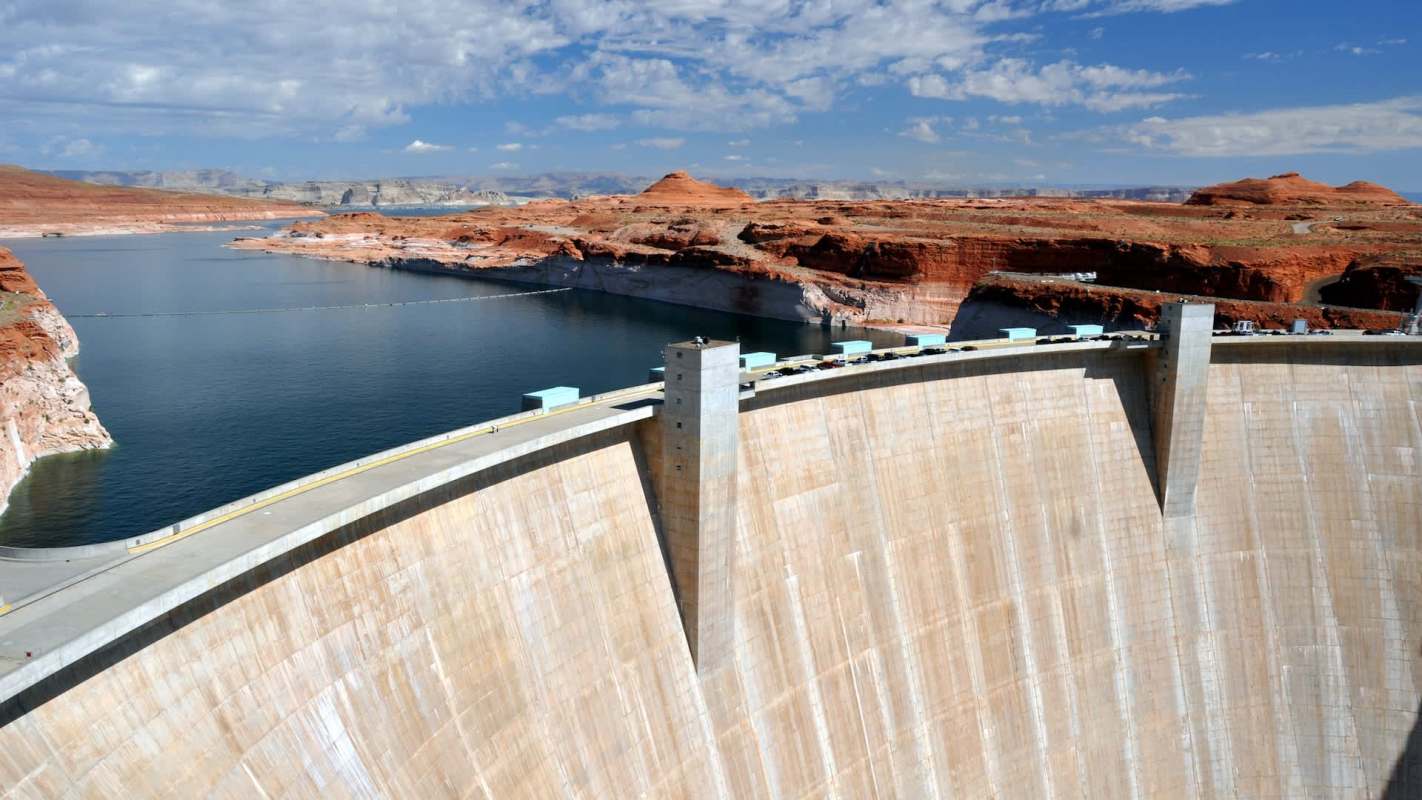
Lake Mead is edging closer to a level that could sharply reduce power generation at the Hoover Dam, one of the West's most important sources of electricity.
If the reservoir falls below 1,035 feet above sea level — just 15 feet below its current level — the dam's hydropower capacity could drop by 70%, Circle of Blue reported.
Water managers now expect Lake Mead to pass that marker sometime in the coming year, potentially by late summer. The threat is as much mechanical as hydrological: 12 of the dam's 17 turbines cannot operate once the lake reaches that low level.
The Hoover Dam is the largest hydropower plant in the Colorado River Basin. Its electricity has long been prized for being relatively low-cost and for how quickly it can respond to changes in demand throughout the day.
The pressure on Lake Mead has been intensified by conditions upstream at Lake Powell. In April, the Bureau of Reclamation cut releases from Lake Powell by 20% to safeguard infrastructure and keep hydropower running there, a change that, as Circle of Blue reported, hastened Mead's decline. At one point this month, it was falling by about a foot every five days.
"We're going to go to 1,035. There's no question that's going to happen," Arizona Department of Water Resources Director Tom Buschatzke said.
TCD Picks » Quince Spotlight
💡These best-sellers from Quince deliver affordable, sustainable luxury for all




Hydropower does more than keep the lights on. Because it can ramp up almost instantly, it helps utilities cover sharp evening swings in demand, when people get home and increase air conditioning and appliance use. That flexibility can keep grid operations stable and electricity more affordable.
If the Hoover Dam loses most of that capability, utilities will have to replace it with other power sources, often at a higher cost. The Arizona Power Authority has warned that rates tied to Hoover power could rise steeply because many of the dam's costs remain fixed even when electricity output falls.
Some communities are especially exposed. Lincoln County Power District in Nevada gets about 70% of its electricity from the dam, though it is diversifying. More broadly, lower hydropower output could stress a grid already contending with extreme heat, wildfire risk, and rising demand.
As Circle of Blue reported, the Bureau of Reclamation announced $52 million in funding for three new "wide-head" turbines that are capable of generating power if the water level falls down to 950 feet. Once they are installed, the projected capacity cut would fall from 70% to 58%.
The LCPD is also planning ahead by locking in future power purchases and adding solar resources to soften the blow from shrinking hydropower supplies.
Grid specialists are also running "what if" scenarios to understand how the Western grid would respond if output drops sharply. As Circle of Blue reported, researchers with the Western Electricity Coordinating Council, Pacific Northwest National Laboratory, and the National Laboratory of the Rockies are studying whether batteries and other resources can make up for lost fast-ramping services.
"This doesn't mean that the grid is going to go dark," Nathalie Voisin of PNNL said. "It just means that other resources are being used to compensate for those services, and it's just more expensive."

Get TCD's free newsletters for easy tips, smart advice, and a chance to earn $5,000 toward home upgrades. To see more stories like this one, change your Google preferences here.






