


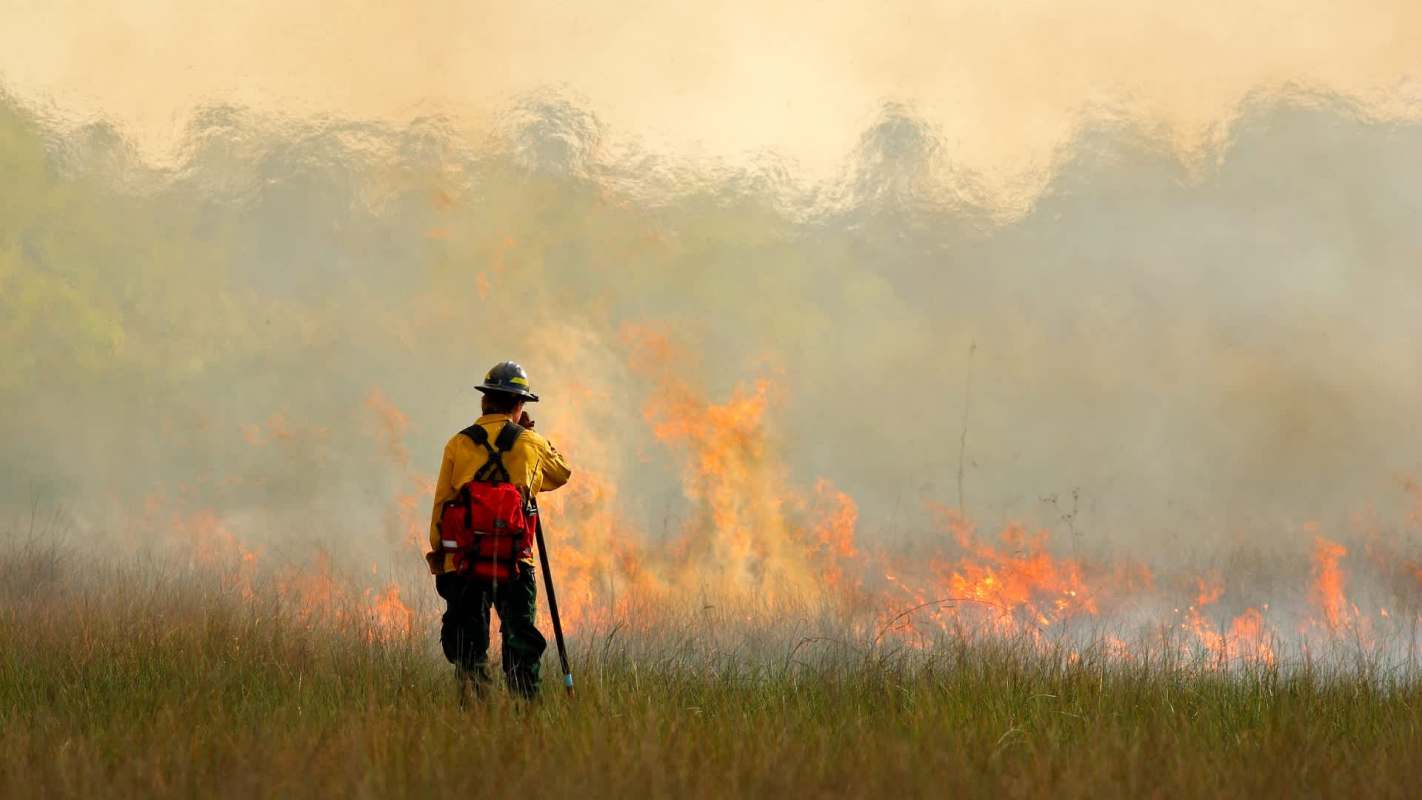
After a relatively mild wildfire year across the country in 2025, experts have said the U.S. could be heading into a much more dangerous fire season.
With drought expanding, mountain snowpack dwindling, and federal fire agencies losing experienced staff, firefighters have warned that conditions are lining up for major blazes.
Inside Climate News reported that roughly 2.4 million acres were listed as burned in 2026 by May 29 — about twice the 10-year average for that point in the year.
So far, much of that damage has come from grass fires in the Southeast and Plains states, including Nebraska, Kansas, and Oklahoma.
Now attention is turning west, where the impacts of peak fire season are typically reduced by slow snowmelt, which keeps forests and lower slopes moist through the summer. However, a warm winter meant the Rockies and California's Sierra Nevada received unusually sparse snow because much of the season's moisture fell as rain rather than snow.
Drought is also widespread, especially in the Southeast, southern Great Plains, and Mountain West. Experts have said the Upper Colorado Basin and Four Corners region could face some of the highest wildfire risk in the coming months, though California may be more of a wildcard after heavy rains.
TCD Picks » Quince Spotlight
💡These best-sellers from Quince deliver affordable, sustainable luxury for all




At the same time, federal wildfire response teams are facing disruption as the Trump administration pushes for a reorganization of wildland fire programs, even as the Interior Department and Forest Service have both lost significant staff.
Fast-moving fires can force evacuations, worsen air quality, destroy businesses, damage infrastructure, and leave communities facing years of financial and emotional recovery.
Experts are especially concerned because the country appears both drier and less prepared.
Former firefighters and advocates said that staff losses may mean fewer red-carded workers can serve on incident teams, including people handling logistics that support crews on the fireline.
The Forest Service also handled far fewer fuel-reduction acres last year than in 2024 — including prescribed fire, thinning, and brush removal — a drop of about 35%.
The Forest Service said it had nearly 10,500 wildland firefighters as of May 11 and was on pace to hit hiring targets, including support personnel who can help during emergencies.
Weather patterns over the next few months, especially the North American Monsoon, could either ease fire danger with rainfall or make conditions worse if early storms bring lightning without much moisture.
The most practical steps are focused on readiness: following local burn restrictions, creating defensible space around homes, signing up for emergency alerts, and keeping evacuation plans up to date.
"I think this is going to be the year," Timothy Ingalsbee, co-founder and executive director of Firefighters United for Safety, Ethics and Ecology, said, per Inside Climate News. "The conditions are just ripe for some really bad outcomes."
Weather and climate scientist Daniel Swain added, "It's a bit of a double-edged sword. Those early storms could be a big problem. They could ignite many lightning fires."

Get TCD's free newsletters for easy tips, smart advice, and a chance to earn $5,000 toward home upgrades. To see more stories like this one, change your Google preferences here.







