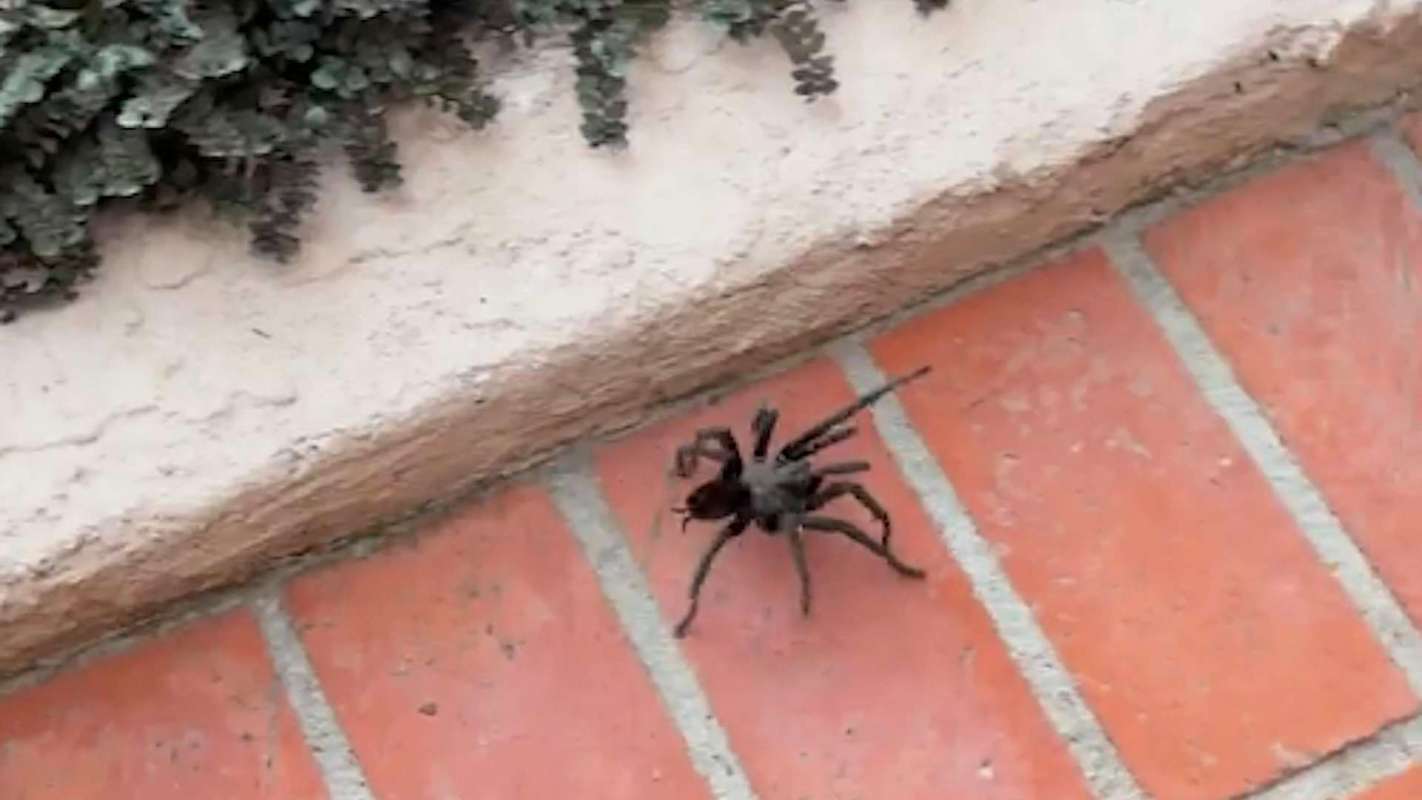
A close encounter with a large tarantula took an unexpectedly sweet turn after commenters explained what the spider was actually doing.
What first seemed like a backyard horror story was, according to people on Reddit, likely a mature male tarantula on one last mission: finding a mate before the end of his life.
The original poster said they had caught the tarantula in a jar in San Diego. "I caught it in a jar, and I'd like to keep it, I don't have any good containers though. What do they eat and need to live, and what kind of tarantula is it? Honestly, I want to know everything."
In the video, a large black spider can be seen scurrying across a brick walkway before squeezing under what appears to be a wall. Commenters identified the spider as likely Aphonopelma eutylenum, more commonly known as a California ebony tarantula.
(Click here if the embedded video does not appear.)
Mature males leave their burrows and move around in the open in search of mates. Commenters noted that once they reach this stage of life, they often stop eating and drinking and have only a short time left to live. After learning that context, the poster let him go into a canyon away from the trails so he could keep looking for a mate.
TCD Picks » Quince Spotlight
💡These best-sellers from Quince deliver affordable, sustainable luxury for all




Also included in the update: "his name is matte."
While tarantulas can easily trigger panic, especially when they show up near homes, these seasonal sightings also reflect the reality that people share space with wildlife whose habitat overlaps with neighborhoods, roads, and recreational areas.
In Southern California, development near canyons and open space means native animals are more likely to wander into human-dominated areas. Often, the animals are simply moving through landscapes that people have fragmented. During breeding season, those encounters become more visible.
Misunderstanding often puts wildlife at risk. A mature male tarantula already has a narrow window to reproduce, and unnecessary capture, relocation, or killing can end that journey immediately.
TCD Picks » Quince Spotlight
💡These best-sellers from Quince deliver affordable, sustainable luxury for all
Native spiders play a role in balancing local ecosystems, and protecting them helps maintain healthier outdoor spaces. Better wildlife awareness can also help people avoid harming misunderstood animals near home.
If you spot a tarantula, the most helpful response is usually the simplest: give it space. During mating season, a wandering male is typically just passing through, and leaving him alone is often the safest option for both the animal and the person who found him.
If the spider is in a risky spot, such as a garage, sidewalk, or trail, a gentle relocation nearby may be better than moving it far from its habitat. The key is to place it somewhere sheltered and close to where it was found, not miles away.
Knowing what local wildlife is active in an area and when can make an alarming sighting feel less mysterious. Wildlife-friendly yards and reduced pesticide use can also support native species while lowering the odds of stressful encounters.
Many other Redditors thanked the OP for not keeping the spider as a pet and releasing it into the wild to live out the rest of its life. One offered some good advice for anyone wanting to keep a wild animal as a pet. "That's great! If you want to keep a tarantula as a pet, don't bring in a wild one," they wrote. "Educate yourself a little, there is a lot of videos on YouTube, and buy yourself something from a reputable animal store."

Get TCD's free newsletters for easy tips, smart advice, and a chance to earn $5,000 toward home upgrades. To see more stories like this one, change your Google preferences here.