


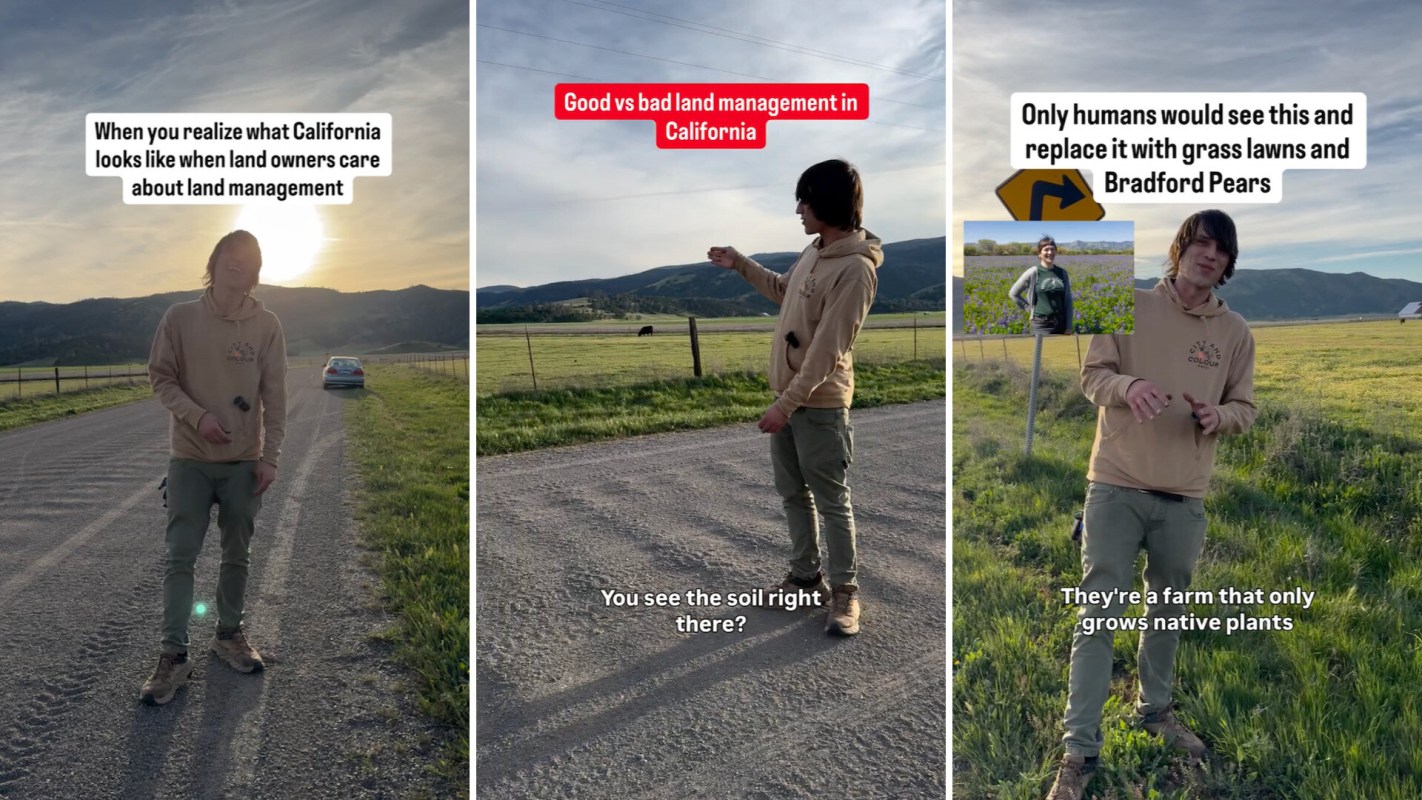
A side-by-side view from Napa County is giving social media users a striking lesson in land stewardship. One ranch appears grazed down to compacted soil, while the property across the road is bursting with color from native wildflowers.
The contrast, captured in a recent Instagram reel, shows how ranching practices can either strip biodiversity away or help sustain it.
In an Instagram reel, creator Jessie Dickson (@sacramentofoodforest) walks through an endangered native grassland in Northern California during a superbloom and highlights a dramatic roadside difference between two neighboring properties.
On one side, the video shows heavily grazed land with bare, compacted soil. Dickson says native biodiversity struggles there and notes that several rare lilies known to exist in the area are not visible in the overgrazed section.
Across the street, the scene shifts completely. Dickson describes seeing "wildflowers for days," with flowers stretching for miles and a rancher who appears to be managing the land with biodiversity in mind.
In the caption, Dickson explained California once had world-leading native wildflower biodiversity and that "over 98% of California's grasslands have been destroyed for agriculture and suburban sprawl."
TCD Picks » Quince Spotlight
💡These best-sellers from Quince deliver affordable, sustainable luxury for all




When one commenter asked what the farmers did differently, Dickson responded, "The family with a superbloom does something called 'rotational grazing,' where they basically only allow grazing in sections … that side had more cattle but you can't even see them!"
Land management decisions can determine whether a working landscape still supports native plants, pollinators, and healthy soil, or becomes too degraded for many species to thrive.
One commenter wrote, "[It's] a ton of work but some of us farmers enjoy looking at nature in her full glory."
Other commenters advocated for those living in urban or suburban areas to grow small habitat patches close to home. One viewer said they planned to ask their HOA to plant milkweed for monarch butterflies.
Replacing even part of a conventional yard with native plants can create food and shelter for pollinators while often reducing water use and maintenance needs.

Get TCD's free newsletters for easy tips, smart advice, and a chance to earn $5,000 toward home upgrades. To see more stories like this one, change your Google preferences here.







