


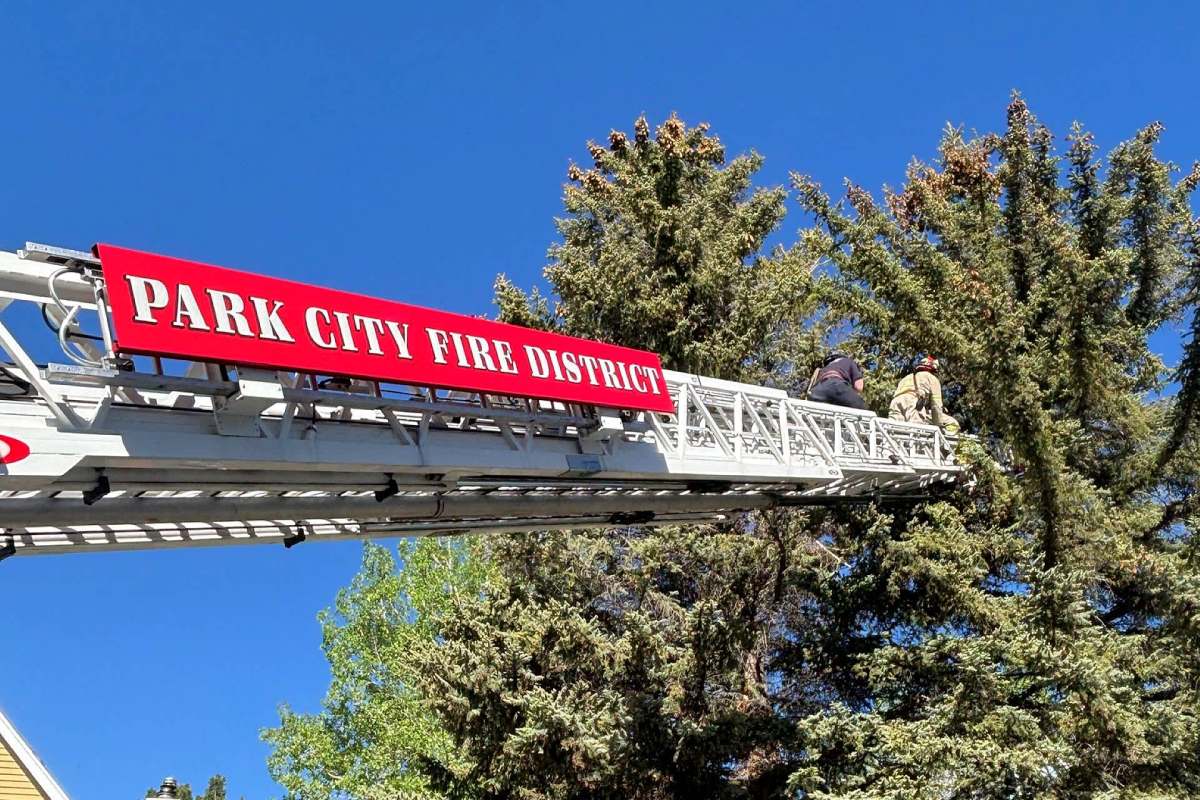
A young American black bear set off a rescue response in a Park City, Utah, neighborhood this week after climbing a tree.
According to a report from TownLift, with help from a fire district ladder truck, wildlife officials safely tranquilized and removed the animal, and neither the bear nor the responders were injured.
The bear was spotted in Park City's Prospector neighborhood, prompting officers with the Park City Police Department to respond. Authorities said the animal remained in the tree while they evaluated the safest next step.
Police contacted wildlife officers and biologists with the Utah Department of Natural Resources. The Park City Fire District also joined the response, using a ladder truck so wildlife officials could tranquilize the bear while it was still above the ground.
Officials have not said where the bear will be relocated, but they confirmed the rescue ended safely.
Sightings like this are common in the area during spring and early summer, when younger black bears spread out and search for food.
TCD Picks » Quince Spotlight
💡These best-sellers from Quince deliver affordable, sustainable luxury for all




In many mountain communities, people and wildlife are increasingly crossing paths in residential areas.
As neighborhoods expand into or near bear habitat, young bears moving through the landscape can wind up in backyards and on neighborhood streets. Easy food sources left by people — including unsecured trash, pet food, and other outdoor attractants — can make those areas even more appealing.
These encounters can quickly become dangerous for people, pets, and the animals themselves. A startled bear can act unpredictably, and once a wild animal begins associating neighborhoods with food, future run-ins can become more likely.
Relocation may solve an immediate problem, but avoiding the conflict in the first place is often the better outcome for both wildlife and the community.
Wildlife officials regularly remind residents to reduce attractants around their homes, especially during times of year when younger bears are on the move.

Get TCD's free newsletters for easy tips, smart advice, and a chance to earn $5,000 toward home upgrades. To see more stories like this one, change your Google preferences here.







