


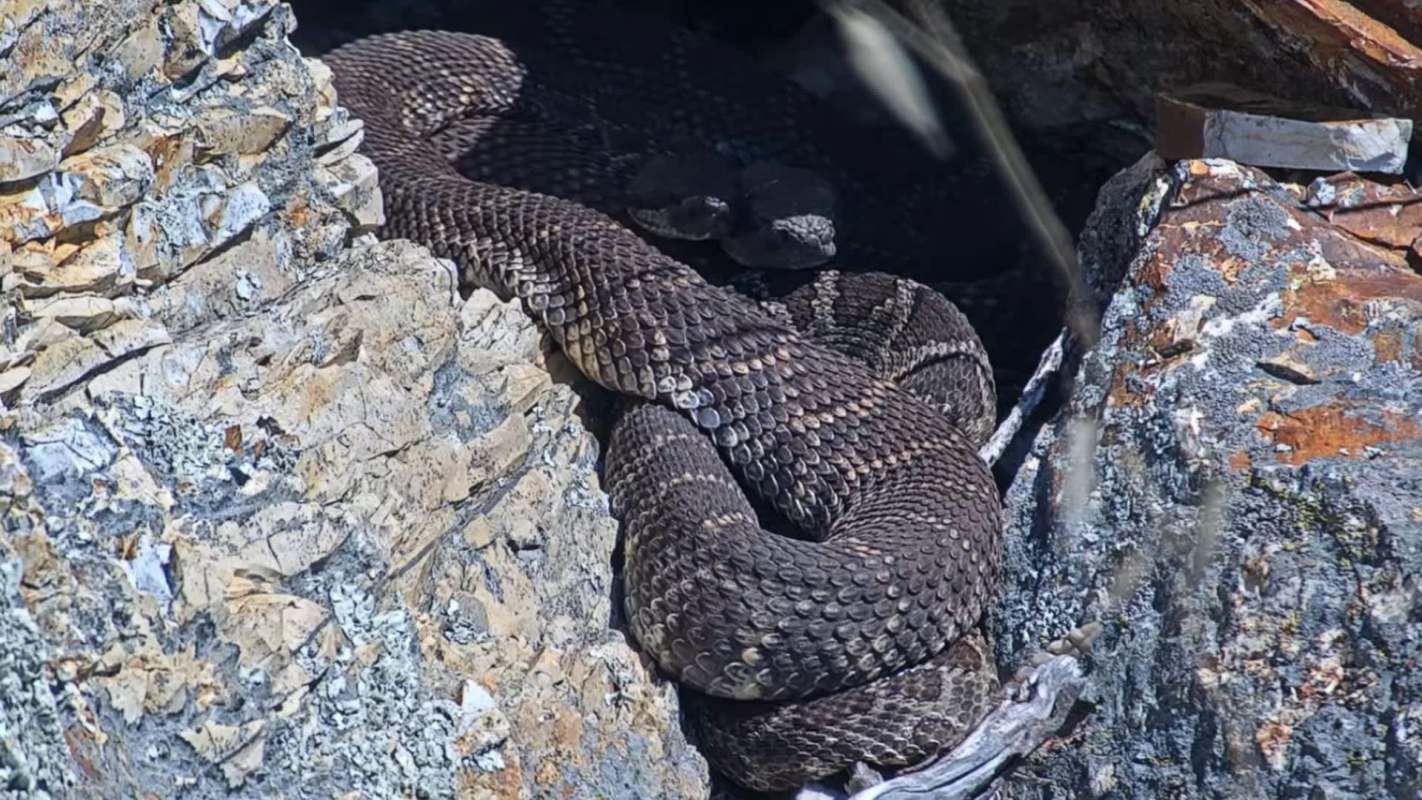
A new livestream on California's Central Coast is giving viewers a rare look inside a rattlesnake rookery, and researchers hope that closer view will help replace fear with curiosity, according to KCLU.
Instead of casting the reptiles as villains, the project allows people to watch them for what they are: wild animals trying to survive.
What's happening?
Project RattleCam now operates three cameras focused on rattlesnake birthing areas in California, Colorado, and Pennsylvania, including one at an undisclosed Central Coast site that recently went live.
Emily Taylor, a biological sciences professor at Cal Poly San Luis Obispo, said these sites are not nests in the way people might think of bird nests. Instead, they are communal birthing areas, sometimes called rookeries, where female rattlesnakes gather during the summer and may give birth in August or September.
The California camera runs daily from 7 a.m. to 8 p.m., and late morning through midday usually offers the best views. Taylor said the camera is now in its sixth year, and some returning snakes have become fan favorites. "Right now, we have a snake named Archie," she said.
The livestreams also give viewers a chance to help researchers by watching the snakes and collecting data.
TCD Picks » Quince Spotlight
💡These best-sellers from Quince deliver affordable, sustainable luxury for all




Why does it matter?
Rattlesnakes are a normal part of life on the Central and South coasts, but they have been in the news after several recent bites, leading to one death in the region. Taylor said those incidents do not mean the snakes are becoming more aggressive or more numerous.
Instead, many dangerous encounters happen when people accidentally get too close, whether while hiking, gardening, or reaching into places where a snake is hiding.
Taylor said local rattlesnake populations are generally healthy, though some groups can be affected when construction destroys habitat.
The cameras show defensive animals rather than a predator that's out hunting people.
What's being done?
Taylor and her students are using the cameras to study rattlesnake behavior, including maternal care. While rattlesnakes do not feed their young, researchers have observed females staying with babies and possibly even "babysitting" young that are not their own.
Members of the public can watch the feeds, learn how to behave safely around snakes, and contribute observations that support the research.
Taylor's team also provides a free rattlesnake removal service on the Central Coast so snakes can be relocated safely without putting people or the animals at risk, rather than being killed.
When spending time outdoors, the guidance is to stay alert to where you step or reach and to leave plenty of room between yourself and any rattlesnake.
"They're not these scary monsters that the media can make them out to be," Taylor said, according to KCLU. "Instead, they are these really gentle creatures that are absolutely fascinating."

Get TCD's free newsletters for easy tips, smart advice, and a chance to earn $5,000 toward home upgrades. To see more stories like this one, change your Google preferences here.






