


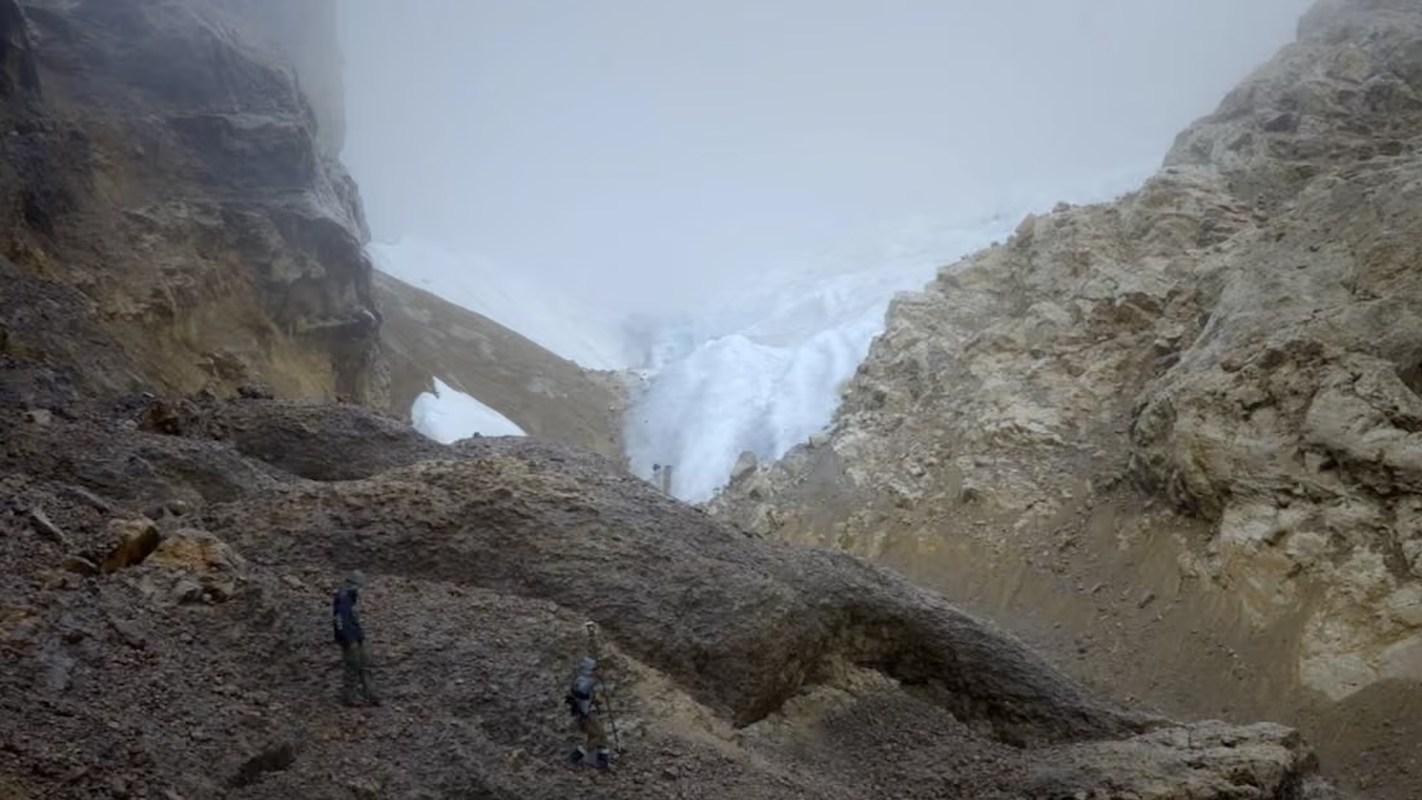
An expedition to Indonesia's West Papua region has produced grim new evidence that Oceania's last tropical glaciers are nearing their end.
Researchers say the remaining "eternal snow" on Puncak Jaya has shrunk so dramatically that its disappearance is no longer a distant threat but a reality unfolding now.
What's happening?
A team led by Klaus Thymann of Project Pressure traveled to the remote mountain in November to document Oceania's last two tropical glaciers, the Guardian reported.
The larger of the two surviving glaciers has lost 95% of its area since 2002. Indonesian researchers have also reported a 97% loss of ice mass in Papua's tropical glaciers from 1980 to 2024.
Scientists say four of the region's six glaciers have already disappeared. The remaining two are expected to vanish before the end of the decade, though earlier projections had suggested they could be gone as soon as this year, according to the Guardian.
Thymann described the scene as "planetary destruction on fast forward," saying that filming the glacier's decline left him emotional.
TCD Picks » Quince Spotlight
💡These best-sellers from Quince deliver affordable, sustainable luxury for all




Why does it matter?
The Puncak Jaya glaciers are the only tropical glaciers in Indonesia and in all of Southeast Asia, making their disappearance a major environmental and cultural loss for local communities and future generations.
The glaciers have long held symbolic importance. Their decline shows how quickly human-caused heating can erase landmarks once believed to be permanent.
Earth has warmed by roughly 1.4 degrees Celsius (about 2.5 degrees Fahrenheit) since preindustrial times, largely because of heat-trapping pollution from fossil fuels and ecosystem destruction.
Glaciers around the world help regulate water systems and serve as warning signs of a destabilizing climate. Scientists warn that shrinking ice threatens drinking water supplies and food security in many regions.
The situation in West Papua also shows how some of the most dramatic climate losses are unfolding in places that are difficult to reach, underdocumented, and often already under social and political pressure.
What's being done?
Researchers are racing to preserve as much information as possible before the glaciers disappear.
The latest expedition relied on high-resolution drone imagery to create a detailed 3D model, helping the team work around cloud cover and steep terrain that can hamper satellite surveys.
That digital record could help scientists better understand how quickly tropical glaciers are disappearing and improve future climate research. According to the Guardian, Thymann said one goal is to create a kind of "visual Noah's ark" so future generations can still study what was lost.
Scientists in Indonesia and abroad are also continuing to track glacier retreat through fieldwork, satellite analysis, and digitized historical maps. Accurate data can help inform climate planning and raise public awareness.
"The ice will be gone: It's not a question of if — it's a question of when," Thymann said, per the Guardian. "And 'when' is coming very, very soon."

Get TCD's free newsletters for easy tips, smart advice, and a chance to earn $5,000 toward home upgrades. To see more stories like this one, change your Google preferences here.






