


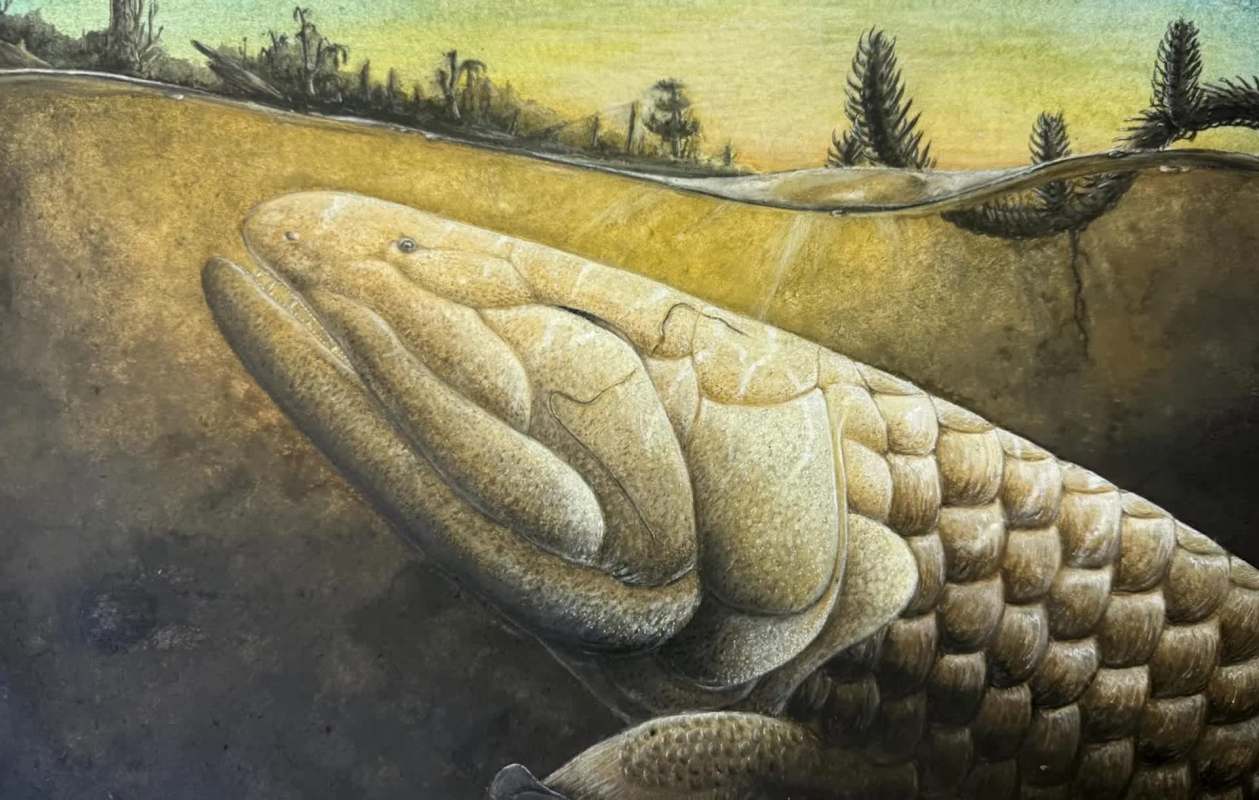
A rare fossil found in Antarctica is giving scientists a clearer picture of one of the most important turning points in Earth's history.
The discovery is shedding new light on how some fish evolved traits that eventually helped vertebrates move onto land.
Using advanced imaging tools, researchers were able to examine the inside of a Koharalepis jarviki skull without damaging the only known specimen of its kind. The findings were published in the journal Frontiers in Ecology and Evolution.
Researchers at Flinders University used neutron and synchrotron tomography to study the Devonian predator from the so-called "Age of Fishes."
The fossil was found in Antarctica's Lashly Mountains region. The team found that Koharalepis belonged to the Canowindrid family, an ancient fish group spread across East Gondwana, with similar fossils found in Antarctica and Australia.
Scientists consider these fish close relatives of the earliest tetrapods, the four-limbed vertebrates whose descendants eventually included amphibians, reptiles, birds, and mammals.
TCD Picks » Quince Spotlight
💡These best-sellers from Quince deliver affordable, sustainable luxury for all




Per Science Daily, lead author Corinne Mensforth said the fossil offers rare access to the fish's braincase and neuroanatomy.
"We found evidence that the brain of Koharalepis was similar to those of the fishes that straddle the vertebrate water-to-land transition," she observed.
The scans suggest Koharalepis had features suited to life near the water's surface, including skull-top openings for extra air intake and a light-detecting organ tied to circadian rhythms. Those adaptations may have helped it survive in shallow environments.
The study has also given researchers a better sense of how the animal may have lived. At roughly one meter long, Koharalepis was likely an ambush predator with relatively small eyes, suggesting it probably relied heavily on senses other than vision.
As Emeritus Professor John Long put it, as Science Daily shared, "This has enabled us to understand some of the behavior, adaptations and relationships of Koharalepis to its environment and to the other tetrapod-like fishes — and how fish first left the water to live on land approximately 385 million years ago."
The research emphasizes the importance of protecting rare fossils and using non-destructive tools to study them. That approach helps preserve irreplaceable specimens for future scientists, students, and communities interested in understanding Earth's deep past.
Scientists are increasingly turning to high-tech imaging methods to unlock details from fossils that once would have required cutting them open. In this case, the researchers were able to reveal hidden internal structures while keeping the rare Antarctic specimen intact, allowing new information to be extracted with updated technology in the future.

Get TCD's free newsletters for easy tips, smart advice, and a chance to earn $5,000 toward home upgrades. To see more stories like this one, change your Google preferences here.






