


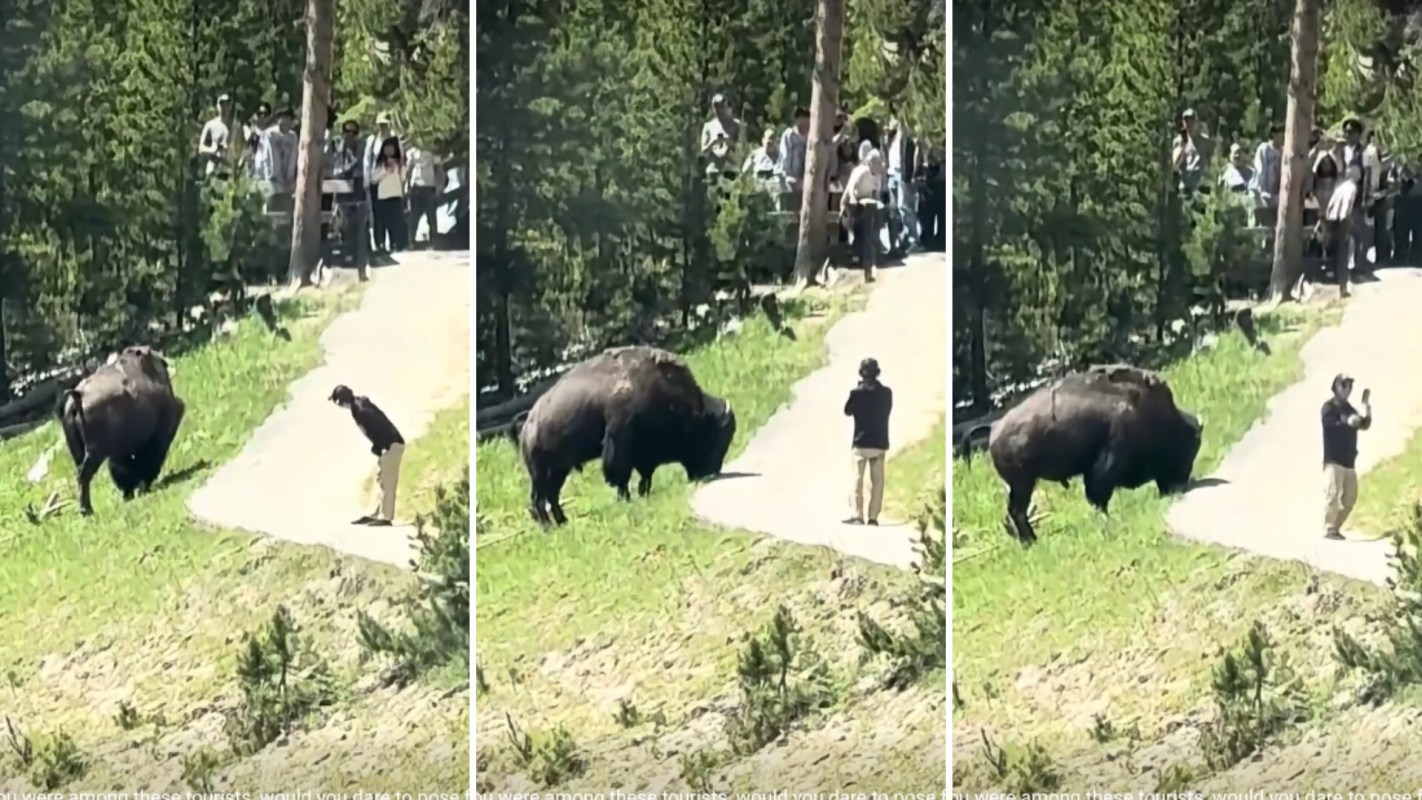
A day in Yellowstone can feel like a once-in-a-lifetime chance to see wild animals up close. But new footage from the park shows some visitors pushing that moment too far, stepping well beyond safety boundaries to pose for selfies with a bison.
That puts both people and wildlife at risk in one of the country's most important ecosystems.
According to Unofficial Networks, videos filmed on a Yellowstone footpath show tourists getting far too close to a bison, then turning their backs on the animal to snap photos.
After one man took a selfie near the grazing bison, another group followed suit.
That is a direct violation of Yellowstone's wildlife safety guidance, which requires visitors to stay at least 25 yards away from bison.
Bison are North America's largest land mammals, with bulls reaching about 2,000 pounds and roughly 6 feet in height. Yellowstone has the nation's largest public bison herd.
TCD Picks » Quince Spotlight
💡These best-sellers from Quince deliver affordable, sustainable luxury for all




Even when they look calm, bison are involved in more visitor injuries in Yellowstone than any other animal. They can be unpredictable when people get too close and can sprint at about three times the average human speed.
Yellowstone offers rare access to wildlife in an intact ecosystem, but that access depends on people following simple rules.
Ignoring those rules can lead to serious injury. A bison does not need much time or distance to react, and once it does, a human on foot has almost no chance of outrunning it.
In Yellowstone, visitors should keep at a distance of at least 25 yards from bison.
If you want a closer view, use binoculars or your phone's zoom instead of your feet. A good photo is never worth putting yourself — or the animal — in danger.
Visitors should also know the warning signs that a bison is stressed or preparing to charge. Signs of agitation include mock charges, bobbing its head while fixed on you, pawing, bellowing, or lifting its tail, all of which mean you are too close.
If others are crowding wildlife, do not follow their lead. Risky behavior can spread quickly in busy parks, but keeping your distance helps protect the animal, other visitors, and your own safety.

Get TCD's free newsletters for easy tips, smart advice, and a chance to earn $5,000 toward home upgrades. To see more stories like this one, change your Google preferences here.







