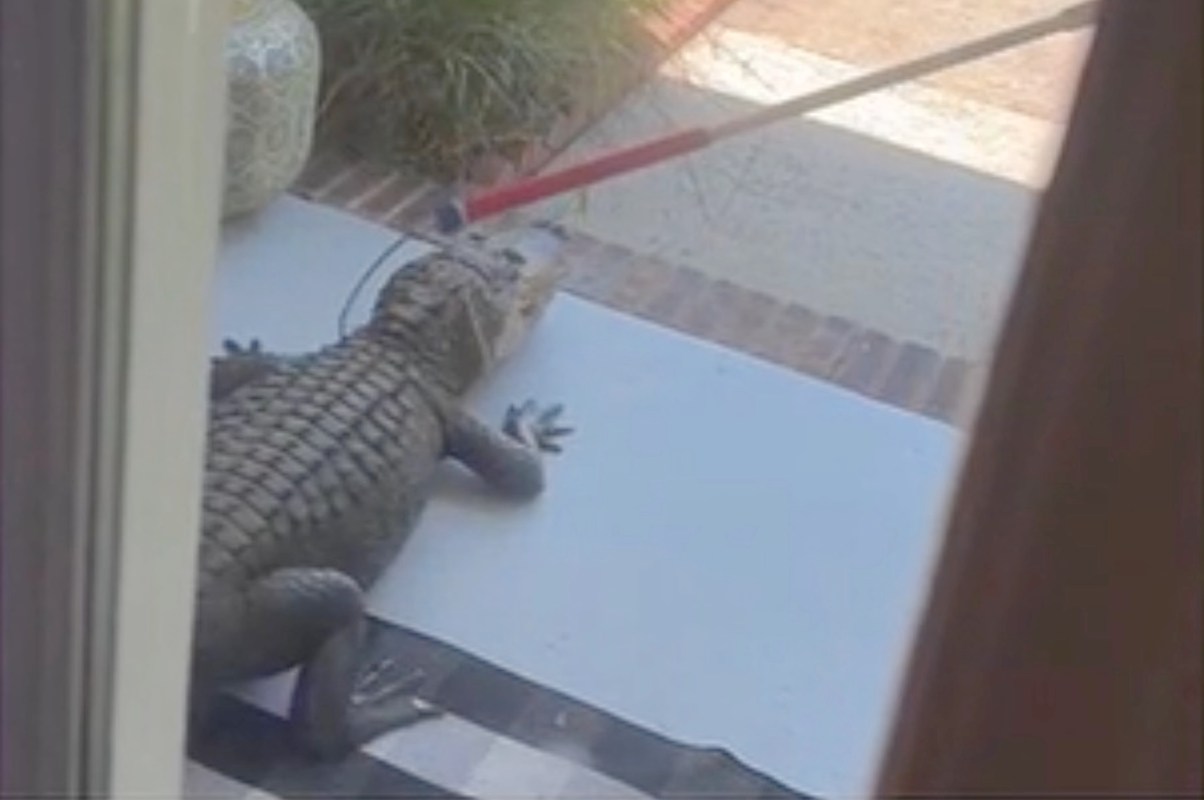
A South Carolina woman got an unwelcome reminder this week that warmer weather in the Lowcountry can bring wild surprises. When she opened her front door, she found an alligator on her porch.
In many warm-weather communities, people and wildlife are increasingly sharing the same spaces.
What happened?
Michele Bradice of West Ashley, South Carolina, told WCSC that she noticed something unusual near her front door earlier this week. At first, she saw only a shadow and then, through the window, a tail.
"I quickly realized that I saw a shadow by the front door and I peeked out the side window and all I could see was the tail," Bradice said. "I cracked the door a little bit to open it, just to make sure my eyes weren't deceiving me and there it was. All, I don't know, five or six feet of it."
When she opened the door slightly, she confirmed that an alligator about 5 to 6 feet long was outside. Bradice said she did not know what to do at first, so she called authorities, and Animal Control responded to the scene.
Such sightings tend to increase across the Lowcountry as temperatures rise. Locals are advised to contact the South Carolina Department of Natural Resources if a gator is in a place that may put the animal or others at risk.
TCD Picks » Quince Spotlight
💡These best-sellers from Quince deliver affordable, sustainable luxury for all




Why does it matter?
A large alligator outside a front door is a safety concern, especially for families with children, pets, or neighbors who may not notice the animal in time.
The incident shows how human development and wildlife habitat continue to overlap. As neighborhoods expand near wetlands, ponds, and marshes, animals such as alligators are more likely to wander into driveways, porches, and roadways instead of remaining out of sight.
Warmer seasonal temperatures can also increase movement, leading to more encounters. That can create stress for homeowners while also putting wildlife at risk if frightened people react unpredictably.
In many communities, people are living alongside animals that were there first.
What can I do?
If you see an alligator in a place that seems unsafe, keep your distance and contact the proper authorities. In South Carolina, residents are urged to call the South Carolina Department of Natural Resources when a gator may endanger people or itself.
Do not approach, feed, or try to move the animal. Even a smaller alligator can be dangerous, and close contact can escalate quickly.
Homeowners can also reduce the chances of a tense encounter by staying alert around doors, yards, ponds, and retention areas during warmer months, especially early in the morning and around dusk. Keeping pets leashed and supervised outdoors can help as well.
Situations like this are a grave reminder of how homes and infrastructure interact with local ecosystems.

Get TCD's free newsletters for easy tips, smart advice, and a chance to earn $5,000 toward home upgrades. To see more stories like this one, change your Google preferences here.