


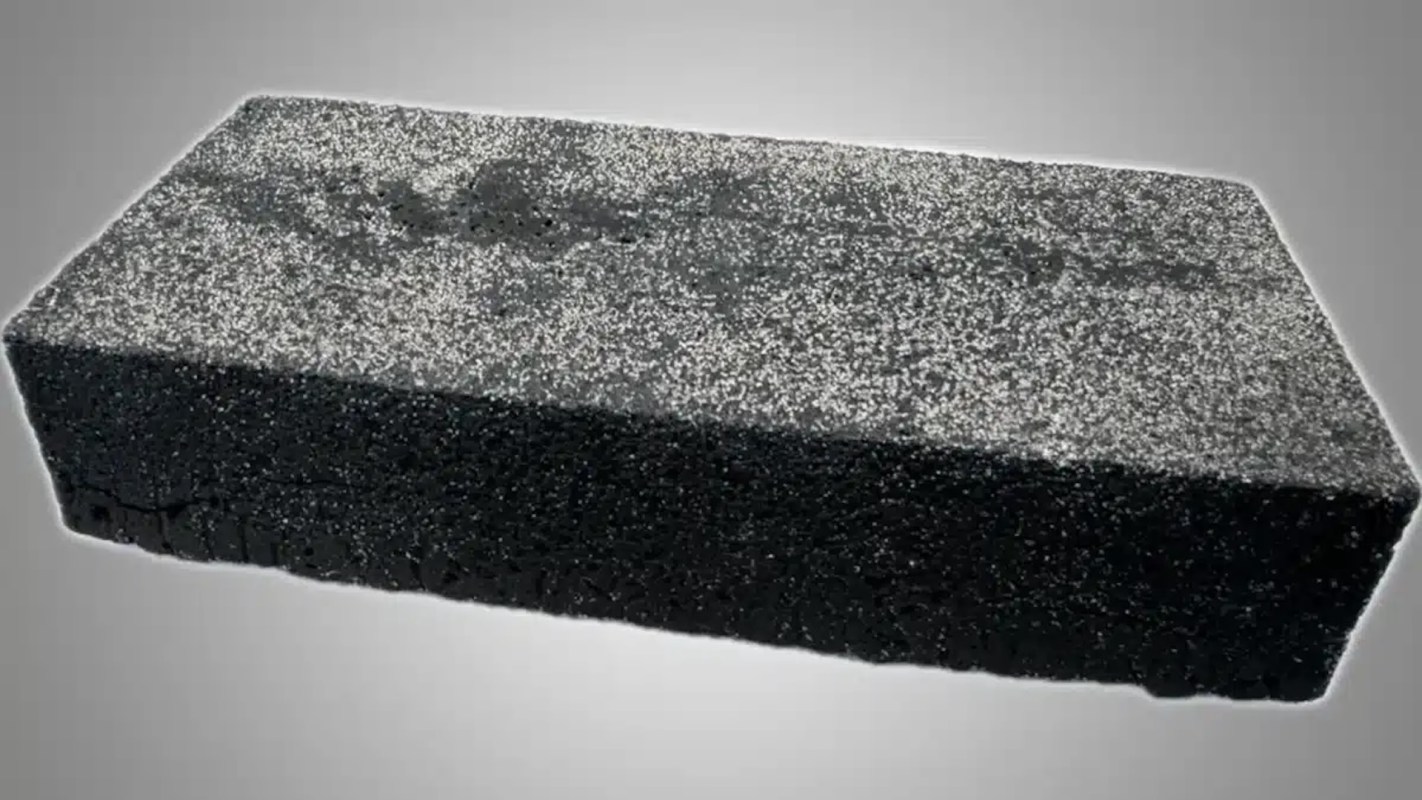
A new concrete-like material developed at Worcester Polytechnic Institute is drawing attention for addressing one of construction's biggest climate problems in a very different way.
Instead of releasing large amounts of carbon dioxide, as conventional concrete does, the experimental material absorbs CO2 as it hardens into a durable solid within a few hours.
What happened?
Engineers at WPI created what they call enzymatic structural material, or ESM, a lab-made building material with the end goal of combating the 8% of global carbon emissions that come from concrete, according to the journal Matter.
Traditional concrete relies on an energy-intensive clinker and can take about four weeks to fully cure. ESM works differently. In the study, carbonic anhydrase accelerates a mineral-forming reaction involving CO2, water, and calcium, producing solid calcium carbonate. Those minerals form the main structural framework of the finished material.
In WPI's announcement, lead researcher Nima Rahbar said the team created "a practical, scalable alternative that doesn't just reduce emissions, it actually captures carbon." The researchers say each cubic meter of ESM captures about 6.1 kilograms of carbon dioxide during production.
Why does it matter?
Producing a cubic meter of standard concrete emits about 330 kilograms of carbon dioxide. By comparison, ESM is carbon-negative in its current lab-scale form.
TCD Picks » Quince Spotlight
💡These best-sellers from Quince deliver affordable, sustainable luxury for all




A lower-carbon building material that also cures quickly could eventually help reduce emissions, shorten construction timelines, and support faster rebuilding after disasters.
The team found that the material was incredibly durable and water-stable. Researchers see potential early applications in wall panels, roof decking, and modular components.
Even so, the study falls well short of presenting ESM as a ready-made replacement for concrete. The material is still a lab result, with unresolved questions about cost, scalability, durability, and reinforcement for more demanding infrastructure applications.
What are people saying?
Rahbar emphasized the potential scale of the advance, saying that "if even a fraction of global construction shifts toward carbon-negative materials like ESM, the impact could be enormous."
The study's authors also pointed to practical advantages beyond emissions, including recyclability and repairability, which could help reduce landfill waste and lower building costs over time.

Get TCD's free newsletters for easy tips, smart advice, and a chance to earn $5,000 toward home upgrades. To see more stories like this one, change your Google preferences here.






