


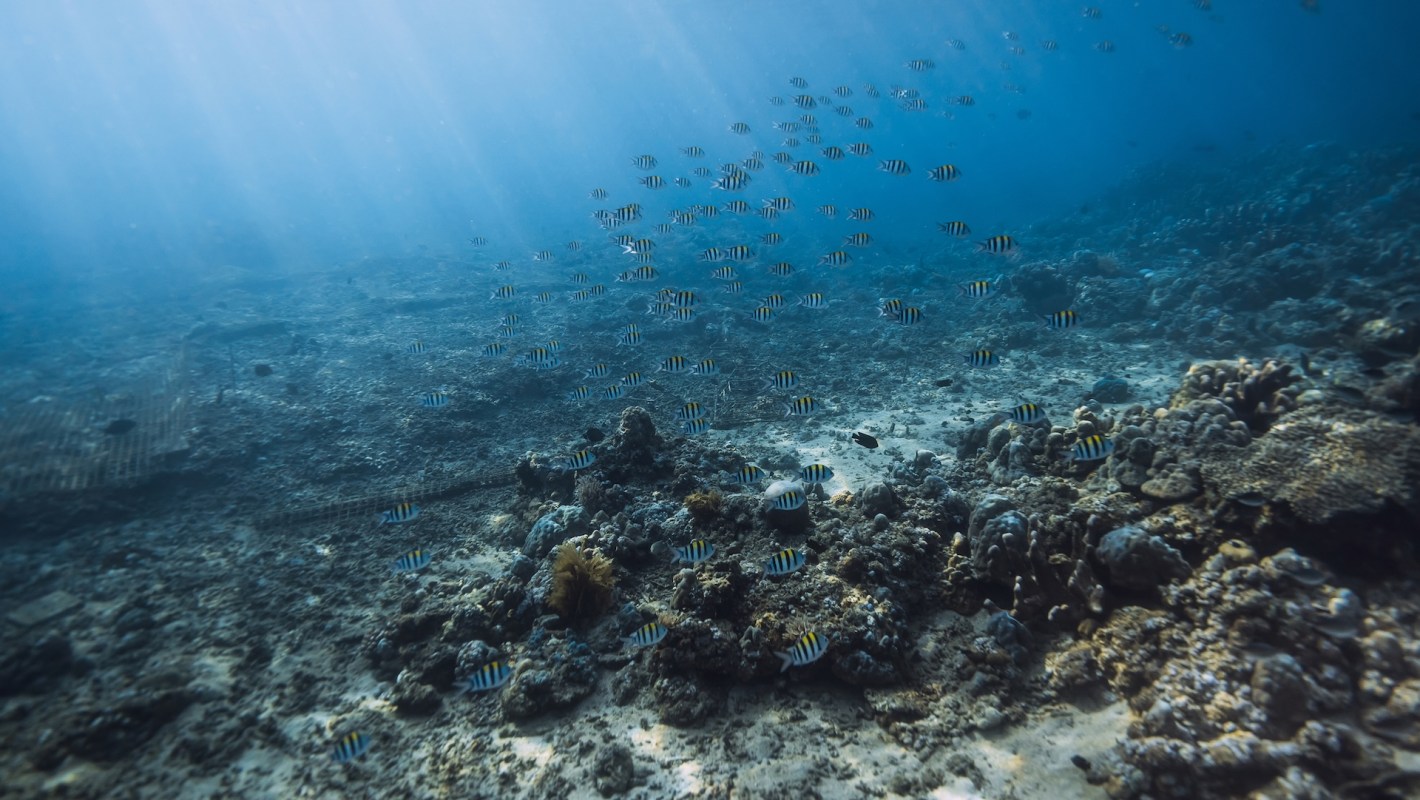
A new study suggests climate change may be reshaping reef life in a subtle but serious way — not only by damaging coral habitat, but by changing how fish cluster together to survive.
Researchers at Adelaide University found that when reef habitat becomes simpler under more acidic conditions, small reef fish form smaller shoals and lose some of the protection that comes with larger groups.
The study, published in the Journal of Animal Ecology, examined how future ocean conditions could affect fish behavior on coral reefs. The team found that as ocean acidification reduces the complexity of reef habitat, fish group sizes shrink, altering how those fish feed, hide, and respond to danger.
Lead author Dr. Angus Mitchell explained that shoaling is central to survival for small reef fish. "Watch a reef long enough and you realize that fish are almost never alone," he said, explaining that grouping helps fish detect predators sooner and lowers the odds that any one individual will be attacked.
The researchers also found that fish in larger shoals generally behave more boldly, spending more time out in the open and feeding more efficiently. But on degraded reefs, that social protection erodes.
Project leader Professor Ivan Nagelkerken said the biggest changes were not driven by heat or acidity acting directly on individual fish. Instead, habitat loss and social disruption appeared to be the main factors.
TCD Picks » Quince Spotlight
💡These best-sellers from Quince deliver affordable, sustainable luxury for all




Coral reefs support fisheries, tourism, and coastal livelihoods around the world. If reef fish become more vulnerable because their habitat no longer supports healthy group behavior, the effects can ripple through entire ecosystems that people depend on.
Weaker fish populations can mean less food security for coastal communities and greater pressure on already stressed marine environments. Reef decline also threatens industries tied to diving, recreation, and local economies.
To study these effects, the Adelaide University team used reef sites in Japan near volcanic CO2 seeps that create more acidic water and offer a real-world view of possible future ocean conditions.
Nagelkerken said these reefs acted as natural climate analogs, allowing scientists to compare reefs under present-day chemistry with reefs exposed to warmer, more acidic water. That approach helps researchers move beyond lab tests and see how entire communities respond in the wild. Protecting habitat structure matters not just for biodiversity, but for the social behavior that also helps species survive.
"Our results suggest that even when individual fish seem to be coping fine behaviorally under climate stress, the social structures supporting their behavioral expression can quietly fall apart," Dr. Mitchell said.
"In the real world, fish do not experience climate change in isolation; they experience it as members of communities, shaped by the habitat around them and the other individuals they live alongside," Dr. Mitchell added.

Get TCD's free newsletters for easy tips, smart advice, and a chance to earn $5,000 toward home upgrades. To see more stories like this one, change your Google preferences here.







