


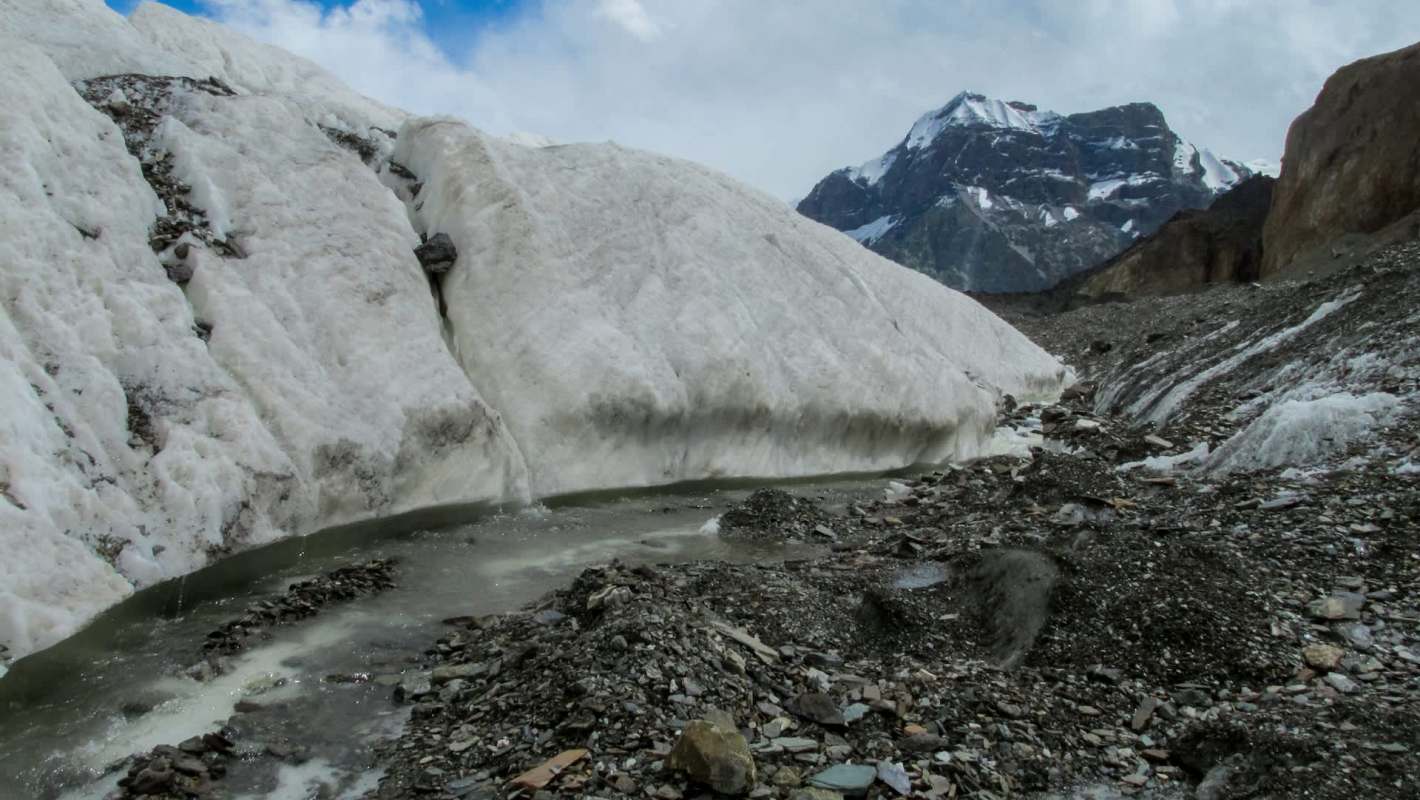
Central Asia's glaciers just had their worst year on record, and the fallout could affect millions of people.
According to a news release, an international study found that 2025 brought the "most extreme mass-loss year on record" across the region.
The study, led by Lander Van Tricht of Vrije Universiteit Brussel and ETH Zürich and published in Environmental Research Letters, reported that Central Asia's glaciers lost roughly 30 cubic kilometers of ice in 2025. That amounted to nearly 2% of the glacier volume still remaining in the region disappearing in a single year.
The team combined on-the-ground measurements from 16 glaciers in the Tien Shan and Pamir mountains with regional glacier modeling to assess the losses. The paper said nine of those 16 glaciers had their worst mass-balance year on record, while modeling showed that 64% of glaciers across Central Asia had their most negative year since at least 1991.
"2025 stands out as an exceptional year because the extreme losses occurred almost everywhere across Central Asia simultaneously," Van Tricht said. "... Many others ranked among their worst years on record."
Persistent warmth in spring and summer combined with much lower snowfall during melt season caused snow cover to disappear early. That left darker glacier ice exposed and accelerated melting, the study found.
TCD Picks » Quince Spotlight
💡These best-sellers from Quince deliver affordable, sustainable luxury for all




Glaciers function as natural water towers for millions of people living downstream in dry parts of Kyrgyzstan, Tajikistan, Uzbekistan, and Kazakhstan. During the summer, glacier meltwater sustains rivers used for drinking water, farming, hydropower, and ecosystems.
Shrinking glaciers can set off a dangerous chain reaction: temporary surges in runoff followed by water declines as less ice remains. For communities already dealing with water-sharing tensions, that raises concerns about food production, electricity, and access to water.
In glacier-fed regions, that can also mean conflict over water and greater vulnerability to future climate shocks.
The study noted that while 2025 was the harshest glacier melt year yet, years like this may become increasingly more common as the climate continues to warm.
"We cannot prevent glaciers from responding to climate warming," Van Tricht said. "But sustained glacier monitoring and improved modeling are essential to better understand future water availability and the impacts on downstream communities."

Get TCD's free newsletters for easy tips, smart advice, and a chance to earn $5,000 toward home upgrades. To see more stories like this one, change your Google preferences here.







