


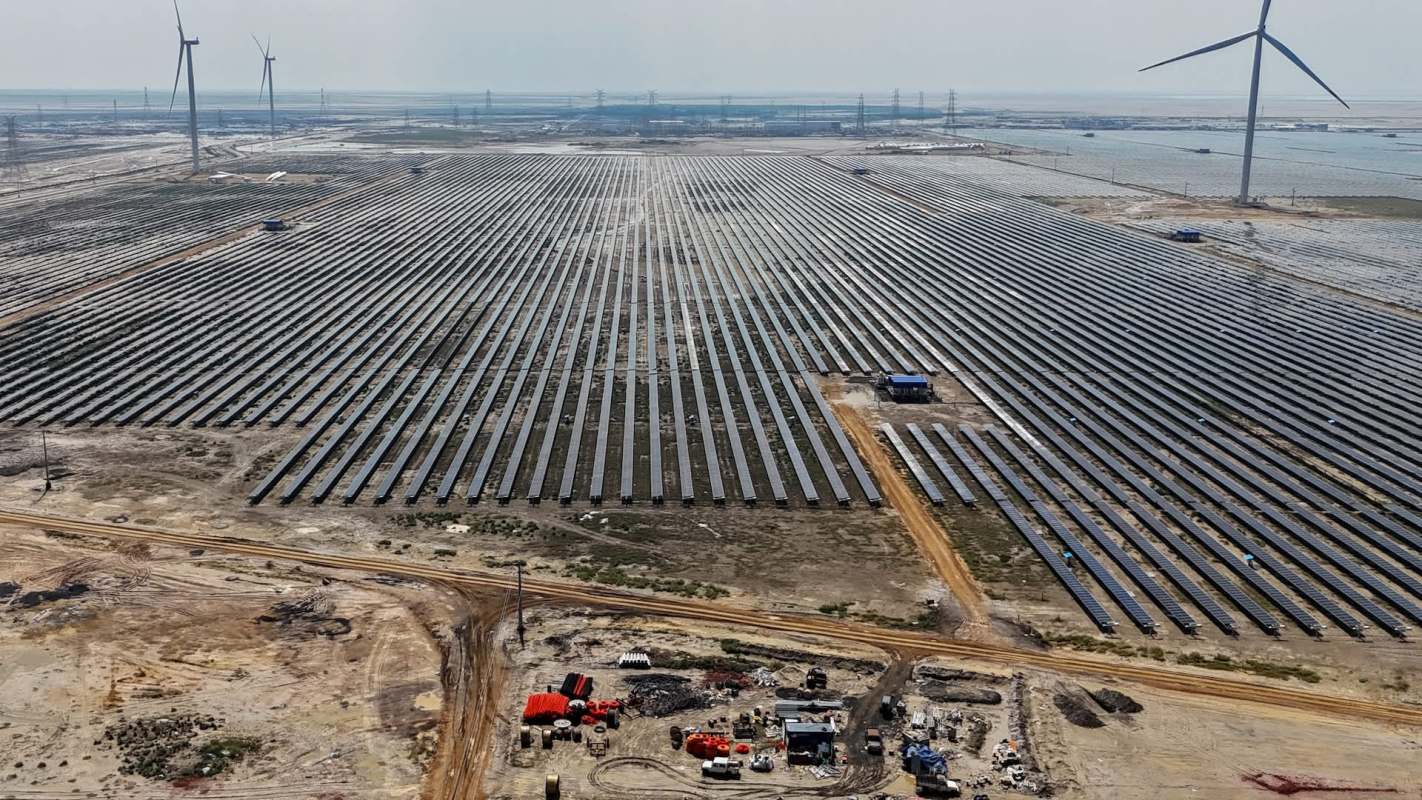
India is building a solar project so massive that it's starting to look like an entirely new kind of landscape — a huge grid of panels stretching across the salt flats of the Rann of Kutch.
By 2029, the site is expected to host nearly 60 million panels across roughly 280 square miles, transforming a remote desert into one of the biggest clean energy hubs on the planet.
What's happening?
The Khavda solar park in western India is on track to become the world's largest solar power project, with a planned capacity of 30 gigawatts. That's roughly 30 times the output of a typical coal or nuclear plant and enough electricity to power a country the size of Austria, according to Yale Environment 360.
India's installed solar capacity has been rising about 40% a year, topped 150 gigawatts in March, and could double again by 2030.
Analysts say India may become the first major economy to industrialize mainly on solar power instead of relying first on coal, oil, or gas. As Ember's Kingsmill Bond put it, "China built on coal; India is building on sun."
Khavda, which is being led by the Adani Group, had reached 9.4 gigawatts by April, and the site uses robots to clear salt and dust from the panels at night without using valuable freshwater.
TCD Picks » Quince Spotlight
💡These best-sellers from Quince deliver affordable, sustainable luxury for all




Why does it matter?
Energy demand there is rising quickly. If most of that growth were powered by coal, it would mean more climate pollution, more dangerous air, and higher health costs in a country that already deals with severe urban smog.
Solar offers a different path: cheaper electricity, less dependence on imported fuels, and cleaner air for millions of people, along with lower power costs over time for households, improved grid access, and support for cleaner transportation.
India is already electrifying major parts of daily life. Its rail network has been almost fully electrified over the past decade, and electric rickshaws now account for around 60% of new sales, cutting fuel costs and tailpipe pollution in crowded cities.
There are still major challenges. Coal remains dominant, the grid still can't move all the solar power where it's needed, and huge projects can threaten wildlife habitat near the India-Pakistan border.
What's being done?
India is investing heavily to make all of that solar power more useful. The government has set aside more than $100 billion for transmission expansion through "Green Energy Corridors" meant to carry electricity from sunny western regions to population and industrial centers.
Storage is also getting a major push. New pumped-storage hydro projects and cheaper batteries are helping solar supply power after sunset, and the government now requires new solar farms to include battery storage. At Khavda, Adani is assembling a battery system able to send more than a gigawatt to the grid for three hours each evening.
"The question is no longer whether solar can power India's electricity system," said Ember's global electricity analyst, Kostantsa Rangelova, "but how quickly it can scale."

Get TCD's free newsletters for easy tips, smart advice, and a chance to earn $5,000 toward home upgrades. To see more stories like this one, change your Google preferences here.






