


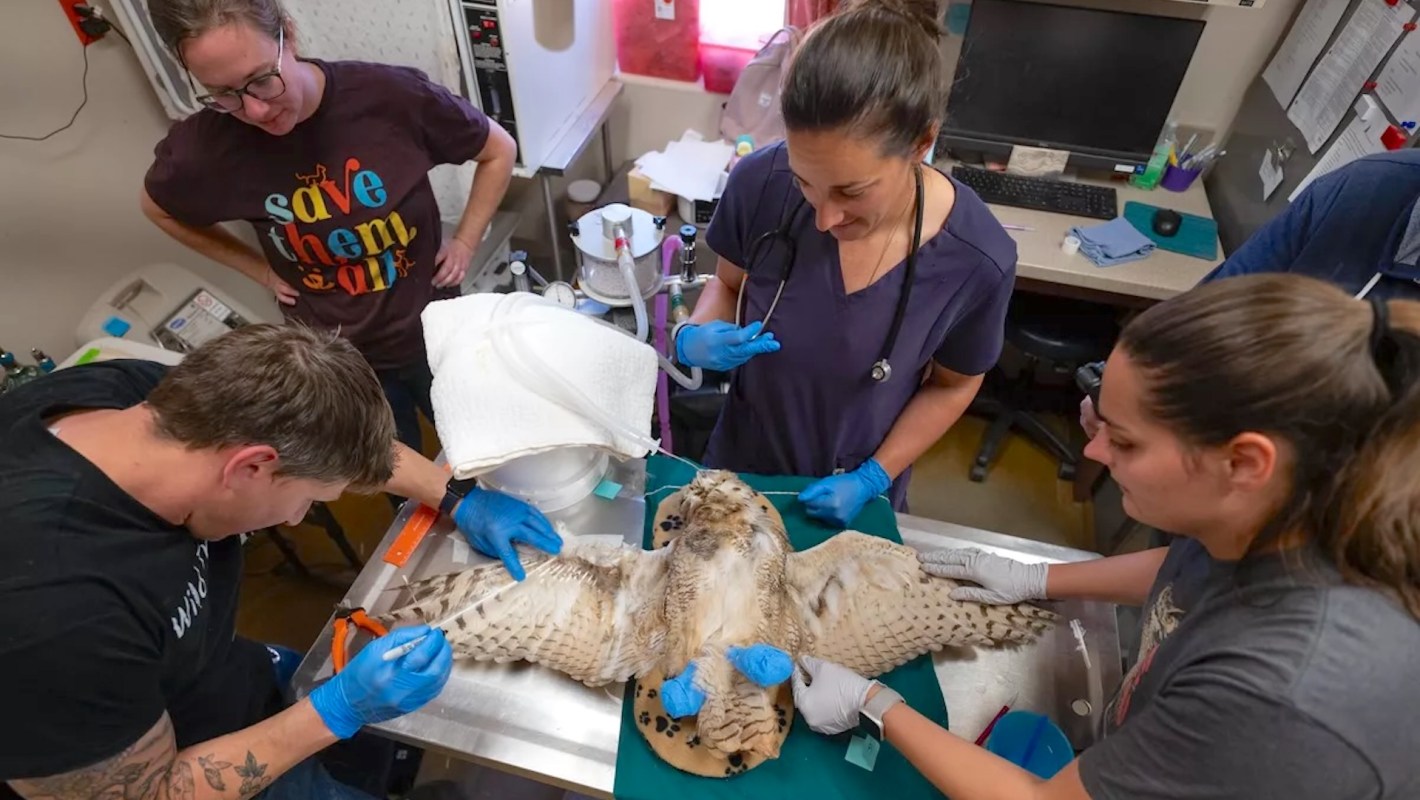
A baby great horned owl in Utah is back in the wild after surviving an ordeal that left its body coated in hardened concrete and a wing too damaged for silent flight.
Its recovery took days of cleaning, months of waiting, and an imping procedure that gave it a second chance, The Washington Post reported.
In fall, wildlife rehabilitator Bart Richwalski received a call about a young owl that had somehow ended up inside a truck-mounted concrete mixer at a resort in Ivins.
Construction workers found the bird after it fell out of the concrete while work was underway on an underground parking garage, per the Post.
Richwalski drove about 80 miles to retrieve the owl and bring it to Best Friends Animal Society in Kanab.
There, caregivers carefully removed dried concrete from the bird's face, chest, and right wing using tools such as forceps, toothbrushes, and dish soap, the Post noted.
TCD Picks » Quince Spotlight
💡These best-sellers from Quince deliver affordable, sustainable luxury for all




The most serious problem emerged later. About a dozen feathers on the owl's right wing had been badly frayed by the concrete, causing a noticeable whooshing sound when it flew.
For a great horned owl, silent flight is essential for hunting and survival, meaning rescuers could not safely release it in that condition, the newspaper described.
Staff waited through the spring in hopes that the owl would molt and naturally replace the damaged feathers.
When that didn't happen, they decided to try imping, a highly precise feather-repair procedure.
On May 1, they replaced 11 feathers with feathers from another great horned owl, according to the Post.
After a 90-minute operation, the owl flew in an aviary without triggering a noise meter and was released later that day.
The owl made it through the concrete accident, but the damage to its flight feathers threatened its ability to hunt, avoid danger, and live independently.
This young owl spent roughly half its life in captivity while experts worked to give it a chance outdoors.
Best Friends Animal Society staff did not stop after removing the concrete. When the owl failed to molt by March, they learned to imp, a technique that requires each replacement feather to match the damaged one in size, placement, and color, the Post reported.
During the procedure, caregivers cut and fitted 10 primary feathers and one secondary feather before gluing them into place.
The team then tested the result using a portable sound meter capable of detecting noise as low as 30 decibels.
"He spent, so far, half his life here in captivity, unfortunately," Richwalski said. "So I hope the rest of his life is truly wild."

Get TCD's free newsletters for easy tips, smart advice, and a chance to earn $5,000 toward home upgrades. To see more stories like this one, change your Google preferences here.







