


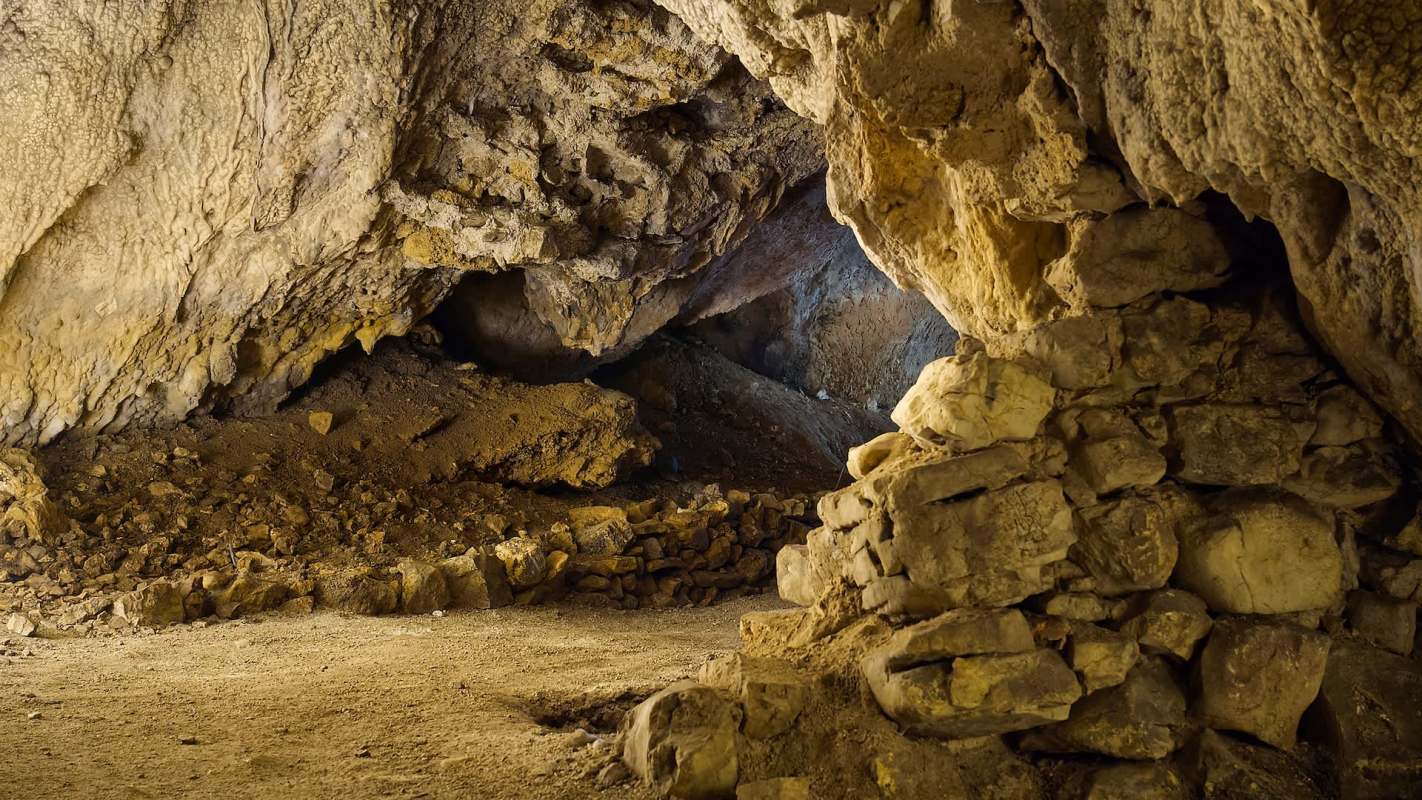
A Greek theater mask over 2,000 years old surfaced inside a cave on Croatia's Pelješac peninsula, offering archaeologists a new clue from a site already marked by centuries of human activity.
As Arkeonews reported, the discovery added to the history of Crno Jezero Cave, which has served at different times as a shelter, burial place, and sanctuary.
What's happening?
Archaeologists from the Archaeological Museum of Dubrovnik Museums found the artifact during excavations in the cave from April 23 to May 4, per Arkeonews. They believe the object is a hollow terra cotta head showing a Greek theatrical mask and dates to the fourth or third century B.C.
The mask has a hole at the top, suggesting it was likely suspended rather than used as an everyday household item, Arkeonews noted. This points to a ritual or symbolic purpose rather than ordinary domestic use.
The cave had already been shown to have a long and complex history, as Arkeonews described. Research from 2025 found that different parts of the cave were used from the Bronze Age to the Iron Age.
During the Bronze Age, the cave seems to have been used as a temporary habitation or refuge. Later, it became a burial site, with radiocarbon analysis indicating that this funerary phase ran from about 1012 to 481 B.C., according to Arkeonews.
TCD Picks » Quince Spotlight
💡These best-sellers from Quince deliver affordable, sustainable luxury for all




After that, finds indicate the cave served as an Illyrian sanctuary from the late fourth century to the mid-first century B.C., with miniature vessels including amphorae, bowls, and kantharoi discovered there.
Why does it matter?
The mask links the cave to a wider ancient religious and cultural world.
In Greek society, theatrical masks were associated with performance, ritual, and the cult of Dionysus, the god linked to theater, wine, ecstasy, and transformation.
That does not mean the cave was dedicated to Dionysus alone. But the find raises the possibility that the sanctuary was tied to Dionysus, an Illyrian counterpart of that god, or a local deity whose cult took on Greek features over time.
Discoveries such as this can explain how ideas, trade, and religious practices moved among communities across the ancient Mediterranean. The artifact suggests the cave was part of a larger network of exchange and belief.
Domagoj Perkić, head of the Archaeological Museum and leader of the research, told Arkeonews many sanctuary-related finds turned up by the entrance and in a side area of the cave that had stayed sealed off and largely concealed before excavation.
That protected setting appears to have preserved materials that might otherwise have been destroyed by weathering, disturbance, or reuse.
What's being done?
Arkeonews reported the broader effort also includes scientific testing such as radiocarbon analysis, which helped establish the timeline for the cave's burial phase. Combined with artifact study, that work is clarifying life and ritual in the region over many centuries.
Crno Jezero is among the three known Illyrian sanctuaries in the wider Dubrovnik area. The theater mask adds evidence that this cave once held a special ritual role shaped by both local traditions and Greek influence.

Get TCD's free newsletters for easy tips, smart advice, and a chance to earn $5,000 toward home upgrades. To see more stories like this one, change your Google preferences here.






