


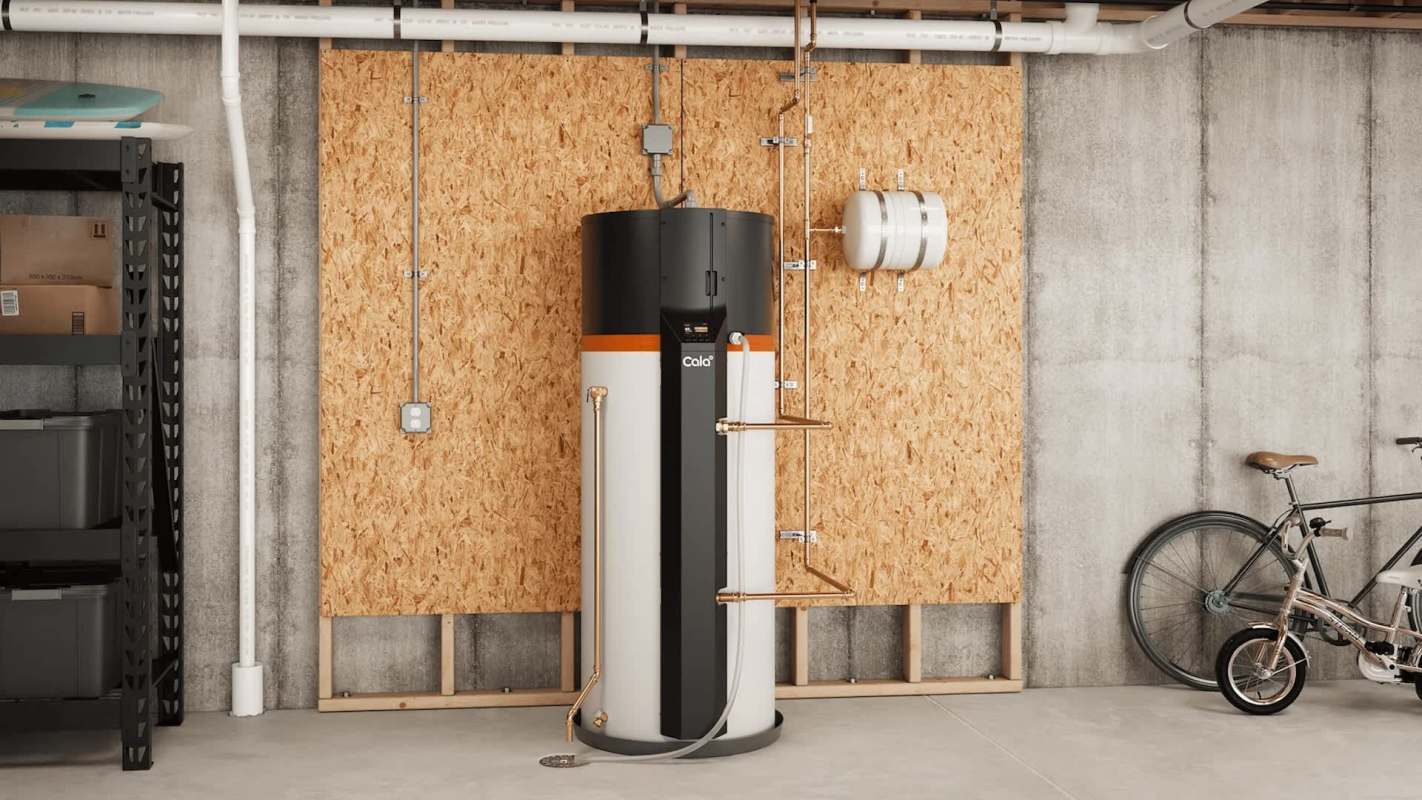
A new generation of heat pump water heaters is adding smart features that could help homeowners reduce energy use and utility costs.
As demand for efficient electric appliances grows, Cala — the startup behind the high-tech water heaters — is entering a market that has expanded rapidly in just a few years, with heat pump water heaters increasingly pitched as both money-saving home upgrades and a form of built-in energy storage.
CleanTechnica reported that Cala launched its heat pump water heater late last year, becoming one of the first startups to enter a space that had been dominated by major legacy manufacturers.
Earlier this decade, only a few manufacturers made heat pump water heaters — today, 13 brands offer them, with more on the way.
Cala's pitch is that its water heater doesn't just heat water efficiently — it learns how a household uses hot water and adjusts accordingly. The system uses predictive software paired with a flow sensor, variable-speed compressor, and integrated mixing valve to determine when to heat water, how quickly to heat it, and how hot the tank should be.
That means it can account for a home's hot-water routines, electricity prices, solar production, and even times when the homeowner wants the unit to run more quietly.
Cala CEO Michael Rigney told CleanTechnica that the first thing to do before building a startup is "convince yourself it's a bad idea" — because if it still makes sense after that, it may be worth the years of effort required to build it.
After years of work and research, Cala's unit has officially launched with a listed price of $2,999. CleanTechnica places it toward the higher end of the heat pump water heater market, but the potential savings of the high-tech model could pay for itself in reduced energy costs.
Save $10,000 on solar panels without even sharing your phone number Want to go solar but not sure who to trust? EnergySage has your back with free and transparent quotes from fully vetted providers in your area. To get started, just answer a few questions about your home — no phone number required. Within a day or two, EnergySage will email you the best options for your needs, and their expert advisers can help you compare quotes and pick a winner. Solar panels can save you more than $50k over their 25-year lifespan, and EnergySage can help you save as much as $10k on installation. Which begs the question — isn't that worth an email or two? |

Water heating is a major chunk of household energy use, so making it more efficient can lower bills and reduce pollution. Heat pump water heaters can replace fossil-fuel-powered systems and use far less electricity than standard electric water heaters.
If more U.S. homes switch to heat pump models, the savings could add up quickly.
There's another advantage, too: A hot water tank can act like a thermal battery. Heating water when electricity is cheaper or when rooftop solar is producing excess power can help households shift energy use away from more expensive times of day, CleanTechnica noted.
In practical terms, that could mean lower utility bills, better use of home solar, and less strain on the grid during peak demand periods.
Cala estimates that homeowners who ditch a conventional electric resistance unit for its next-gen alternative could save nearly $10,000 in energy costs over 10 years, depending on their situation.
More broadly, the heat pump water heater market itself is growing fast, giving homeowners more options than they had just a few years ago.
For people interested in making the switch, connect with Cala to see how much you can save by swapping out your older unit for a next-gen model.

Get TCD's free newsletters for easy tips, smart advice, and a chance to earn $5,000 toward home upgrades. To see more stories like this one, change your Google preferences here.






