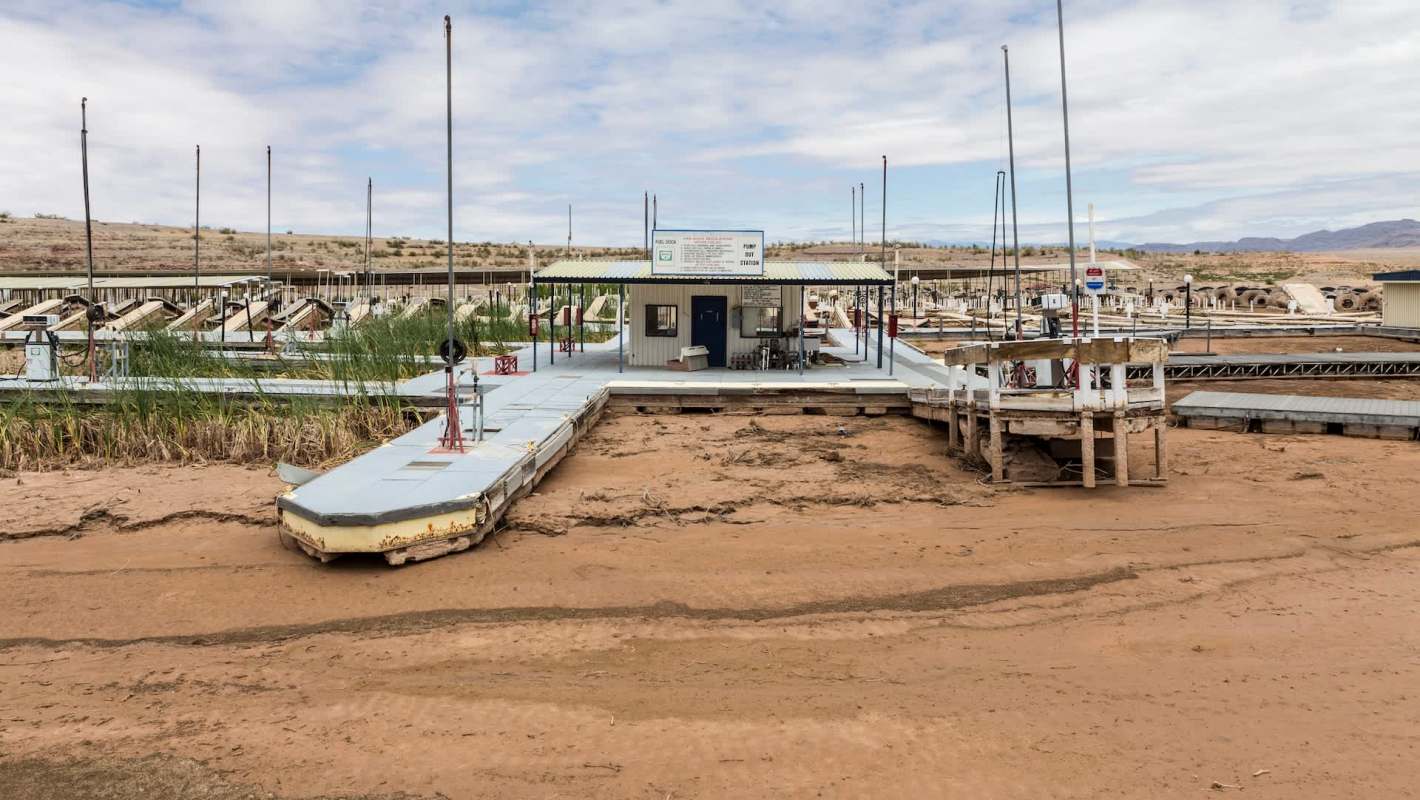
Lake Mead may be on track to reach an even lower level than in 2022, when receding water exposed long-hidden boats and human remains.
According to EarthSky, a new federal forecast said the reservoir could fall another 20 feet below that level by July 2027.
Figures in the U.S. Bureau of Reclamation's May 2026 report show Lake Mead may reach 1,020 feet above sea level by July 2027. That would put it about 20 feet under the 1,040-foot level recorded in July 2022.
Lake Mead sits at about 1,052 feet — already under the lake's recent range of around 1,060 to 1,070 feet. The reservoir is considered full at 1,229 feet, a height it has not hit since 1983.
Lake Mead, the country's largest reservoir by capacity, is held back by Hoover Dam and supplies water to communities in Nevada, Arizona, California, and parts of Mexico.
Conditions farther up the Colorado River basin are especially dry this year, and Lake Mead and Lake Powell together serve as linked storage for the river system, holding about 80% of its water.
TCD Picks » Good Store Spotlight
Get 10% off your next purchase with code TCD10




The Colorado River system supports drinking water, farming, and electricity generation for more than 40 million people.
Low reservoir levels also weaken hydropower output at major dams. Federal water managers have already adjusted operations so upstream releases from Lake Powell will be reduced to help preserve electricity production at Glen Canyon Dam.
Worsening extreme weather disasters, such as prolonged drought, can endanger lives and livelihoods by straining water supplies, raising utility and food costs, and increasing pressure on public infrastructure.
Las Vegas takes water straight from Lake Mead, San Diego gets about three-quarters of its supply from the Colorado River, and Phoenix gets roughly 40% of its supply from the river.
TCD Picks » Quince Spotlight
💡These best-sellers from Quince deliver affordable, sustainable luxury for all




Officials and local utilities are not treating this as a surprise. Western cities have spent years preparing for drier conditions through conservation programs, infrastructure upgrades, and planning to stretch existing supplies.
Phoenix said in April that per-person water use has fallen over the past several decades, even as the city has grown. That kind of efficiency push — from leak reduction to conservation incentives — has become a key tool for making limited river water go further.
At the federal level, managers are also making operating changes across the Colorado River system to preserve critical functions, including hydropower. Those decisions do not solve the underlying drought, but they can help reduce near-term risks as reservoirs continue to fall.

Get TCD's free newsletters for easy tips, smart advice, and a chance to earn $5,000 toward home upgrades. To see more stories like this one, change your Google preferences here.