


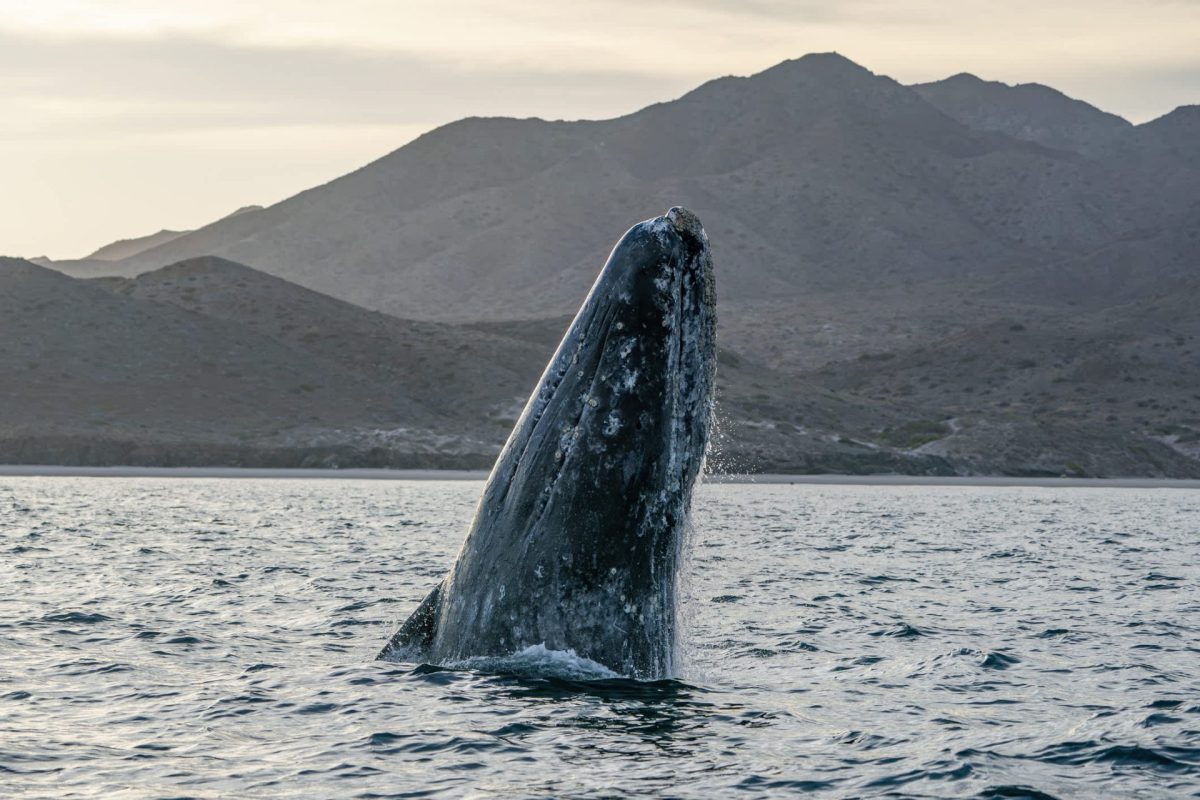
Gray whales have long been one of the most recognizable marine mammals along the West Coast, known for undertaking one of the longest migrations of any mammal on Earth.
But this spring, many of them have been washing up dead along Washington's coast. Inside Climate News reported that scientists say it points to a much deeper crisis.
Twenty-two gray whale carcasses have been found in Washington state so far this spring. Many showed signs of starvation, while others appeared to have been badly injured by boat strikes.
Researchers said these strandings are part of a much larger collapse in the eastern North Pacific gray whale population.
According to the National Oceanic and Atmospheric Administration, the population fell from around 27,000 in 2016 to roughly 13,000 last year. Over that same period, annual calf births plunged by 95%, dropping from about 1,600 to just 85.
The trouble appears to start in the Arctic Ocean, where gray whales typically feed on shrimp-like crustaceans found in seafloor sediments. Scientists say climate-driven loss of sea ice is reducing the algae that once helped nourish those prey species, while warmer waters and stronger currents are making conditions even worse.
TCD Picks » Quince Spotlight
💡These best-sellers from Quince deliver affordable, sustainable luxury for all




The current decline has lasted longer than previous cycles monitored over the past 60 years. Gray whales had largely recovered after commercial whaling, but scientists now say Arctic warming is stripping away the blubber reserves the animals need to survive and reproduce.
Coastal communities from California to Washington are seeing more whales wash ashore, in harbors, and along waterways.
Researchers also say that malnourished whales are more likely to lose their bearings, get entangled in fishing gear, or be struck by ships. Climate disruption is colliding with existing human pressures in ways that make recovery even harder.
Changes there can ripple through food webs, coastlines, and communities far to the south.
Scientists at Cascadia Research Collective, Oregon State University, and NOAA have been tracking the population decline, monitoring strandings, and studying how Arctic food webs are changing. Their research links sea-ice loss, prey quality, whale starvation, and falling birth rates.
Some gray whales are also changing their behavior in response. Instead of continuing south to breeding grounds in Mexico, growing numbers are turning into Puget Sound in search of food. A small group called the "Sounders" has successfully made this detour for decades, according to Inside Climate News, and a few more whales are now beginning to do the same.
"The population is in serious trouble, and this is not part of a normal cycle," said John Calambokidis, a senior research biologist and co-founder of the Cascadia Research Collective in Washington state.
Joshua D. Stewart, an assistant professor at Oregon State University's Marine Mammal Institute, added: "The prey base is extremely sensitive to the warming Arctic and does not seem to be recovering. There is no reason to think this is not a response to climate change."

Get TCD's free newsletters for easy tips, smart advice, and a chance to earn $5,000 toward home upgrades. To see more stories like this one, change your Google preferences here.







