


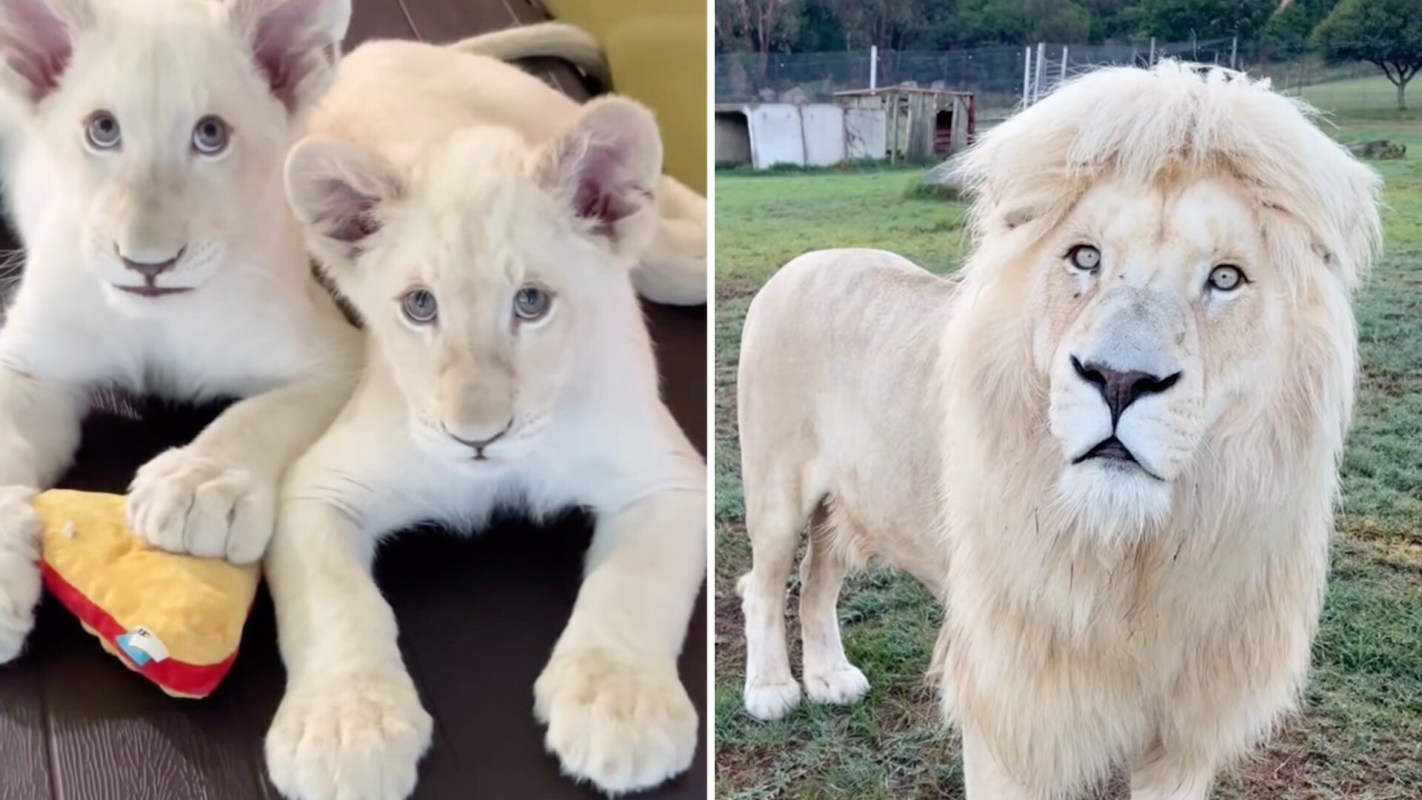
A viral TikTok is giving viewers a closer look at one of nature's rarest big cats, the white lion. What might come as a surprise to viewers is that these striking animals are not actually albinos.
What's Happening?
In a 60-second wildlife explainer, TikTok creator Snugbarn (@snugbarn) highlighted why white lions are so unusual in the wild.
@snugbarn One of the rarest lions on Earth #whitelion #lion #bigcats #wildlife #fypシ゚viral ♬ original sound - Snugbarn
The video explains that white lions' ghostly appearance comes from leucism, a genetic trait that lessens pigmentation rather than eliminating it. That means their pale coats come from a different genetic condition entirely. For many people, that makes an already mythical-looking animal even more fascinating.
That distinction matters because albino animals typically have pinkish eyes and noses, while white lions can still have more typical coloring in those features. As cubs, their pale fur and bright eyes make them look especially distinct from other lions.
The video also points out that sightings of white lions in nature are extremely uncommon and largely tied to one part of South Africa. Even as they mature into massive adults, with males growing heavy bodies and impressive manes, their coloring continues to set them apart in a way that makes a wild sighting feel almost unreal.
Why Does It Matter?
The clip resonates because it clears up a common misconception about a fascinating animal. Many people see a white lion and assume albinism, but understanding leucism helps explain both the animal's appearance and some of the challenges it may face in the wild.
TCD Picks » Quince Spotlight
💡These best-sellers from Quince deliver affordable, sustainable luxury for all




Unlike the tawny coats of most lions, white fur may not blend as easily into dry grasslands. That means the very feature that makes white lions so captivating to people could be a disadvantage when it comes to stalking prey or staying concealed in certain environments.
It also matters because white lions are so rarely seen in nature. When social media surfaces animals like this, it can spark broader interest in biodiversity and in the unusual genetic traits that sometimes appear in wild populations.
That can spark interest in citizen science and platforms like iNaturalist. Citizen scientists have a role to play in sharing sightings of rare creatures and aiding conservationists in helping uncover more of nature's mysteries.
What Can I Do?
Videos like Snugbarn's help improve public understanding of animals that are already rare enough to inspire confusion.
Viewers can also use viral wildlife posts as a starting point for deeper learning or their own exploration. Short videos can introduce a topic, but they rarely tell the whole story. Looking for the science behind terms such as leucism can make those clips more meaningful and help separate spectacle from fact.
If rare-animal content grabs your attention, keep following creators and educational accounts that focus on wildlife in a respectful, informative way.
Of course, if you are lucky enough to spot a rare creature, don't hesitate to share it online. You might even end up being listed as a co-author in a research study.

Get TCD's free newsletters for easy tips, smart advice, and a chance to earn $5,000 toward home upgrades. To see more stories like this one, change your Google preferences here.







