


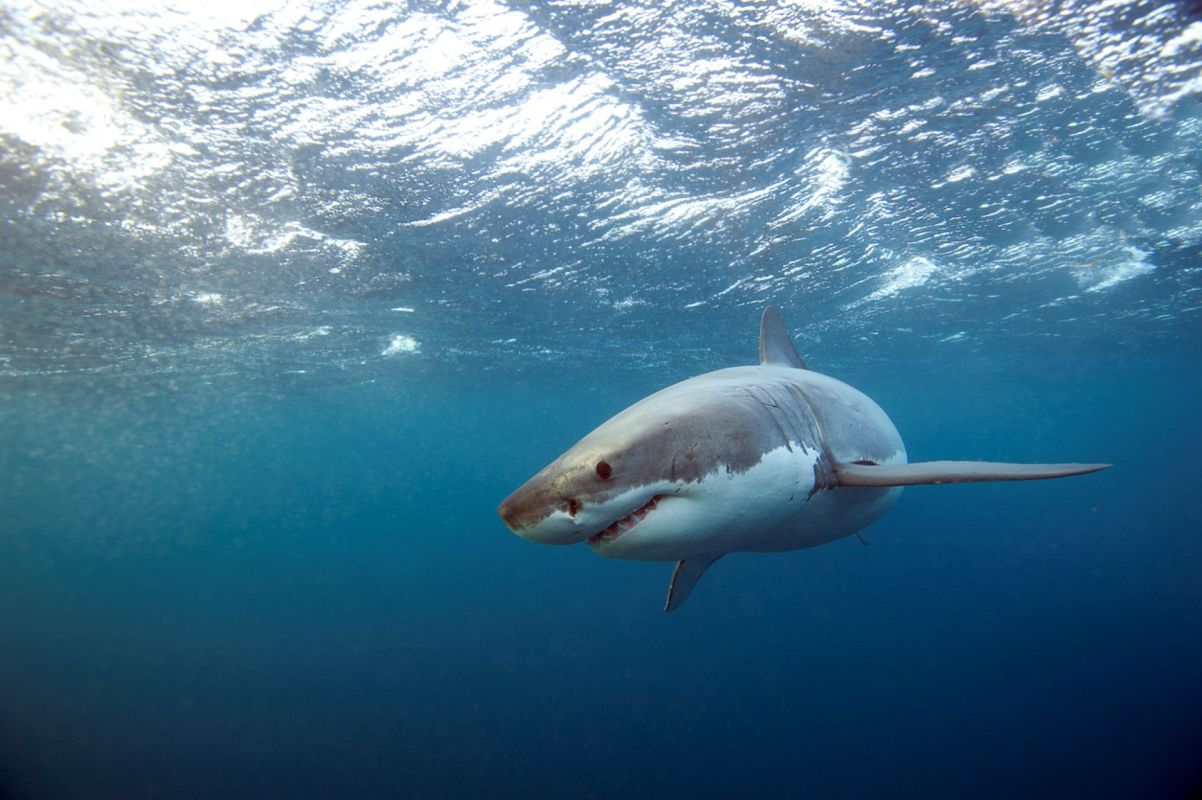
White sharks are known for seasonal migrations that can span thousands of miles, but one tagged shark named Goodall is taking a route researchers did not expect.
The adult female has logged roughly 6,000 miles since last fall, and instead of following a more typical seasonal path north, she is now cruising through the Bahamas, Fox Weather reported.
She is now in the Northwest Providence Channel off Grand Bahama Island, offering a fresh reminder that even well-studied migrations can surprise scientists.
Goodall was tagged off Nova Scotia in September 2025 by a Tancook Islands Marine Field Station team working with OCEARCH, a nonprofit that tracks sharks, whales, sea turtles, and other marine animals.
Since then, OCEARCH has followed her as she traveled from Canada to Florida's Gulf Coast, then back around into the Atlantic before arriving in the Bahamas. At the time she was tagged, Goodall measured just over 13 feet and weighed nearly 1,400 pounds.
Her current location is notable because white sharks typically begin moving north in summer toward cooler water. OCEARCH scientist John Tyminski said Goodall's path is "a bit unusual," adding that the only other OCEARCH-tagged white shark known to make a similar Bahamas detour was Breton in 2022.
TCD Picks » Quince Spotlight
💡These best-sellers from Quince deliver affordable, sustainable luxury for all




Tyminski said the route could be tied to environmental conditions, prey availability, or both. Deep-water channels such as the Northwest Providence Channel can act as migration corridors for large marine animals, and for an opportunistic predator like a white shark, a change in food sources can mean a change in travel plans.
A shark appearing in an unexpected place can be a sign that ocean conditions are shifting in ways that affect wildlife and people alike.
Researchers did not pin Goodall's movement on any single cause, but the possibilities they mentioned can be influenced by human activity.
Warmer oceans, changing currents, and pressure on fish populations can alter where prey species gather, which may reshape where large predators go.
Goodall is one of more than 400 ocean animals visible on the group's free Global Shark Tracker app.
This kind of tracking helps scientists spot unusual patterns earlier, compare routes across years, and study how environmental changes may be influencing animal behavior.
It also provides wildlife managers and the public with better information without requiring constant close contact with the animals themselves.
Goodall, who was named in honor of Dr. Jane Goodall, is also a reminder that ocean research often depends on long-term monitoring. As Tyminski put it: "White shark migration is not always linear or predictable."

Get TCD's free newsletters for easy tips, smart advice, and a chance to earn $5,000 toward home upgrades. To see more stories like this one, change your Google preferences here.






