


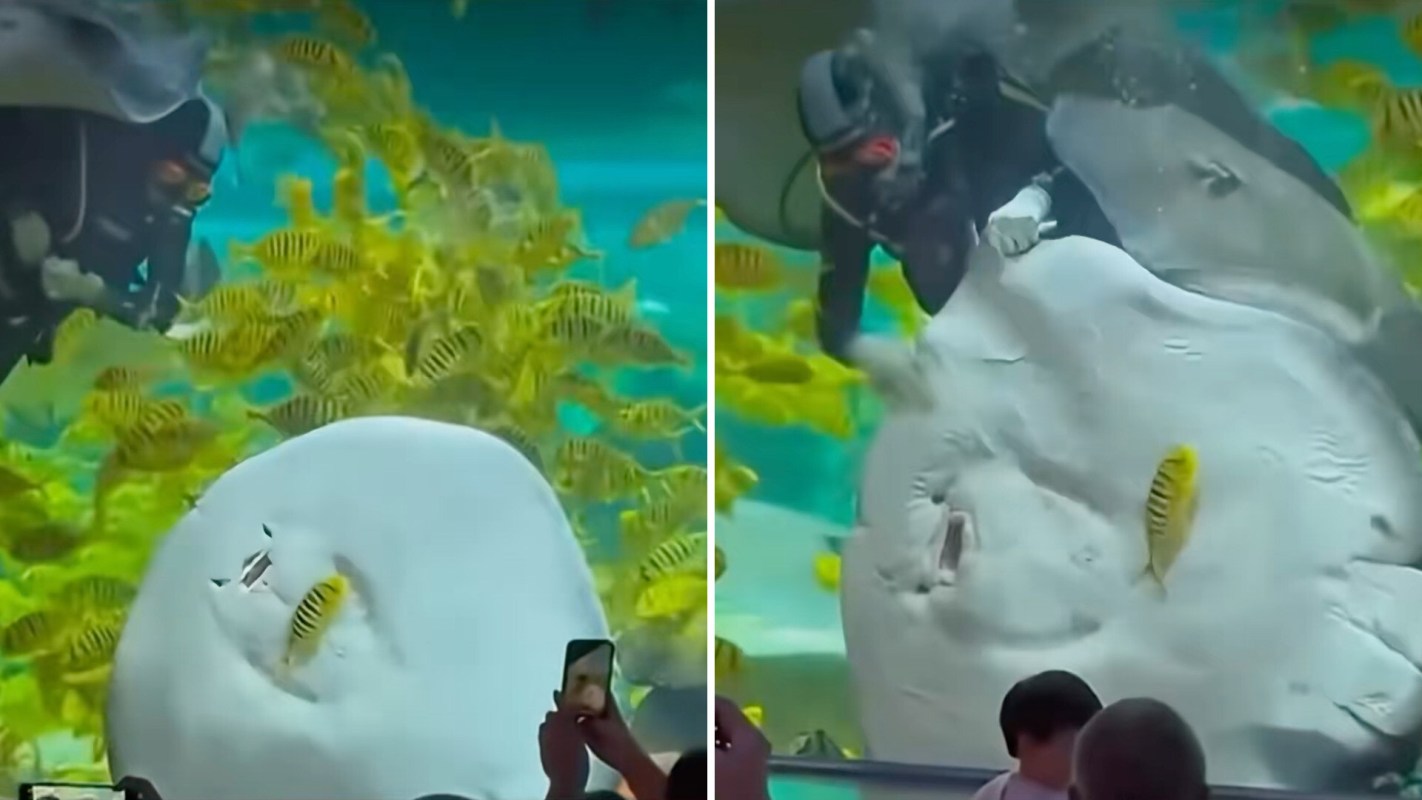
A stingray in an aquarium is drawing attention online after a TikTok video captured the animal using the tank's glass like a hunting tool.
The clip is a sharp reminder that even creatures many people see as calm or passive can be highly effective predators.
In the short video posted by creator WorldOfWater (@worldofwater5), a stingray traps a fish against the glass wall of an aquarium, flattening its body around the prey so it cannot escape.
@worldofwater5 This stingray turned the glass into a trap 😳 #Stingray #OceanLife #Nature #Wildlife #Aquarium ♬ original sound - WorldOfWater
The creator explains in the narration that the behavior is not as unusual as it may look. While the glass makes the ambush easier to see, the stingray is using a tactic similar to one it would use in the wild by trapping prey between its body and a hard surface, such as the ocean floor in shallow water.
The moment looks especially dramatic because the tank wall gives the animal a firm barrier to work with. A worker in the video also appears to struggle to pull the stingray away once it seals itself around the fish.
The video, which has been liked nearly 3,000 times, challenges a common misconception. As the narrator says, many people think stingrays "just float around and never really do much," when in reality they are active hunters capable of strategic ambushes.
TCD Picks » Quince Spotlight
💡These best-sellers from Quince deliver affordable, sustainable luxury for all




That matters because short wildlife clips often shape how people understand animals. In this case, the footage offers a close-up look at predator-prey behavior that would be much harder to observe in the ocean.
At the same time, the clip touches on a broader conversation about aquarium captivity. When dramatic behavior unfolds in a tank, viewers may wonder whether they are seeing a natural feeding strategy, stress, or some combination of both.
Nature is often more complex — and more intense — than it appears.
If you're interested in wildlife conservation, it's a good practice to treat viral animal videos as a starting point for learning, not as the whole story. A single clip can capture real behavior, but it does not always show the full context of an animal's health, environment, or care.
If you visit aquariums, asking staff questions about how species hunt, eat, and interact with their surroundings can help separate normal behavior from signs of distress.
It also helps to support facilities that are transparent about animal welfare, feeding practices, and habitat design.

Get TCD's free newsletters for easy tips, smart advice, and a chance to earn $5,000 toward home upgrades. To see more stories like this one, change your Google preferences here.







