


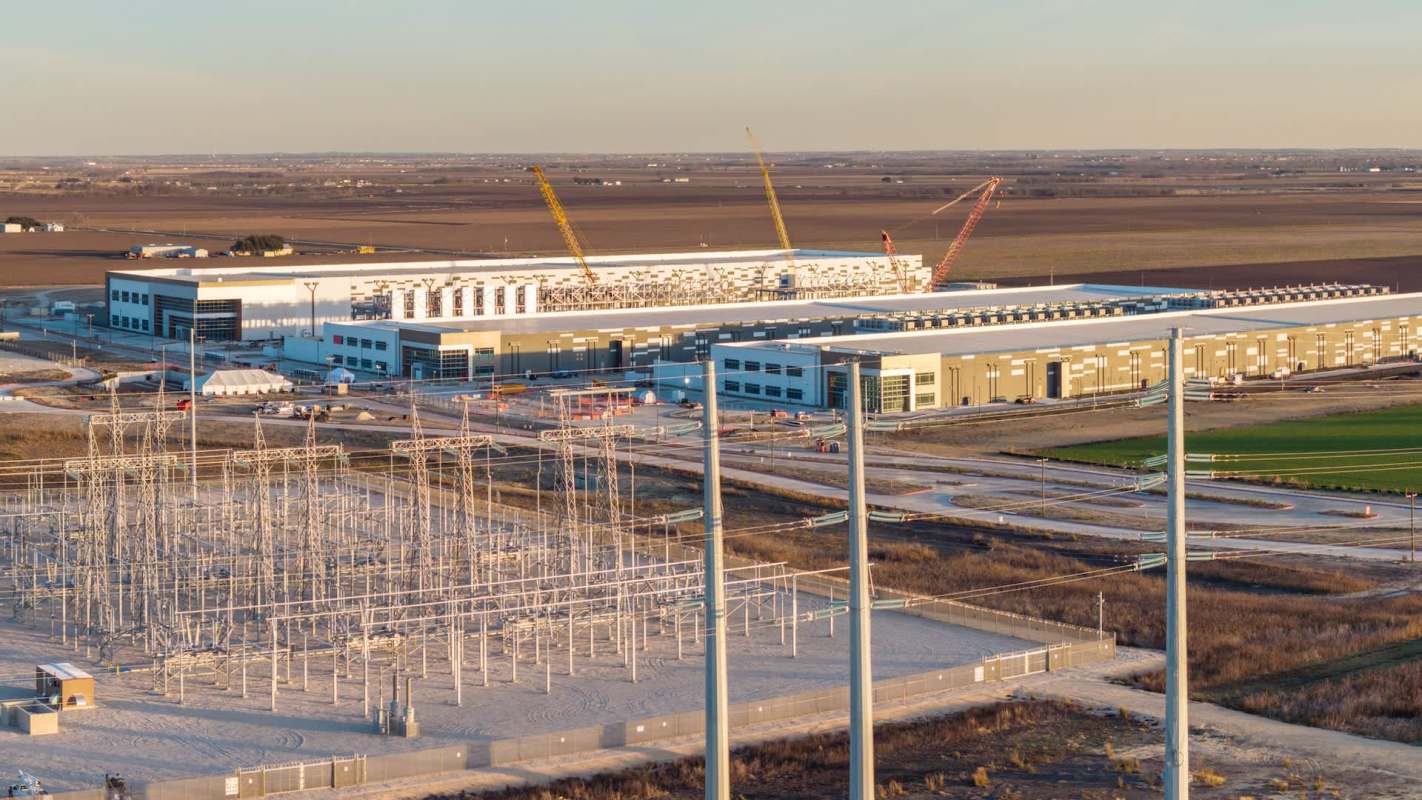
Wyoming officials are evaluating a strange new claim of the artificial intelligence boom: Data centers that could demand staggering amounts of electricity may at least not use nearly as much water as many residents fear.
At a recent legislative hearing, developers told lawmakers that newer cooling systems can keep water use surprisingly low even as giant computing campuses spread across the state, WyoFile reported.
Representatives for Microsoft and Prometheus Hyperscale told Wyoming's Select Water Committee that planned data centers are increasingly designed around closed-loop cooling systems, direct-chip cooling, and even geothermal approaches that avoid constantly evaporating water.
Wyoming is attracting enormous interest from data center operators. According to estimates discussed at the hearing and reported by WyoFile, Microsoft and Prometheus together could end up needing electricity equal to more than twice Wyoming's current consumption.
Cheyenne already hosts 13 large data centers, including Microsoft facilities that date back to 2012. More campuses are planned in and around the city, while companies such as OpenAI, Meta, and Crusoe are also tied to projects in the region.
Prometheus CEO Trenton Thornock told lawmakers that the scale of these projects leaves little choice but to use advanced cooling technology. "It just so happens that [Prometheus Hyperscale's technology] doesn't consume water on a continuous basis," he said.
TCD Picks » Quince Spotlight
💡These best-sellers from Quince deliver affordable, sustainable luxury for all




Water worries have become a flashpoint in communities across the country as AI-related development accelerates. Some places are even considering pauses or bans on new data centers until officials have better information about their water demand and broader environmental impact.
In Cheyenne, Mayor Patrick Collins said the city's current data center footprint uses roughly 200 acre-feet of water a year — about 1.48% of total local consumption, according to WyoFile. He said that even if all planned projects move forward, total consumption could rise to roughly 400 acre-feet annually — around 3% of current use and still below the city's available supply.
The bigger pressure point may be electricity. AI depends on huge volumes of computing power, which frequently ties the technology directly to the energy grid. That connection cuts both ways: AI can help utilities forecast demand, manage renewables, and optimize cleaner energy systems, but it can also drive up power needs, require new generation, raise concerns about customer bills, and create additional risks tied to security, misuse, and rapid infrastructure expansion.
Residents and advocates say that uncertainty is exactly why caution matters. They worry not just about server cooling but also about the water needed to support whatever new power plants or grid upgrades these campuses require.
Cheyenne says it has already started building guardrails. According to WyoFile, Collins told lawmakers that the city worked with the state and Cheyenne Light, Fuel and Power to establish a separate electric tariff for data centers, so average customers are not stuck subsidizing the new demand.
Local officials have also used zoning and planning rules to address light pollution, noise, and growth concerns. Collins argued that the industry has brought high-paying jobs and economic activity without overburdening city services.
Still, some state leaders and residents want stronger oversight before more deals move ahead. Wyoming Outdoor Council Government Relations Manager Auna Kaufmann said that many smaller communities may lack the resources to assess those impacts on their own, per WyoFile.
For now, the Select Water Committee left the issue without legislative action. Lawmakers are expected to revisit the issue in August as questions continue over water transparency, electricity demand, and how Wyoming should manage the fast-moving AI build-out.
"I want you to know that our expectations of a company will be to do no harm when they come into our community," Collins said.
But Rep. Gary Brown added a note of skepticism. "We don't live in a laboratory," he said. "We live in Wyoming. We live in a state where water is a big issue."

Get TCD's free newsletters for easy tips, smart advice, and a chance to earn $5,000 toward home upgrades. To see more stories like this one, change your Google preferences here.






