


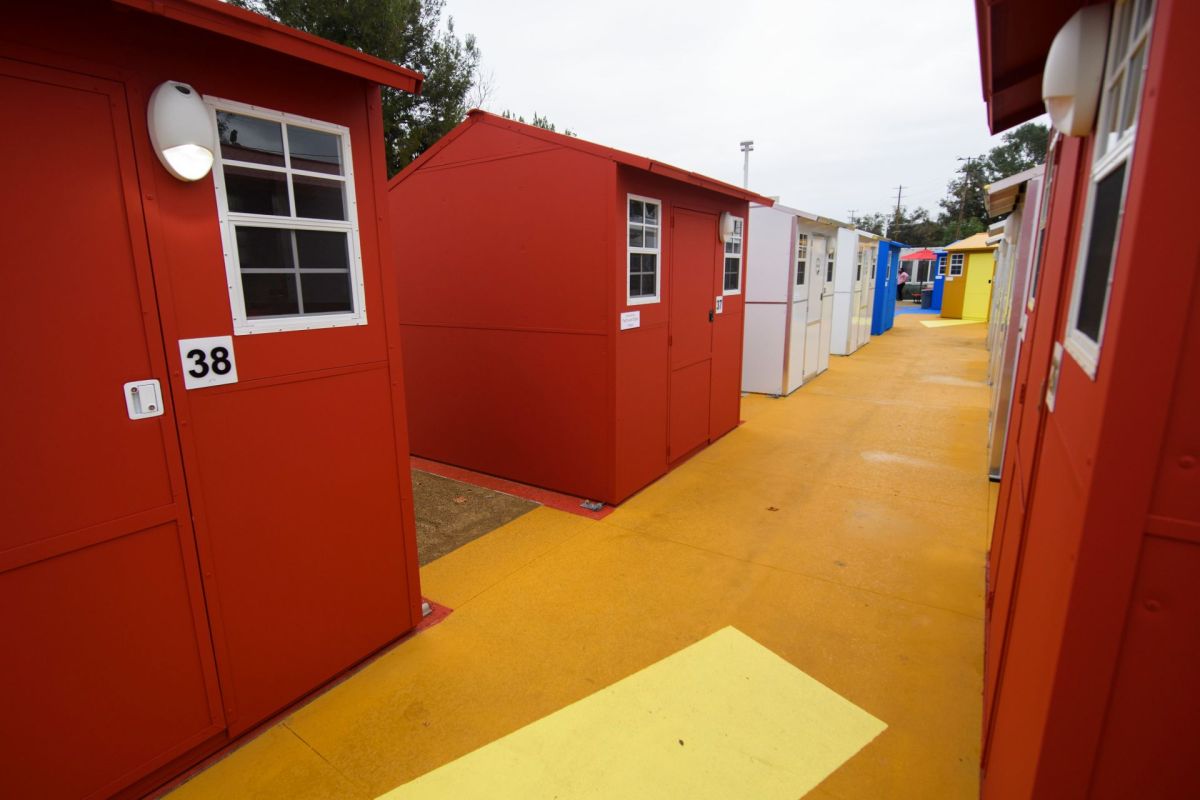
California's long-delayed tiny-home effort may finally be gaining traction in Los Angeles.
According to the New York Post, city leaders recently launched construction on a new East Hollywood development meant to shelter 50 people experiencing homelessness, offering one of the clearest signs yet that California's 2023 push to expand tiny homes is beginning to turn into real housing on the ground.
The project — which drew Los Angeles Mayor Karen Bass and Councilmember Hugo Soto-Martinez to the site — will serve 50 people overall, including 10 beds reserved for transitional-age youth.
That progress is notable because the state's original plan, backed by $33 million from Gov. Gavin Newsom, aimed to create about 1,200 tiny homes statewide but later drew criticism over delays, design problems, and rising costs. The Post said the initial allocation was 500 units for Los Angeles, 350 for Sacramento, 200 for San Jose, and 150 for San Diego before California changed course and began issuing grants so local communities could order the homes directly.
Now, the East Hollywood site is emerging as an example of how that revised approach could help move people indoors more quickly.
The local impact is already visible. Los Angeles recently stepped in at a homeless encampment on nearby Sierra Vista Avenue and brought 20 people indoors. Expanding options such as tiny homes can help cities move more people out of unsafe outdoor conditions and into more stable shelter faster — a meaningful public health benefit for both unhoused residents and the surrounding community.
TCD Picks » Quince Spotlight
💡These best-sellers from Quince deliver affordable, sustainable luxury for all




Tiny homes can also come with environmental benefits. Because they are smaller than conventional housing, they typically require fewer building materials, less land, and less energy to operate. When paired with faster construction methods, they can give cities a way to add urgently needed housing with a lighter footprint. According to the Post, California has also been testing other quicker, lower-impact housing strategies, including modular-home construction and even straw homes.
The timing is especially important. Bass said street homelessness in Los Angeles is down 18% over the past two years, a sign that progress is possible even as funding becomes more constrained. That momentum stands out as support for homelessness programs has dropped sharply, with net funding for Los Angeles decreasing from $6.9 billion in 2022 and 2023 to $1.5 billion in 2025 and 2026.
For communities facing tighter budgets, lower-cost housing solutions are even more important. Faster, smaller homes can help local governments stretch limited dollars further while improving safety, health, and stability for vulnerable residents.
"At a time when funding is being cut at every level of government, the determination and creativity it took from my team and our trusted service providers to break ground on these 51 beds is truly extraordinary," Soto-Martinez said.
According to the Post, the East Hollywood development is being built by Hope the Mission, Built On Site Systems, Lehrer Architects, the Zegar Family Foundation, and the California Department of Housing and Community Development — a partnership that could provide a model for other cities still working to turn tiny-home plans into real places for people to live.

Get TCD's free newsletters for easy tips, smart advice, and a chance to earn $5,000 toward home upgrades. To see more stories like this one, change your Google preferences here.






