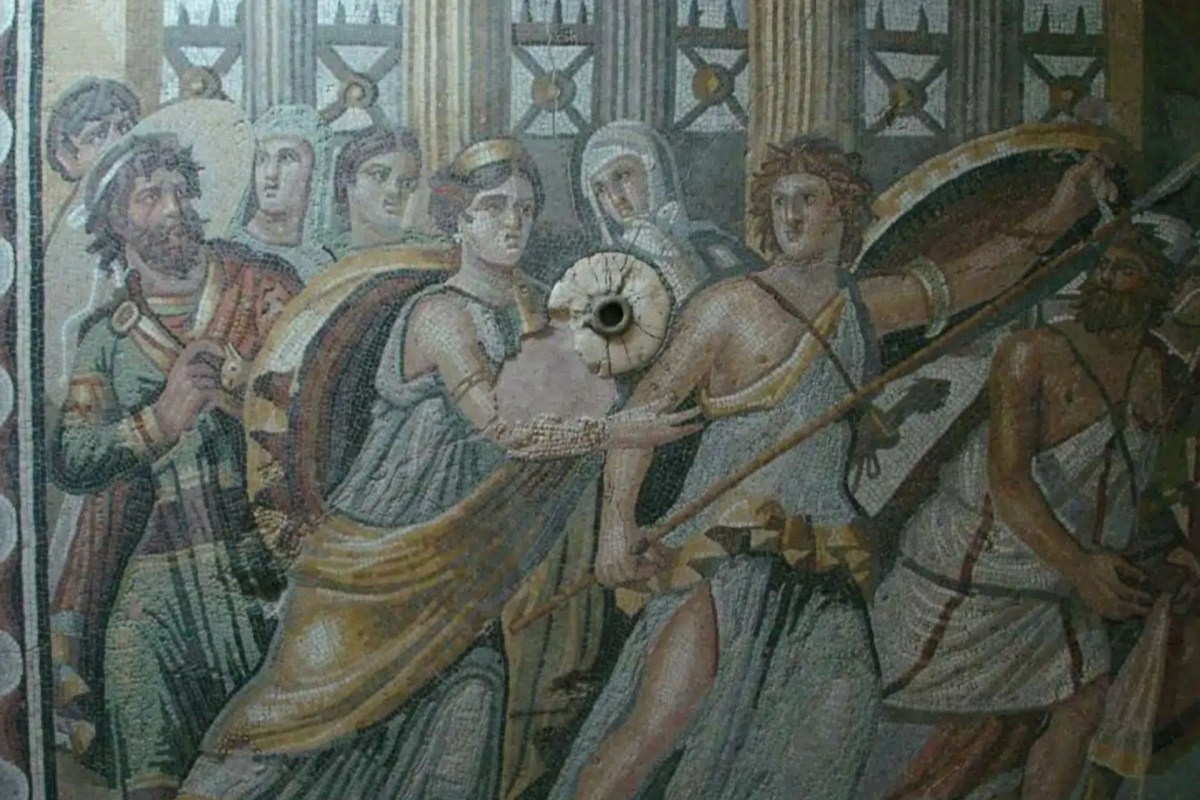
An extraordinary archaeological discovery in southern France is bringing one of antiquity's best-known heroes back into view in vivid color.
Researchers excavating a Roman villa near Narbonne have uncovered a life-size mural of Achilles, the legendary warrior of the Trojan War, according to the Greek Reporter.
Experts say that it ranks among the region's largest classical figural wall paintings.
Even more striking, the painting's pigments remain remarkably bright despite having spent nearly 1,800 years underground.
The Roman-era mural shows Achilles in a warrior's pose, carrying a spear and shield. Archaeologists also identified surrounding imagery linked to the broader mythological cycle of the "Iliad," indicating that the work likely formed part of a much larger and highly sophisticated decorative scheme within the villa.
The significance of the discovery extends beyond the world of classical scholarship.
TCD Picks » EDF Spotlight
💡EDF's Vital Signs newsletter delivers stories about game-changing solutions close to home and around the world



Finds of this kind can make the ancient past feel immediate and accessible, transforming history from an abstract subject into something tangible and deeply human.
Once restored and eventually placed on display, the mural could offer museum visitors, students, and tourists a rare opportunity to see how Roman elites used art to project education, wealth, and cultural identity.
The find is also prompting historians to reconsider long-held assumptions about Roman Gaul. Rather than serving merely as a distant outpost on the empire's edge, the region appears to have functioned as a significant hub of classical learning and artistic activity.
Murals of this size and quality would have demanded expert painters and major patronage, suggesting a prosperous household closely engaged with Greek myth.
TCD Picks » Quince Spotlight
💡These best-sellers from Quince deliver affordable, sustainable luxury for all




From an environmental perspective, the careful conservation of existing cultural sites can also serve as a constructive model. Protecting and studying what is already in the ground encourages communities to value place-based history, while museum-focused and regional heritage tourism can provide a lower-impact means of supporting local economies than large-scale new development.
For now, however, the mural remains extremely fragile. Researchers are working to stabilize the pigments and interpret the surrounding scenes, and conservation is expected to take several years before the mural is likely to be moved to a regional museum.
If restoration proceeds as hoped, this ancient image of Achilles may soon become one of France's most compelling windows into the Roman world, and a vivid reminder that history still has the power to surprise.

Get TCD's free newsletters for easy tips, smart advice, and a chance to earn $5,000 toward home upgrades. To see more stories like this one, change your Google preferences here.