


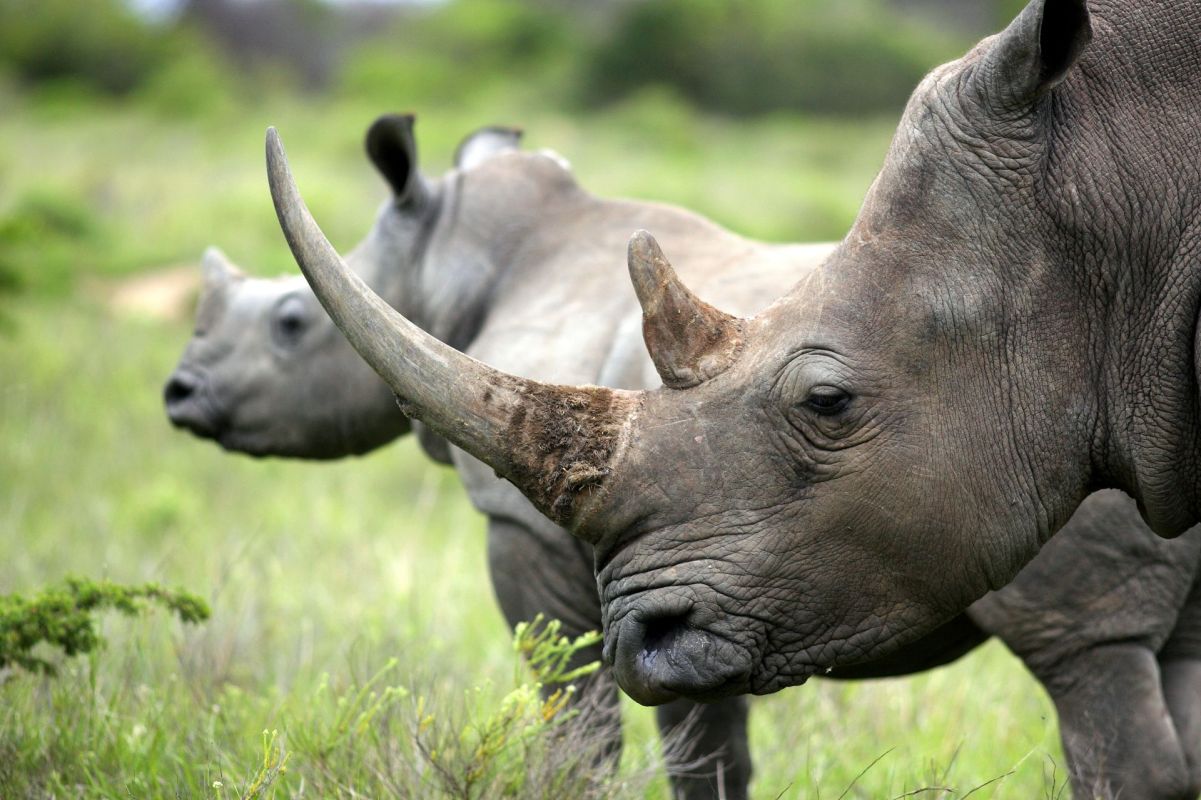
A powerful Instagram post from National Geographic wildlife photographer Beverly Joubert is drawing attention for one unforgettable detail: a rhino mother's enormous horn, held high as she walks beside her calf across an open grassland.
The image is striking on its own, but the story behind it carries an even deeper weight.
Joubert shared the photo for Endangered Species Day, using the moment to reflect on the fragile state of rhinos in Africa.
In her caption, she described photographing rhinos in the wild as "bittersweet," explaining that they were once widespread across Africa before human exploitation sharply reduced their numbers and pushed them into isolated pockets.
The image shows a mother rhino whose horn remains intact, which is increasingly rare, either because poachers target it or because conservationists remove horns to reduce that risk. Beside her, her calf follows in step.
Joubert wrote that the youngster was "learning with every step," underscoring how important a mother is to a calf's survival.
TCD Picks » Quince Spotlight
💡These best-sellers from Quince deliver affordable, sustainable luxury for all




She also linked the photo to "Blood Moon," the book she published with her husband, Dereck Joubert. The project documented a rhino rescue and relocation effort involving military personnel, planes, helicopters, and even private-sector gunboats to move animals away from high-poaching areas and into safer habitats.
Rhinos are more than iconic animals; they help shape the ecosystems around them. As large grazers and browsers, they influence vegetation patterns across savannas and grasslands, which can affect other wildlife sharing those habitats.
When rhino populations collapse, the damage ripples outward.
Joubert's post also highlights a devastating but often overlooked consequence of poaching: calves left without their mothers. Young rhinos depend on that guidance for protection and survival, so the loss is not just immediate; it can affect the next generation, too.
At the same time, the post offers hope. Conservation efforts, including relocations and anti-poaching operations, show that intervention can work when resources and policy come together.
Joubert framed the moment as both painful and hopeful, writing that rhinos are "fighting for survival" but that "the situation is far from hopeless."
She described the relocation mission behind "Blood Moon" as an "extraordinary effort" carried out "all in the name of conservation" to give rhinos "a fighting chance to survive."
Her central message was a call for collective action. "Every action, no matter how big or small, makes a difference," she wrote, adding that shared determination can help bring endangered species back from the brink.

Get TCD's free newsletters for easy tips, smart advice, and a chance to earn $5,000 toward home upgrades. To see more stories like this one, change your Google preferences here.







