


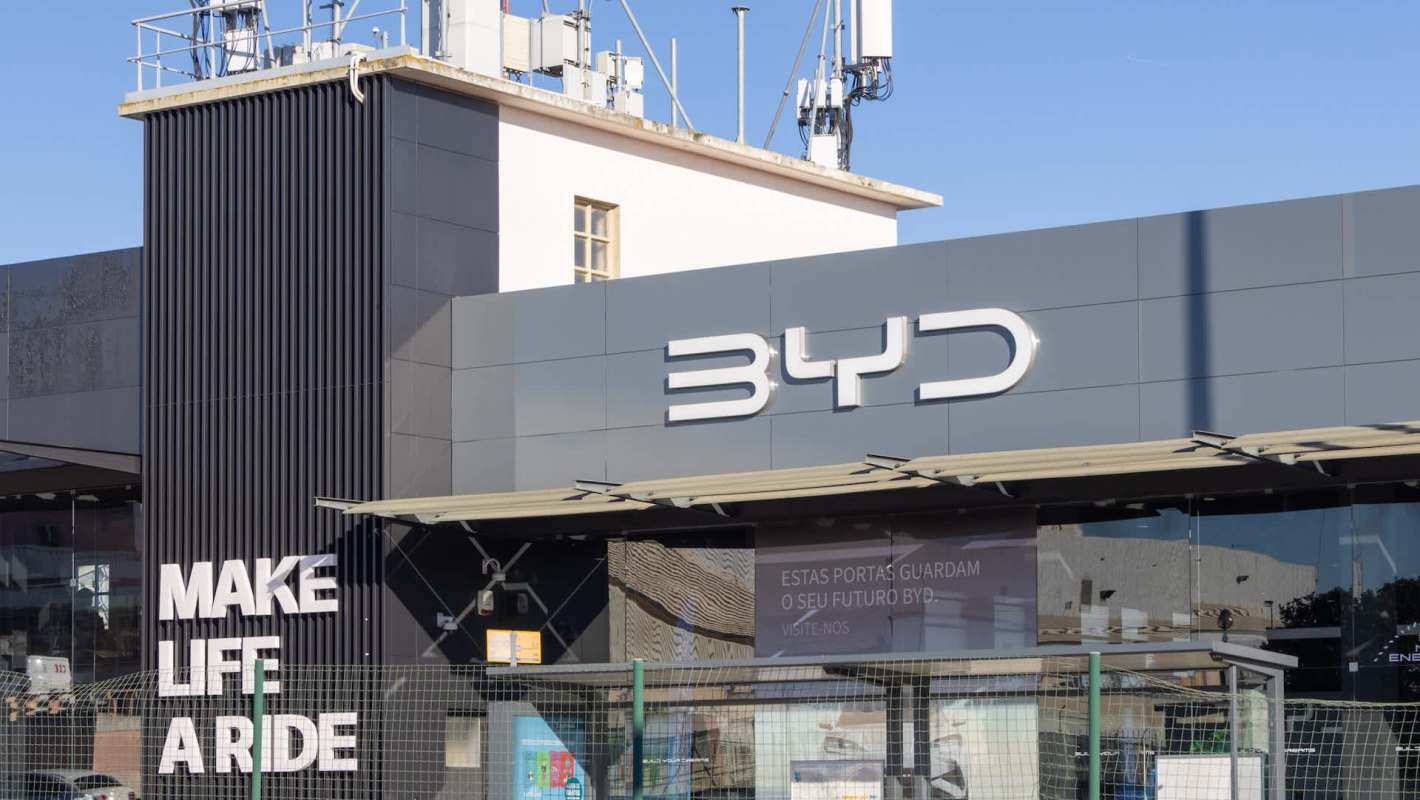
Recent reports suggest BYD, the Chinese auto giant, is looking for ways to expand its operations outside of China.
What happened?
According to a report from Euronews, citing information from Bloomberg, BYD is in discussions with Stellantis and other carmakers about acquiring or using factories in the European Union. Stella Li, who oversees BYD's international operations, said the company is looking for "any available plant in Europe" as part of its expansion.
The talks come weeks after Stellantis announced a $25 billion write-down tied to its electric vehicle operations, saying it had overestimated demand for clean energy cars. The company has also been considering offloading a little-used factory in Spain to Leapmotor and has plants in Italy operating far below capacity.
Euronews noted one of those facilities, the Cassino plant, turned out just 2,916 vehicles during the first quarter of 2026 — a 37.4% drop — according to a Fim-Cisl report cited by Italian press. Across Europe, auto factories are running at roughly half capacity as the market has not fully recovered from the COVID-19 pandemic downturn.
BYD, which became the world's biggest EV seller last year, is already building a factory in Szeged, Hungary, that is scheduled to open next year. Li also said the company is interested in struggling European legacy brands, calling Maserati "very interesting."
Why does it matter?
This is a major sign that Europe's auto market is entering a new phase. Legacy carmakers are dealing with weak demand, costly transitions, and excess factory space, while Chinese EV makers are expanding aggressively with lower production costs and rapidly improving technology.
TCD Picks » Quince Spotlight
💡These best-sellers from Quince deliver affordable, sustainable luxury for all




For drivers, more EV production in Europe could eventually mean more choices and stronger price competition. That could be especially important because EVs can save owners a lot of money over time through lower fuel costs and reduced maintenance, since they have fewer moving parts and don't require oil changes.
There are also big implications for jobs and local economies. Reusing existing factories could help preserve industrial sites that might otherwise sit idle, even if the companies operating them change. At the same time, the pressure on European automakers shows just how disruptive the clean transportation shift has become.
The environmental stakes are significant, too. Wider EV adoption can help reduce tailpipe pollution, especially when paired with cleaner electricity sources, bringing both public health and climate benefits while potentially lowering household transportation costs.
What's being done?
BYD appears to be taking a two-track approach in Europe: building from scratch in Hungary while also exploring existing plants that could be brought online more quickly. That would allow the company to expand faster without waiting years for entirely new facilities to be completed.
For shoppers, this is another indication that the EV market is continuing to widen. If you're thinking about making your next vehicle electric, this guide can help you compare the practical benefits and trade-offs.
BYD's push suggests the company sees Europe's spare factory capacity as a major opportunity. Li said: "We are talking to not only Stellantis; we're talking to other companies, too."

Get TCD's free newsletters for easy tips, smart advice, and a chance to earn $5,000 toward home upgrades. To see more stories like this one, change your Google preferences here.






