


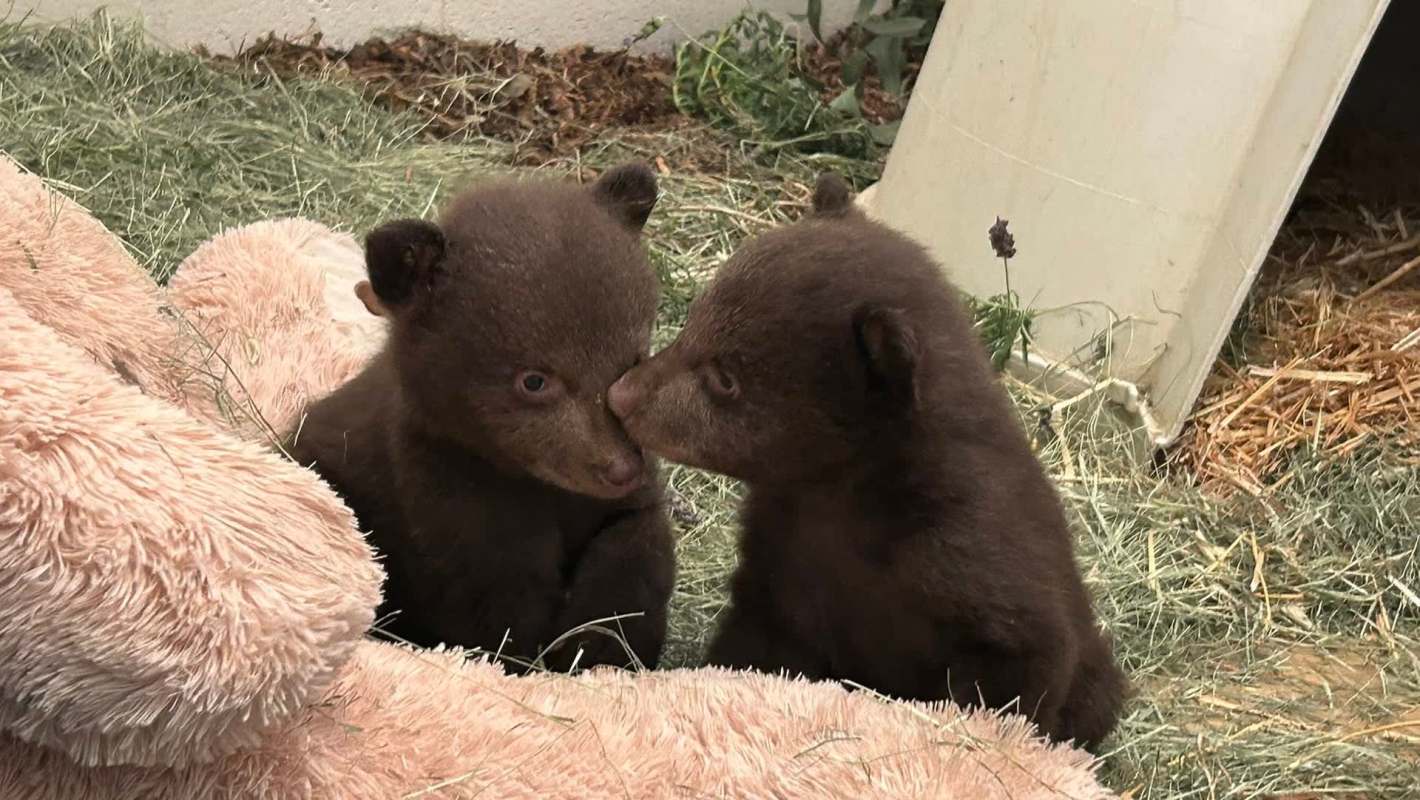
Two orphaned black bear cubs in Southern California have reached an encouraging new milestone in their recovery.
The Desert Sun reported that after nearly two months of extensive care, the young brothers have officially been moved into an outdoor habitat meant to help them relearn how to live in the wild, according to a news release from the San Diego Humane Society.
The cubs were rescued from Monrovia and brought to the nonprofit's Ramona Wildlife Center in mid-March. At the time, they were only about 2 to 3 months old. Their move outdoors on May 12 marks a major step toward the ultimate goal of returning them to their natural habitat as healthy, independent bears.
"Moving outside is a big step. The cubs are gaining confidence, exploring and learning the skills they'll need to survive on their own," Autumn Welch, the humane society's wildlife operations manager, said in the release, according to the Desert Sun.
That progress is meaningful not only for the cubs but also for the surrounding community.
Wildlife rehabilitation can give vulnerable animals a second chance while also helping reduce the risk of future conflict between people and wild animals.
TCD Picks » Quince Spotlight
💡These best-sellers from Quince deliver affordable, sustainable luxury for all




In this case, the cubs' mother was euthanized by state wildlife officials after being labeled a "Public Safety Bear" following aggressive encounters with humans, including a March incident in which a woman walking her dog was attacked. The cubs were later found in a den beneath a nearby home and brought to the Ramona center for specialized care.
Since then, the wildlife team has taken unusual precautions to ensure the cubs remain wild. Staff members limited human interaction as much as possible, wearing bear masks and animal fur scented with natural scents during feedings so the cubs would not grow accustomed to people. Caretakers even crawled into the habitat to better mimic a mother bear's behavior.
That effort could make a major difference.
When wild animals become too comfortable around humans, release becomes more difficult, and neighborhoods can face added safety concerns. By preserving the cubs' instincts, the rehabilitation team is improving their chances of surviving on their own later on.
Now about 4 months old, the cubs are living in what the San Diego Humane Society described as a "specialized den area," outfitted with live-edge wood from a Ramona sawmill, according to the Desert Sun. Once they have acclimated, they are expected to move into a bigger habitat while continuing to access the den.
Their diet has changed, too. What began as spoon-fed formula has progressed to gruel and solid foods, including fruit and leaves from native plants, and the cubs are increasingly feeding themselves.
As a changing planet pushes wildlife into urban areas and increases human-wildlife encounters, communities search for better ways to coexist with wildlife, and successful rehabilitation efforts can help protect native species and people alike.
For now, the cubs' recovery offers a welcome bright spot after a difficult chain of events, the nonprofit said when the bears first arrived, according to the Desert Sun.
"Our top priority now is giving these babies the care they need and the best possible chance to return to the wild," according to the nonprofit.

Get TCD's free newsletters for easy tips, smart advice, and a chance to earn $5,000 toward home upgrades. To see more stories like this one, change your Google preferences here.







