


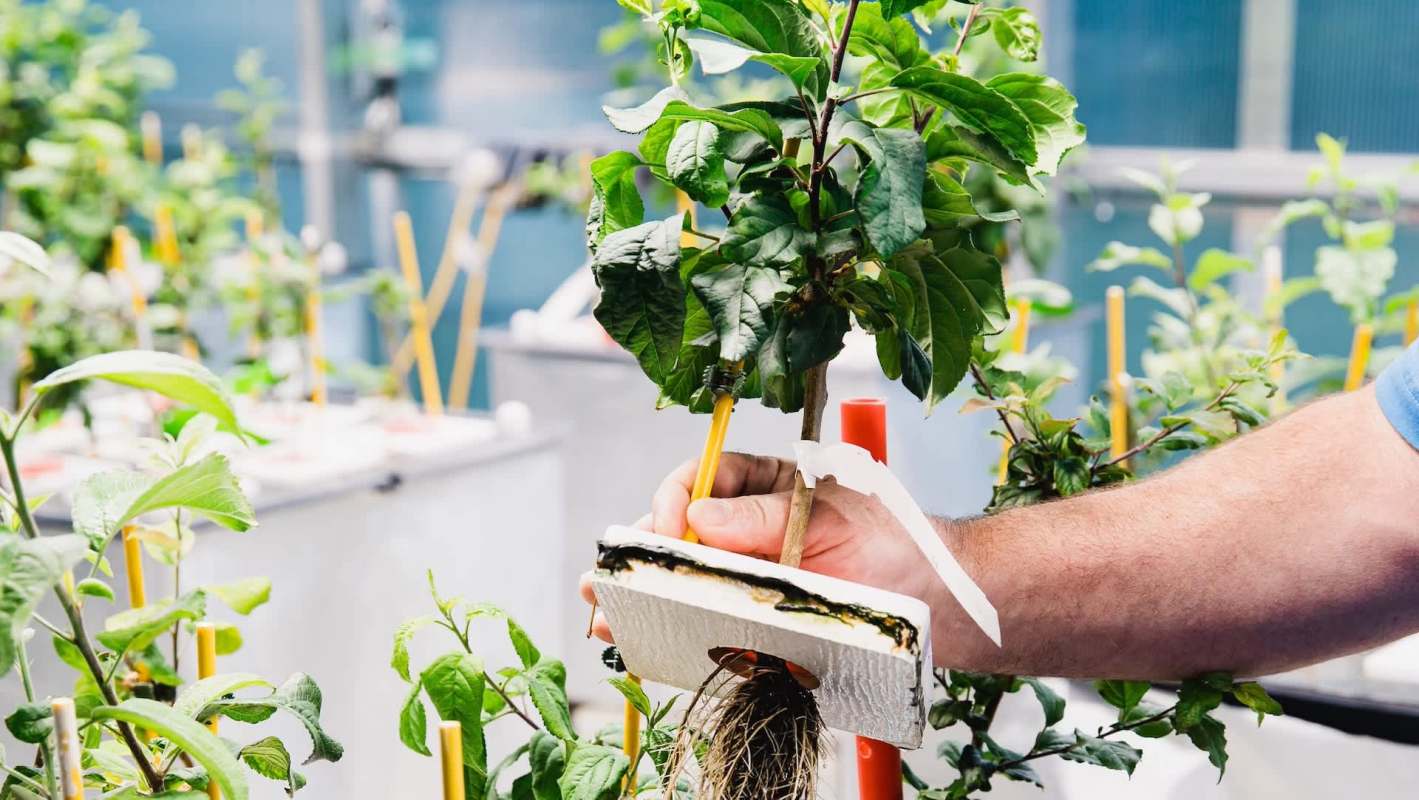
Scientists are making steady progress on strengthening apple tree roots, a surprisingly important climate solution.
After a series of destructive cold snaps hit major growing regions, researchers at Cornell University and the U.S. Department of Agriculture are developing new apple rootstocks that can better withstand the wild temperature swings becoming more common in a warming world.
The work could help protect one of the nation's most popular fruits, support growers, and make orchards more resilient for decades to come.
According to The Guardian, the push follows what Cornell horticulture professor Terence Robinson described as the "Valentine's Day Massacre" of 2015. An unusual burst of warmth in February was followed by a sharp freeze across parts of New York and Pennsylvania, damaging apple trees that had already begun to emerge from winter dormancy.
Scientists later connected that kind of weather whiplash to what became known as "rapid apple decline," a condition that can weaken or kill trees. Robinson and his colleagues found that one of the biggest vulnerabilities was not just damage to branches or trunks, but damage to the rootstock — the lower part of the tree that anchors it and helps determine how it grows.
Nearly every commercial apple tree in the U.S. is actually made from two plants joined together. The top portion, known as the scion, produces the fruit variety shoppers recognize, and starts as a cutting from a variety such as Gala or Red Delicious. The bottom portion, the rootstock, controls traits growers rely on, including tree size, hardiness, and how well the plant handles stress.
TCD Picks » Quince Spotlight
💡These best-sellers from Quince deliver affordable, sustainable luxury for all




Now, researchers in Geneva, New York, are working to build stronger foundations for the orchards of the future. Through the Geneva Apple Rootstock Breeding Program, Cornell and the USDA have been crossing and testing rootstocks since 1968. Their goals now extend beyond disease resistance to focus more heavily on climate resilience, including tolerance for drought, salty soils, and winters that swing unpredictably between warm and cold.
That could be welcome news for growers and consumers alike. According to The Guardian, the U.S. apple industry supports about $23 billion in annual economic activity and produces more than 11 billion pounds of fruit annually. More durable trees could help farmers avoid devastating orchard losses, stabilize production, and keep apples more reliably available.
The environmental benefits are significant as well. Stronger rootstocks can help trees survive on less water and better tolerate stress. Researchers are also widening the genetic toolbox by studying wild apples from Central Asia, where apples were first domesticated, in search of traits that could make modern trees even tougher.
There is another promising sign: the latest rootstocks already appear to be outperforming the long-dominant M9 rootstock when it comes to false springs followed by freezes. After breeders make promising crosses, those trees are then trialed nationwide in NC-140 orchards, as The Guardian reported, allowing scientists to see which candidates hold up under real-world conditions.
That long timeline is part of what makes the work so valuable. Apple orchards are investments that can last 15 to 30 years, so researchers are trying to breed trees that are not tailored to one narrow forecast but resilient enough to handle surprises. In a climate era defined by extremes, that adaptability may prove just as important as yield.
Lee Kalcsits, a Washington State University professor who leads a national fruit-tree climate resilience effort, put the challenge this way: "We need to be mindful that the rootstocks we select are adaptable. It's not that they're adapted to a future climate, but that they're adaptable."

Get TCD's free newsletters for easy tips, smart advice, and a chance to earn $5,000 toward home upgrades. To see more stories like this one, change your Google preferences here.






