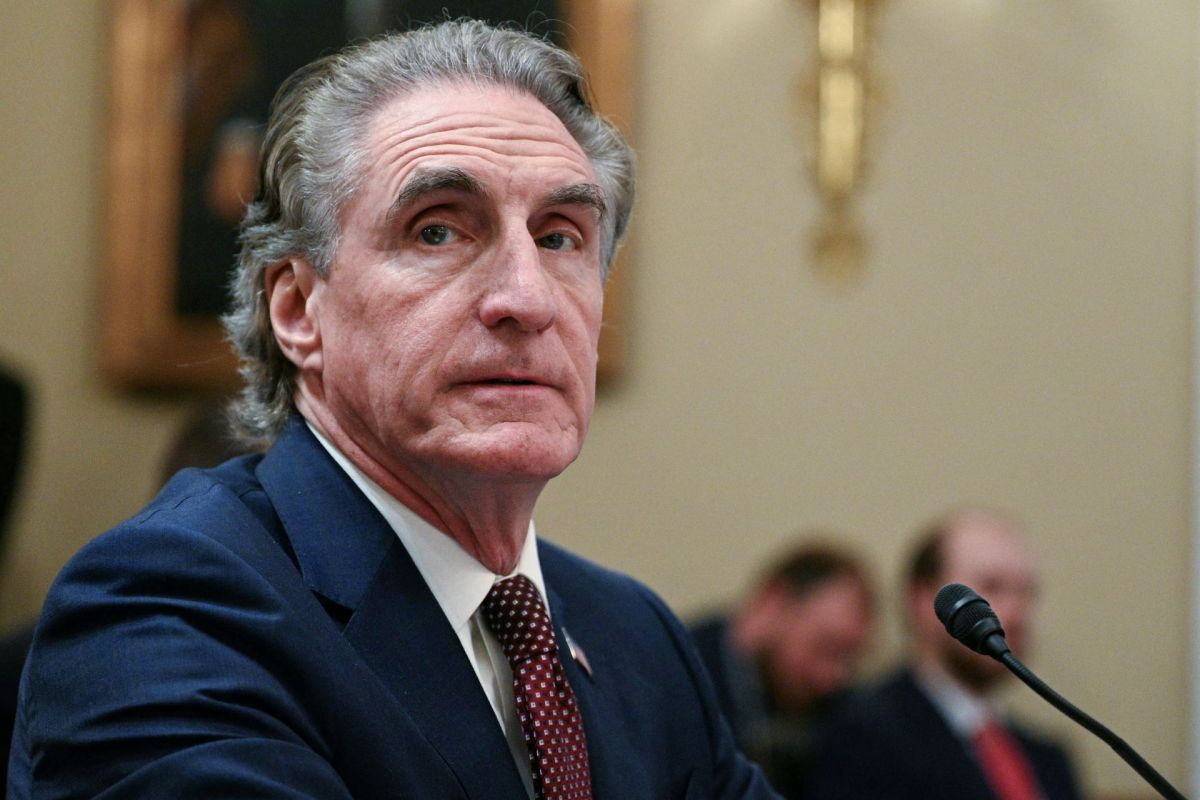
A tense exchange on Capitol Hill is blowing up online after Interior Secretary Doug Burgum made a remark about solar power that drew immediate pushback — and a pointed joke — from Rep. Jared Huffman.
The clip, widely shared on X by Aaron Rupar, is getting attention because Burgum appeared to dismiss Nevada solar projects by saying they produce "zero electricity" after sunset, without acknowledging the obvious role that battery storage now plays in modern clean energy systems.
For many viewers, the moment raised an unsettling question: How well does the nation's top interior official understand one of the country's fastest-growing energy technologies?
BURGUM: When the sun goes down, solar produces zero electricity
— Aaron Rupar (@atrupar) May 13, 2026
HUFFMAN: I want to enter into the record this amazing new technology that apparently the secretary is unaware of -- it's a battery pic.twitter.com/tPmRhmtnA9
During testimony before the House Natural Resources Committee, Burgum said, "All of these projects you're describing in Nevada have one thing in common — when the sun goes down, they produce zero electricity."
As The New Republic noted, he also argued that additional power sources would still be necessary while portraying solar as unreliable.
Huffman quickly fired back, asking to enter into the record "this amazing new technology that apparently the secretary is unaware of: It's a battery," before adding that "China's figured it out" and the nation is "cleaning our clock on clean energy."
TCD Picks » Good Store Spotlight
Get 10% off your next purchase with code TCD10




Burgum responded by saying that China's role as the biggest climate polluter belonged in the conversation, and Huffman countered that China also produces "far more clean energy." The committee chair then cut off the exchange, but by then the damage to Burgum's credibility had been done.
The moment struck such a nerve because battery storage is no niche concept. While solar panels do stop generating power at night, homeowners, utilities, and developers increasingly pair them with batteries that store electricity for use after sunset, during peak demand, and in emergencies.
Battery storage can help stabilize the grid, reduce reliance on expensive and polluting backup generation, and support cleaner, more resilient energy systems. Meanwhile, scaling solar-plus-storage can help cut the heat-trapping pollution driving more intense storms, droughts, and wildfires.
The exchange revived broader frustration with how clean energy is discussed in Washington. According to The New Republic, Burgum previously served as governor of North Dakota and has ties to the oil and gas industry, and critics have argued that brushing aside battery-backed renewables only slows progress at a time when communities need affordable, reliable power.
Battery projects are already helping bring more renewable electricity onto the grid, and solar continues to expand in ways that can lower costs and pollution.
Commenters were quick to respond to the clip. One person wrote, "Renewables *with batteries* are cost-competitive with fossil fuels. They're quicker to build, the R&D to bring their costs down further is nowhere near peak. The health care costs of oil and coal air pollution alone justifies the switch."
Others said it showed why the U.S. risks falling behind in the global clean energy race if leaders continue to treat storage as an afterthought. Several pointed to the same basic takeaway Huffman did: Batteries are not some futuristic idea — they are already here, and pretending otherwise does not help consumers or the planet.

Get TCD's free newsletters for easy tips, smart advice, and a chance to earn $5,000 toward home upgrades. To see more stories like this one, change your Google preferences here.