


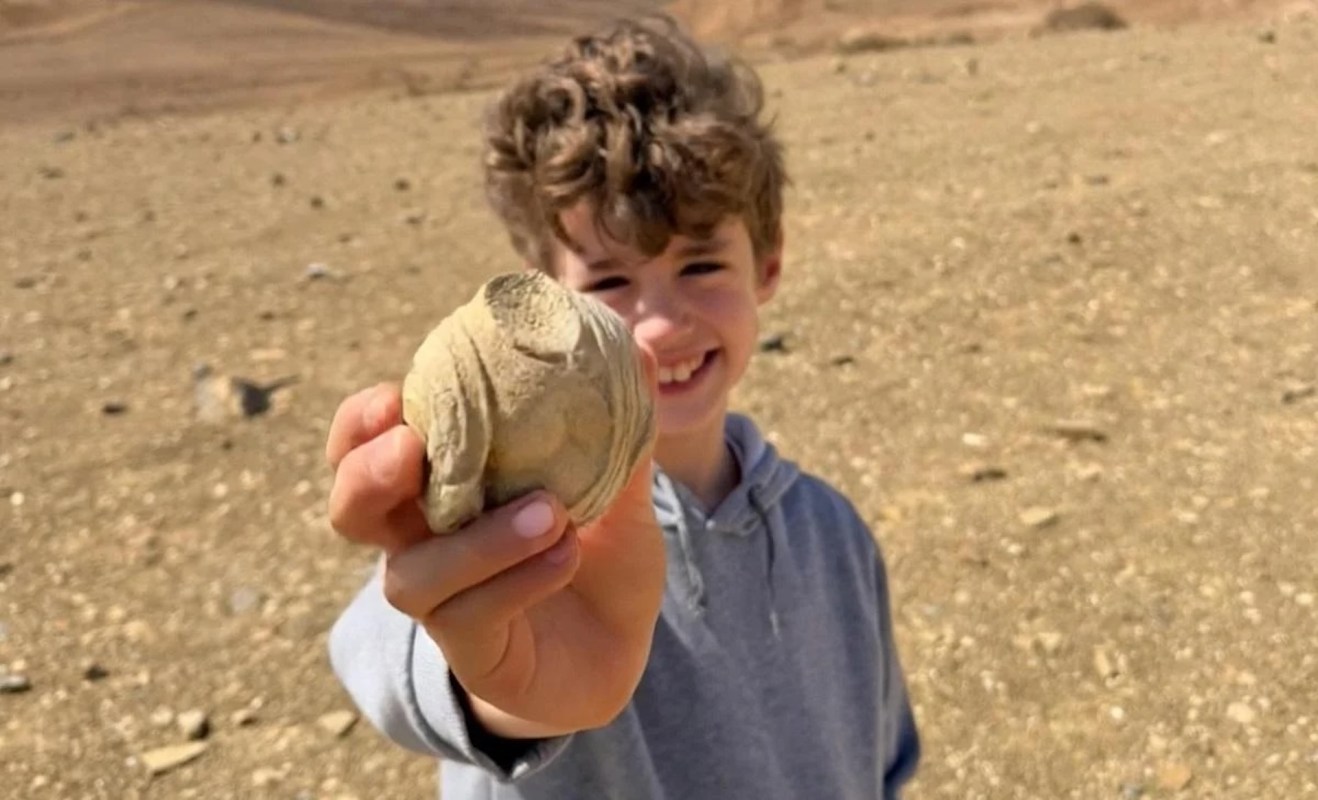
An 8-year-old's weekend rock hunt has turned into a significant archaeological discovery.
On May 11, while visiting Israel's Ramon Crater with his father, Dor Wolynitz picked up what appeared to be an unusual striped stone, as reported by The Economic Times. Experts later determined it was something far more remarkable: a roughly 1,700-year-old fragment of a statuette, likely depicting a Roman or Nabataean deity, found along the ancient Spice Route that once linked the Arabian Peninsula with the Mediterranean.
The find is more than a heartwarming story. It is also a vivid reminder that even a small object can illuminate the movement of people, goods, beliefs, and artistic traditions across the ancient world.
According to the Israel Antiquities Authority, the fragment measures a little over two by two inches and preserves part of a human figure draped in carefully carved robes. Archaeologists identified the garment as a himation, a cloak commonly represented in Greek and Roman art, and said the craftsmanship points to a highly skilled artist.
The piece was handed to Akiva Goldenhersh, an IAA archaeologist overseeing its Theft Prevention Unit, who happened to be on the same trip. After further examination, IAA geologist Dr. Nimrod Wieler confirmed that the object was carved from phosphorite, a mineral found in the Negev, indicating it was likely produced locally rather than imported.
Researchers do not yet know exactly whom the figure represents. Goldenhersh said the leading possibilities are Jupiter or Zeus-Dushara, a deity associated with the Nabataeans whose religious traditions reflected a blend of Greek and Roman influence. That cultural blending is part of what makes the discovery so compelling.
TCD Picks » Quince Spotlight
💡These best-sellers from Quince deliver affordable, sustainable luxury for all




Ramon Crater lies along the ancient Spice Route, the trade corridor that carried incense, spices, and other goods through the Negev during the Nabataean and Roman periods. Studies of the route have shown that it wasn't simply a one-way supply line. It functioned instead as a complex exchange network, with goods moving in multiple directions and cultures shaping one another along the way.
Seen in that context, this small fragment tells a much larger story. Long before the modern era, a form of globalization was already emerging at desert crossroads like this one.
The discovery also has value in the present. Finds like these can make history feel immediate and tangible, especially when the discoverer is a child rather than a professional excavator. Moments like this can spark curiosity, encourage learning, and deepen people's connection to a shared past.
It also underscores the importance of protecting landscapes that serve as cultural archives. The Negev desert is more than a dramatic natural setting; it preserves evidence of ancient communities, trade networks, and artistic traditions. When places like Ramon Crater are treated with care, they continue to offer insight to both researchers and the public.
There is a practical benefit as well. Responsible archaeological preservation can support education and heritage tourism, allowing communities to benefit from historic sites without damaging them.
Dor turned the fragment over to the IAA's National Treasures Department and received an official certificate of good citizenship for doing so.
The reaction from experts and officials captured why the moment resonated so widely. Goldenhersh said the fragment "reflects the combination of local traditions with influences from the classical world. ... Every archaeological find is part of our common heritage in this land."
Israel's heritage minister, Amichai Eliyahu, called the discovery "a reminder of how much history is right under our feet."

Get TCD's free newsletters for easy tips, smart advice, and a chance to earn $5,000 toward home upgrades. To see more stories like this one, change your Google preferences here.






