


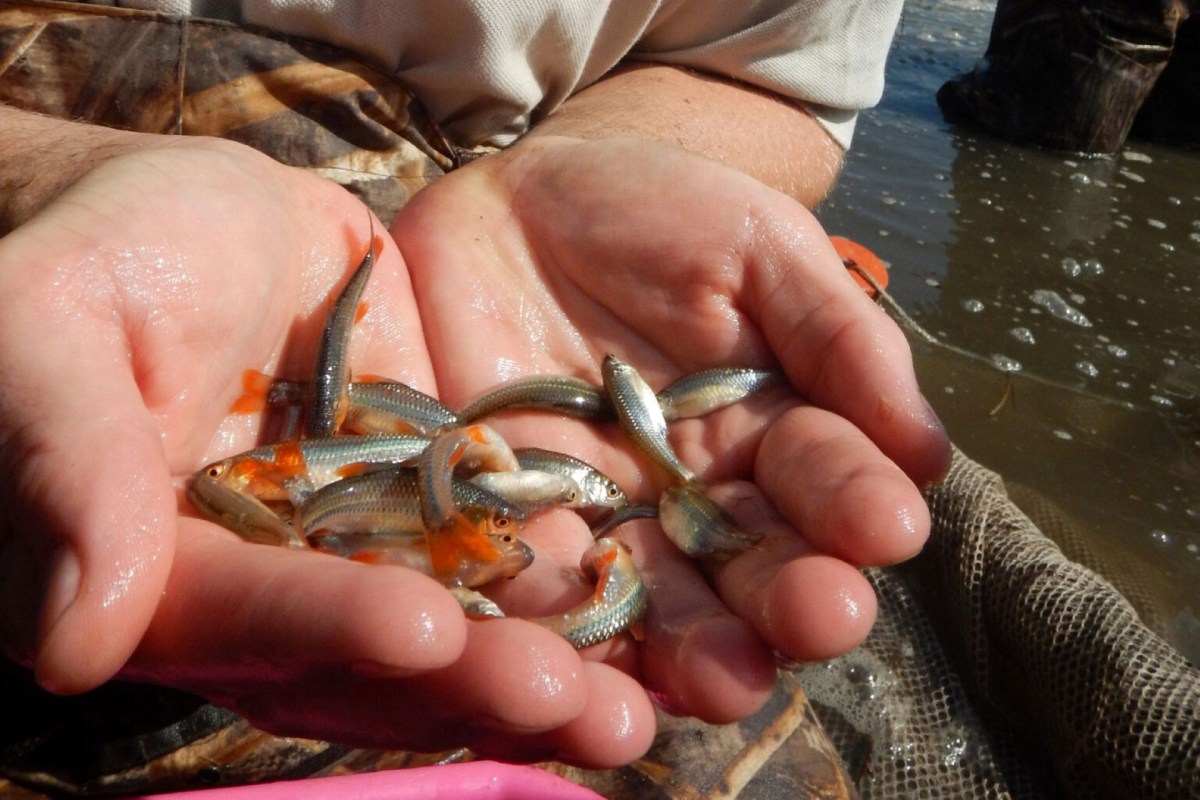
A restoration effort that began with a tiny endangered minnow is yielding a much bigger payoff for Iowa. By restoring hundreds of vanished oxbow wetlands, conservation groups and farmers are helping the Topeka shiner recover while reducing farm runoff that pollutes local waterways.
What's Happening?
Inside Climate News reported that across Iowa, partners including the U.S. Fish and Wildlife Service, The Nature Conservancy in Iowa, and the Iowa Soybean Association have restored more than 200 oxbows — former U-shaped bends in rivers that were cut off from streams and later filled with sediment.
The initial goal was to rebuild habitat for the Topeka shiner, a small silver fish that was listed as endangered in 1998 after decades of wetland loss, stream channelization, and agricultural expansion erased much of its range across the Great Plains.
The effort appears to be working. According to ICN, in 2016 and 2017, shiners were documented in 60% of Iowa watersheds they had historically occupied, up from 32% in 2010 and 2011. Further, in a 2021 five-year review, federal wildlife officials recommended changing the fish's status from "endangered" to "threatened."
Why is this Restoration Important?
For landowners such as Kathy Law, whose family farm restored five oxbows in Carroll County in 2021, the change has been both practical and personal. Water returned first, followed by native plants, birds, frogs, and eventually the fish itself.
Iowa has lost more than 95% of its original wetlands, according to ICN, making it harder for the landscape to naturally filter water and support wildlife. Restored oxbows now provide both benefits at once.
TCD Picks » Quince Spotlight
💡These best-sellers from Quince deliver affordable, sustainable luxury for all




They create the slow, shallow habitat that Topeka shiners can tolerate better than many other fish, and they also intercept water from farm tile lines before it reaches rivers. On average, these wetlands remove 62% of the nitrate carried in that runoff.
That has real implications for communities downstream. Cleaner water can mean healthier rivers, less pollution moving through the state, and a more resilient rural landscape overall.
The restored sites also bring back everyday benefits that are harder to quantify but easy to recognize: ducks on the water, tadpoles in the shallows, and places where families can reconnect with a version of Iowa that once seemed lost.
The restoration model has expanded because it works for both conservationists and farmers. Oxbow excavation costs about $20,000 per acre, but participating landowners generally do not pay out of pocket thanks to federal, state, and private funding, ICN noted. That matters in a state where more than 97% of the land is privately owned.
The water-quality benefits have also broadened support. According to ICN, oxbow restoration was added to Iowa's Nutrient Reduction Strategy in 2019, and the Iowa Department of Agriculture and Land Stewardship now pays the full cost for projects that take in water from tile lines.
For farmers, that means a relatively low-hassle way to improve marginal ground while supporting cleaner water and wildlife habitat. For residents, it shows how restoring natural systems can address multiple problems at once.
What are People Saying?
"It really is a success story," said Karen Wilke of The Nature Conservancy in Iowa, according to ICN. "Now we're not just doing it for Topeka shiner, but we're doing it for water quality as well."
"It shows we can do things that don't cost us any money, and try to make a difference," Law shared.
"I think the picture is brighter, and I firmly believe that oxbows are part of that story," said Clay Pierce, a former scientist in the U.S. Geological Survey's Iowa Cooperative Fish and Wildlife Research Unit at Iowa State University. "It's an 'if you build it, they will come' sort of thing."

Get TCD's free newsletters for easy tips, smart advice, and a chance to earn $5,000 toward home upgrades. To see more stories like this one, change your Google preferences here.







