


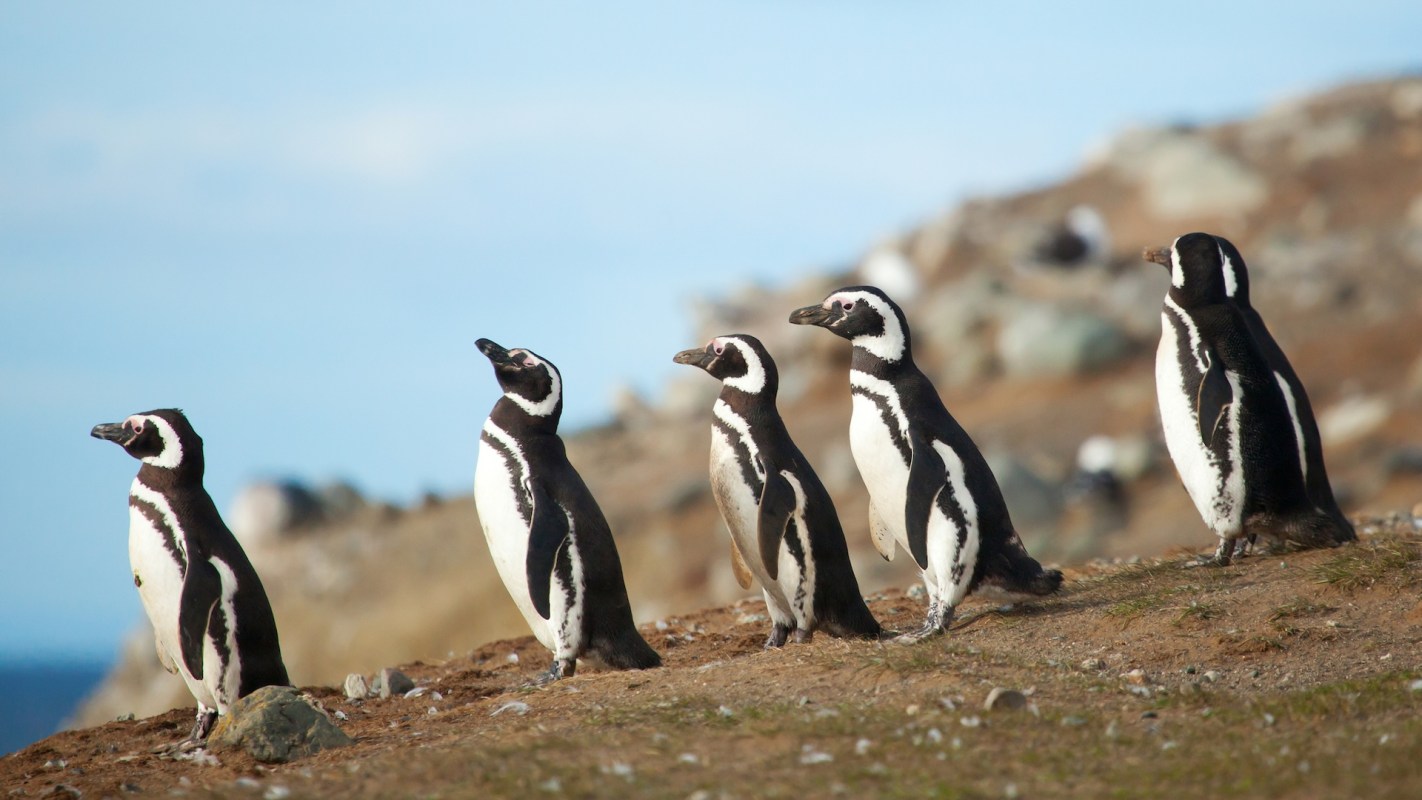
Even on the remote southern coastline of Argentina, toxic "forever chemicals" are still showing up — and researchers found them with an unusual assist from penguins.
A new study found that Magellanic penguins can help scientists track pollution in places that are otherwise difficult and expensive to monitor.
Researchers fitted 55 penguins with customized silicone passive sampler bands over three breeding seasons, according to a study published in March and detailed by CNN. The bands were designed to absorb chemicals from water, air, and surfaces without requiring invasive sampling.
Over 90% of the recovered bands detected PFAS, a large class of human-made chemicals used in products such as nonstick cookware, rain jackets, firefighting foam, and pharmaceuticals. These chemicals are often called forever chemicals because they resist breaking down and can linger in ecosystems and bodies for years.
"The concentration [of PFAS] is not high, but we found it consistently," wildlife veterinarian and co-author Ralph Vanstreels told CNN. "It shows that even in this very remote, not very inhabited region, these animals are getting exposure on a consistent basis."
To make the method safe for the birds, the team adjusted the bands to fit each penguin's leg with stainless-steel wire. Vanstreels said the fitting process took about three minutes and caused minimal distress.
TCD Picks » Quince Spotlight
💡These best-sellers from Quince deliver affordable, sustainable luxury for all




While the levels detected were not especially high, the findings still matter. PFAS pollution has been linked to reproductive and developmental problems, cancers, and other health concerns in people. It has also been documented in hundreds of wildlife studies, with the Environmental Working Group identifying the chemicals in more than 600 species.
That makes this study important for two reasons. First, it adds to the growing evidence that per- and polyfluoroalkyl substances contamination reaches even remote marine environments. Second, it offers a less invasive way to study wildlife exposure than traditional blood or tissue sampling.
The researchers also looked for both older "legacy" PFAS and newer replacement versions. Diana Aga, the study's lead chemist, said the rise in replacement PFAS is especially worrying because they appear to be just as persistent and bioaccumulative as the older chemicals they were meant to replace.
The penguin-band method could give scientists a practical new tool for tracking ocean pollution without the need to launch costly expeditions or rely solely on invasive animal testing. Penguins naturally travel across feeding grounds, helping researchers identify where contamination may be present.
Experts say the bands do not show exactly how much PFAS is accumulating inside the birds, but they could complement blood samples and food analysis to paint a fuller picture of exposure. Environmental chemist David Megson, who was not involved in the study, called it a "complementary technique."
"There is no way of protecting penguins in Patagonia without dealing with global problems in terms of pollution, in terms of industry, in terms of how we dispose of chemicals," Vanstreels told CNN.
Aga added, "We thought that replacement chemicals would be less persistent, but it's not."

Get TCD's free newsletters for easy tips, smart advice, and a chance to earn $5,000 toward home upgrades. To see more stories like this one, change your Google preferences here.






