


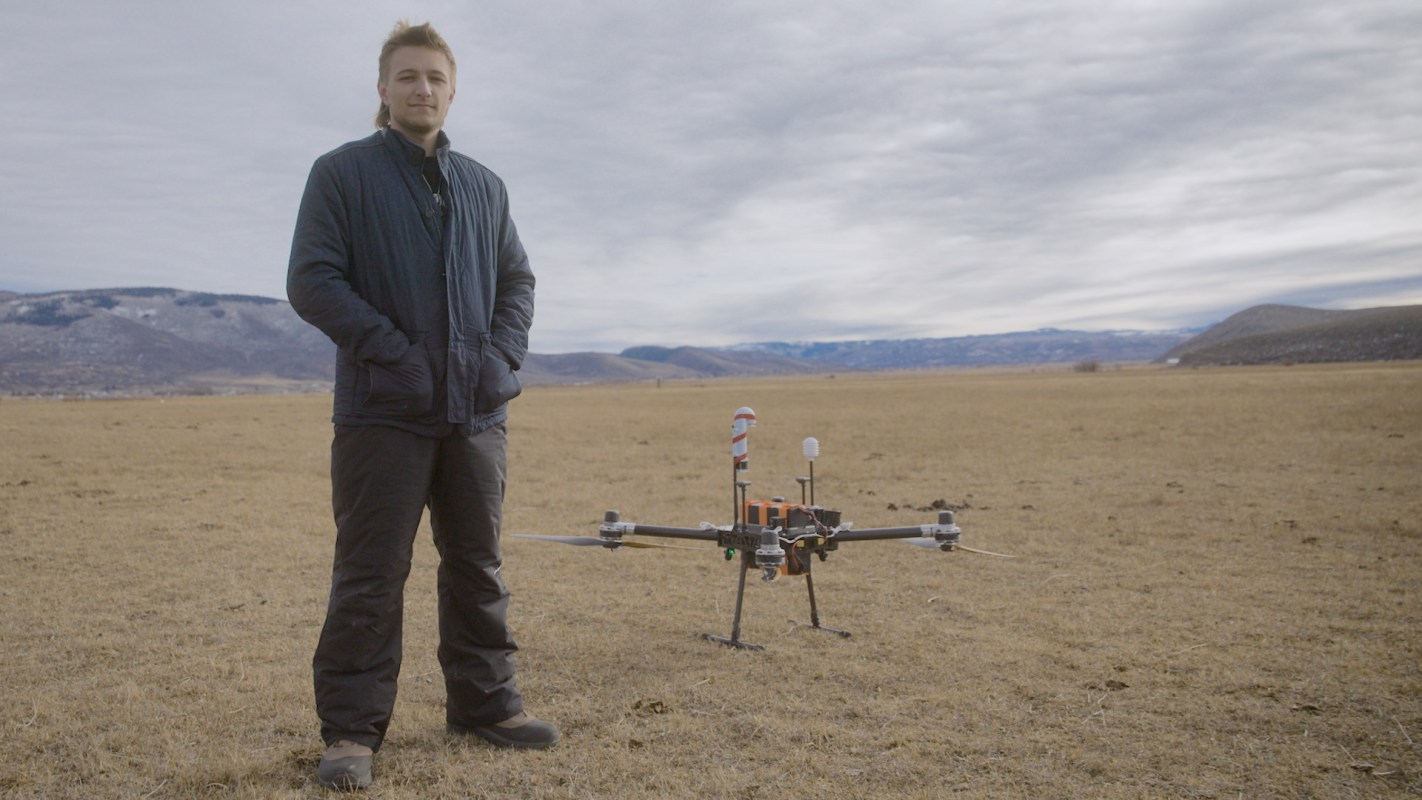
For decades, scientists have tried to create rain in our atmosphere by shooting particles into clouds. While research shows it can be done successfully in a lab, the theory has yet to be proven in a real-world setting.
However, a start-up company called Rainmaker is challenging this after claiming its cloud-seeding drones produced over 142 million gallons' worth of snow. According to initial reports from the Washington Post, some scientists are still skeptical about the validity of these claims.
Although millions of gallons of water is a substantial amount, the data has not yet been peer reviewed, and the Washington Post noted that the added rainfall would likely have little impact on the severe drought conditions facing many Western states.
Nonetheless, states being hit hardest by drought conditions, like Utah and Idaho, are already shelling out millions of gallons of water attempting to ease the impacts. If proven, the Rainmaker reports would take commercial cloud seeding to the next level, proving to be the first operation to create precipitation.
Katja Friedrich, a cloud microphysics expert and professor at the University of Colorado Boulder, said that although exciting, the results from Rainmaker need to be studied further, per the Post.
"If they want to be credible, they have to go through this, because otherwise it's just numbers on a piece of paper," Friedrich said.
TCD Picks » Quince Spotlight
💡These best-sellers from Quince deliver affordable, sustainable luxury for all




According to the 26-year-old founder of Rainmaker, Augustus Doricko, cloud seeding offers a unique opportunity for Western states that rely on snowpack for annual water reserves.
Rainmaker also differs from traditional cloud seeding efforts in that it uses drones instead of conventional aircraft. This approach offers several advantages, including lower operating costs, the ability to conduct flights more frequently, and eliminating the need to send pilots into dangerous weather.
Cloud seeding works by releasing silver iodide into clouds colder than 23 degrees Fahrenheit, encouraging water droplets to freeze into ice crystals that can then fall as snow.
Utah, which has struggled with the shrinking Great Salt Lake, is among several states expanding cloud seeding efforts. Over the past five years, the state's annual cloud seeding budget has grown by more than $6.5 million.
The Washington Post reported that the Great Salt Lake's surface area is now just a quarter of what it was when its decline began in 1986. David Tarboton, a hydrologist and professor at Utah State University's Water Research Laboratory, estimated the lake would need more than 800,000 additional acre-feet of water each year to eventually recover to the levels seen a decade ago.
Rainmaker claimed it can only, for now, prove its process has created 437 acre feet of water, a far cry from what would be needed to save the state. Although Tarboton said that Rainmaker's number seems "quite small," he also noted that "every little bit helps," according to the Post.
While Doricko said Rainmaker is working to narrow the gap between its estimates and what it can definitively prove, per the Post, other experts noted that cloud seeding alone is unlikely to solve the West's worsening drought challenges.
"It is exciting that they're revisiting this challenge of weather modification with new tools and new techniques," said Kara Lamb, an atmospheric physicist and associate research scientist at Columbia University, per The Post. "But I think there is still the fundamental issues with how effective can weather modification ever be on a large scale."

Get TCD's free newsletters for easy tips, smart advice, and a chance to earn $5,000 toward home upgrades. To see more stories like this one, change your Google preferences here.






