


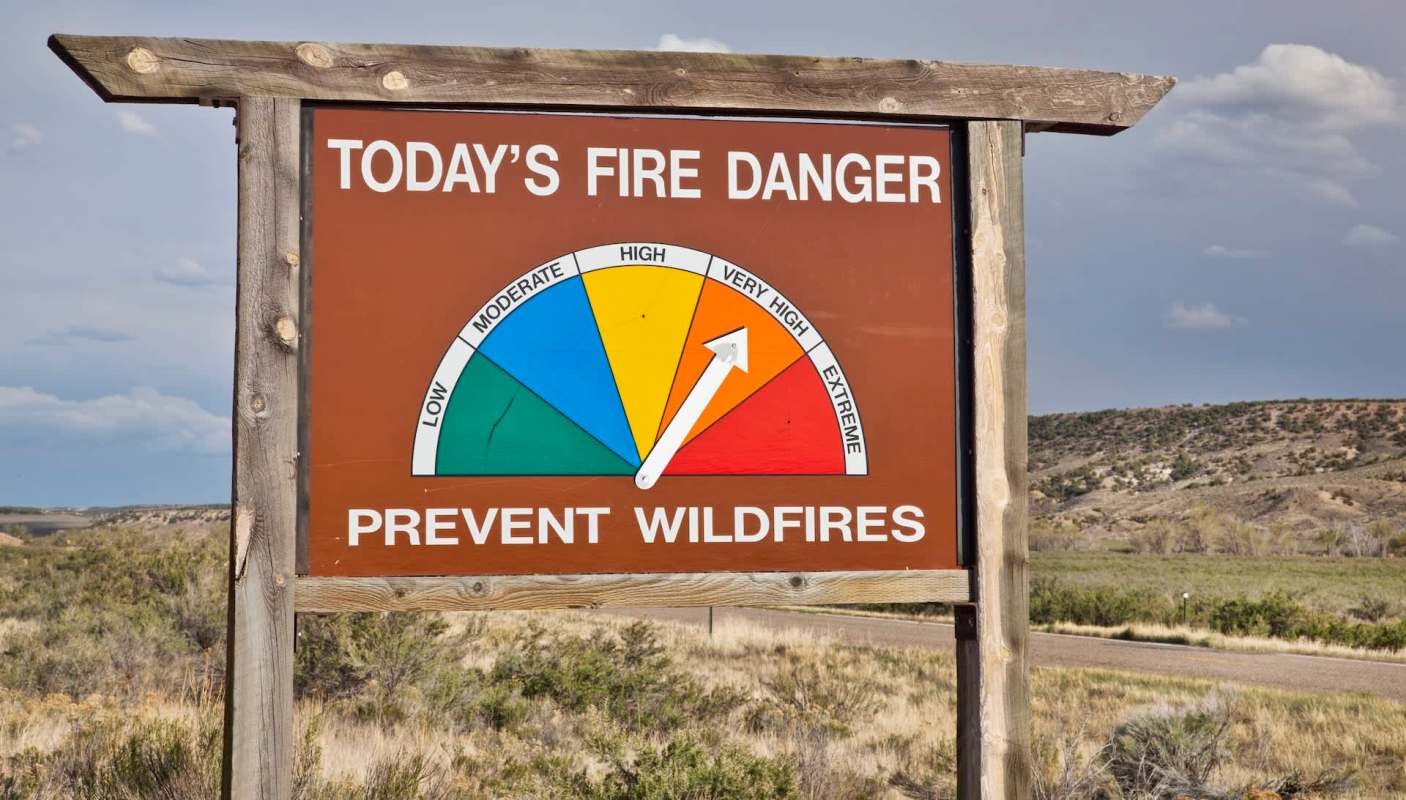
A new study suggests wildfire prevention delivers a major payoff. According to University of California, Davis research, each $1 spent on forest fuel treatments in the United States avoids roughly $3.75 in future wildfire damage.
The Forest Service describes these "forest fuels" as the vegetation that can feed a wildfire. The research found that strategies such as prescribed burns and forest thinning significantly reduced fire spread, fire severity, and the costly fallout associated with major wildfires.
As climate change makes wildfires more destructive, the findings build a strong case for investing more in prevention rather than waiting to pay for disaster response later.
The study, published in the journal Science, analyzed roughly 300 wildfires in 11 states from 2017 to 2023 that crossed into Forest Service fuel-treatment areas. This was the first broad analysis of the West to put a real-world economic value on those treatments using observed wildfire outcomes instead of depending mainly on simulation models, according to a news release shared by Phys.org.
To estimate the benefits, the team contrasted fire behavior in treated areas with that in untreated forests while accounting for weather conditions, suppression efforts, and expected fire-spread patterns.
Fires were over 13 percentage points less likely to keep spreading after reaching treated land.
TCD Picks » Quince Spotlight
💡These best-sellers from Quince deliver affordable, sustainable luxury for all




The researchers also found the treatments were especially effective at cutting high-severity fire, the kind that kills more than 75% of the tree canopy, ultimately reducing burned areas by 20-35%.
The greatest benefits came from prescribed burning, which, according to the research, outperformed mechanical thinning alone in slowing wildfire spread.
Scale also mattered. Landscape-scale treatments exceeding 2,400 acres were the most effective.
Across all the fires analyzed, the researchers estimated the treatments cut the total burned area by 36%, equal to about 152,000 acres that otherwise might have burned.
That reduction carries major consequences beyond the forest itself.
The study estimated that the treatments spared more than 4,000 buildings, kept 2.7 million tons of air pollution (carbon dioxide) from being released, reduced 25,757 tons of fine particulate matter pollution, and prevented 59 premature deaths.
In economic terms, this adds up to about $2.8 billion in avoided damages, including $895 million in avoided structure losses, $503 million from lower carbon dioxide pollution, and $1.4 billion in avoided health impacts and productivity losses tied to smoke pollution.
The findings also add to growing evidence that smarter land management may be one of the most practical climate resilience tools available.
"Fuel treatments and forest management are critically underfunded public goods," lead author Frederik Strabo said. "... Wildfire policy has historically focused on suppression, but our results suggest greater investment in prevention could substantially reduce wildfire damages. That will become even more important as the climate continues to change and forests face more large wildfires and other disturbances."

Get TCD's free newsletters for easy tips, smart advice, and a chance to earn $5,000 toward home upgrades. To see more stories like this one, change your Google preferences here.






