


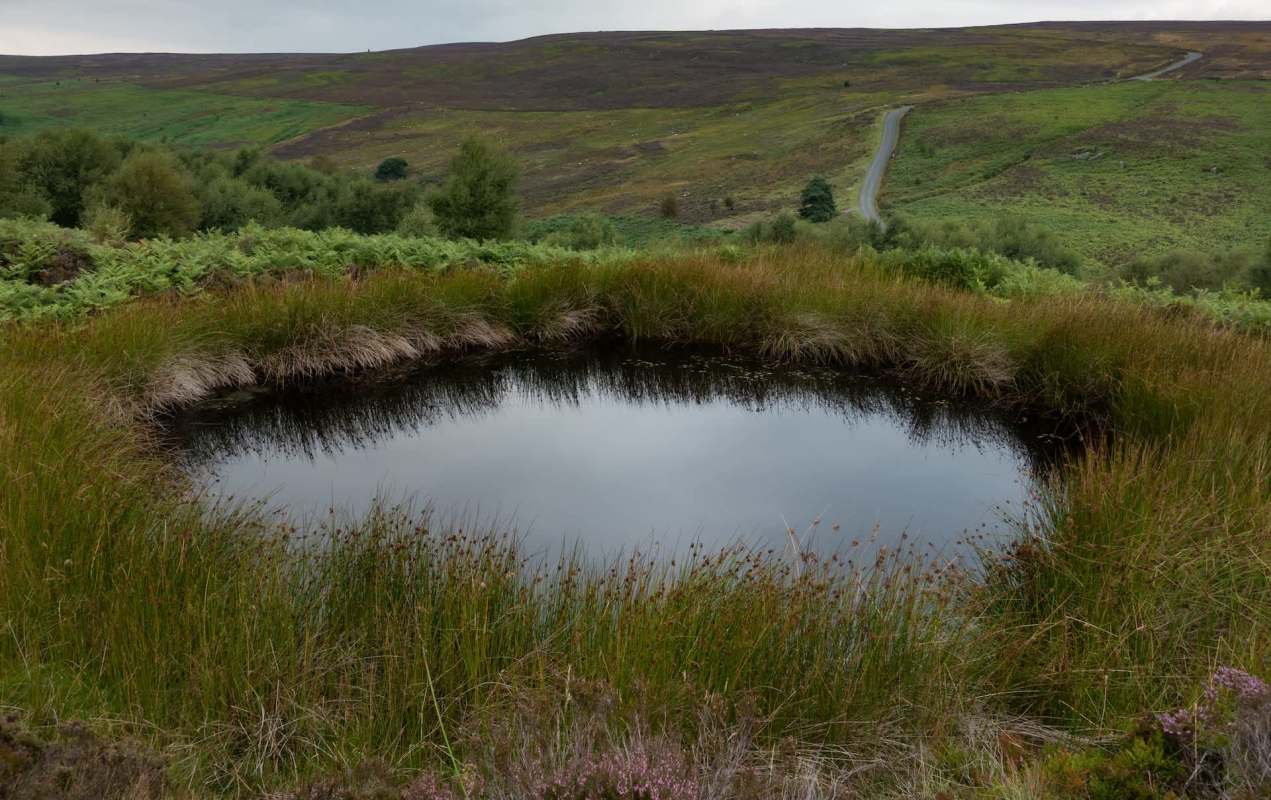
A crater blasted into London marshland by a V2 rocket in 1945 now holds clear water, rare plants, and breeding amphibians — a striking example of how landscapes scarred by war can become unexpected havens for biodiversity.
That unlikely transformation is at the center of renewed attention on bomb craters in the U.K. and Ukraine, according to The Guardian.
At Walthamstow Marshes in east London, the Bomb Crater Pond sits within a protected site of special scientific interest and has become a year-round freshwater refuge in an otherwise heavily managed urban landscape.
"It's like an engine room for the marshes," said Luke Boyle, a ranger for the Lee Valley Regional Park Authority, per The Guardian. "Despite its size, it supports the wider ecosystem around it."
More than a million people visit the marshes each year, often unaware that the modest pond began as a wartime blast site.
Jeremy Biggs, the CEO of Freshwater Habitats Trust, told The Guardian that small ponds often get overlooked, but they are important biological features.
TCD Picks » Quince Spotlight
💡These best-sellers from Quince deliver affordable, sustainable luxury for all




"They support a wider range of freshwater plants and animals — including more rare and protected species — than other freshwater habitats, such as big rivers or lakes," he observed.
One reason is relatively simple. Ponds are less likely to collect the heavy runoff and pollution that larger water bodies receive.
That has implications well beyond London. In Belgium, World War II blast holes have been incorporated into a nature reserve that now supports seven amphibian species. In Ukraine, however, ecologists are confronting a far more painful and ongoing reality: millions of craters left by Russia's invasion.
"It is not as big a deal as people think when they talk about craters causing huge pollution," ecologist Dr. Bohdan Prots said, per The Guardian. "Not when you are looking at a single explosion. The problem is not really the crater. The problem is unexploded devices."
Nevertheless, both the London pond and some forest craters in Ukraine point to a broader lesson for communities rebuilding damaged landscapes. Small, clean wetlands can help nature return quickly. In Northern California, for example, wetlands that reached full capacity after drought conditions brought back migratory birds.
"Diversity of habitats, even created by war, leads to species diversity," Prots said.
The resources these sites offer to pollinators allow these creatures to provide vital ecosystem services, even helping protect the human food supply. Meanwhile, in heavily polluted cities like London, thriving green spaces can help purify the air.
In post-conflict areas, it also suggests that careful restoration — guided by local conditions rather than one-size-fits-all assumptions — can help recover both ecosystems and quality of life.
"At the bottom of these explosions, which go three to eight meters deep, there will always be water in the end, even in very dry periods," said Prots, per The Guardian. "It is like establishing a small wetland. And that is a place where animals are always eager to come."

Get TCD's free newsletters for easy tips, smart advice, and a chance to earn $5,000 toward home upgrades. To see more stories like this one, change your Google preferences here.







