


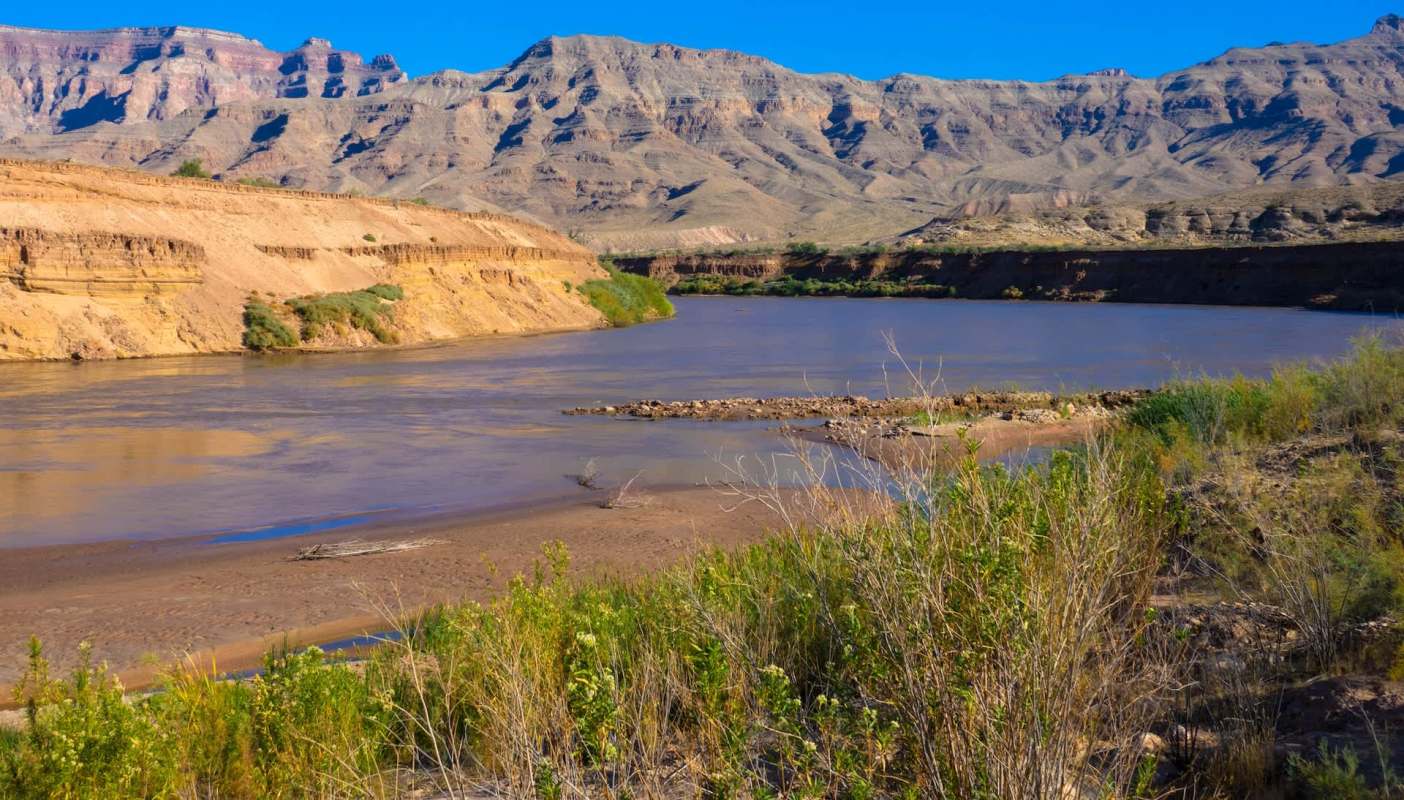
For the 40 million people who rely on the Colorado River for water, a new proposal from California, Arizona, and Nevada could provide short-term security, The Guardian reported.
The Colorado River is one of the most important water sources in the American West, supplying water to cities, farms, and communities across seven states.
Persistent overuse, declining snowpack, and rising temperatures linked to the changing climate have severely strained the system.
The seven states with legal rights to the Colorado River's water struggle to make equitable cutbacks on usage. The Guardian reported that dozens of Indigenous tribes also have water rights to the Colorado River, but several of these rights remain unquantified and difficult to access.
Multiple Western states experienced record-breaking heat in winter, and as of April 1, snowpack in the Upper Colorado River Basin was only 23% of the historical median.
Lake Mead and Lake Powell, the river's two largest reservoirs, have both fallen to historically low levels, raising alarms about future water shortages.
TCD Picks » Quince Spotlight
💡These best-sellers from Quince deliver affordable, sustainable luxury for all




The three Lower Basin states have introduced a voluntary water-saving plan that would run through 2028, looking to slow the decline of Lake Mead and Lake Powell while long-term negotiations remain stalled.
The proposal would save 3.2 million acre-feet of water over the next three years, with another 700,000 acre-feet saved through conservation efforts and infrastructure improvements.
The proposal still needs approval from state water agencies, the Arizona legislature, and federal partners. It also comes as broader negotiations among all seven Colorado River Basin states are deadlocked, with Upper Basin and Lower Basin states still divided over how future water cuts should be allocated.
"With this proposal, the Lower Basin is putting forth real action to stabilize water supply along the Colorado River," said JB Hamby, chair of the Colorado River Board of California, in a statement. "We're putting forward additional measurable water contributions for the system. Without that, the system will continue to decline."
The plan is not a long-term solution, but it could help prevent conditions from getting worse in the near term and buy valuable time while state and tribal leaders work toward a broad agreement.

Get TCD's free newsletters for easy tips, smart advice, and a chance to earn $5,000 toward home upgrades. To see more stories like this one, change your Google preferences here.






