


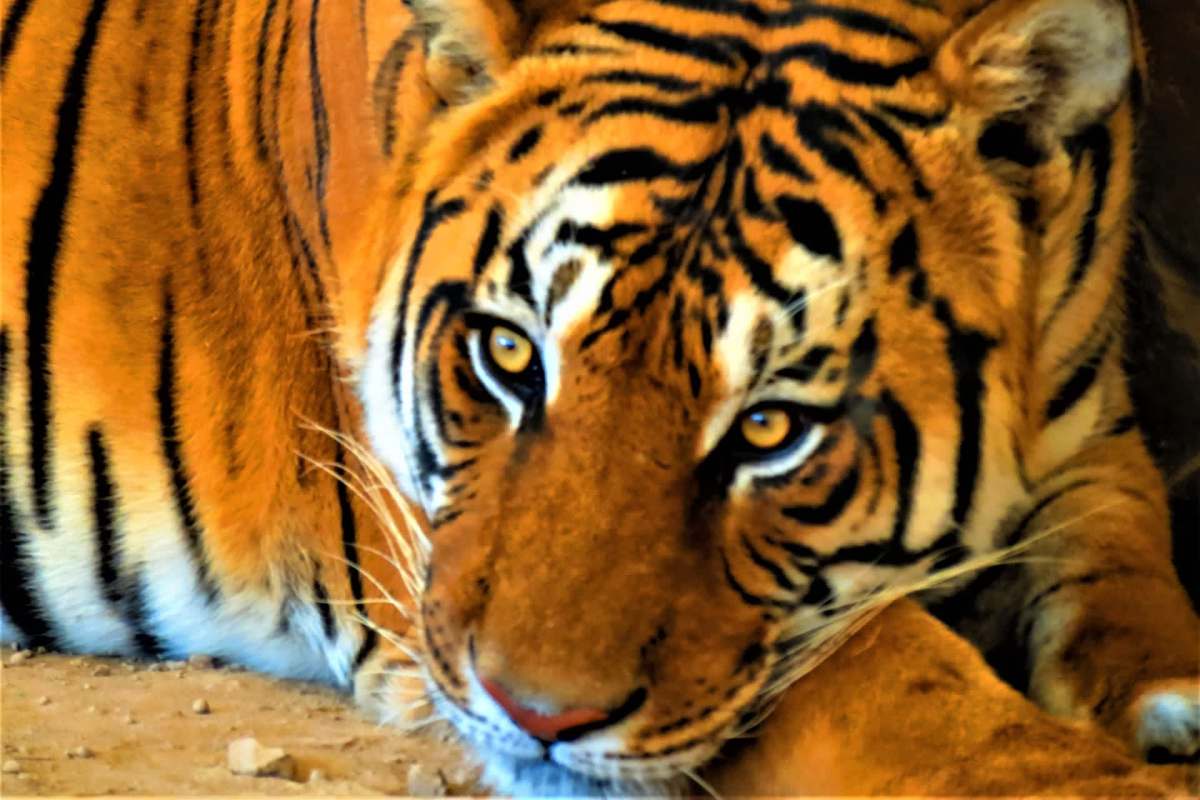
In 2014, with just four tigers remaining in India's Similipal Tiger Reserve, researchers searched for ways to help bring the Indian tigers back from the brink of extinction.
Of the four tigers, only one was male. That male tiger, however, fathered a cub now commonly known as T12. The cub presented a unique genetic mutation: a distinctive black fur coat.
The rare genetic mutation is known as "pseudo-melanism," according to National Geographic.
National Geographic photographer Prasenjeet Yadav and his partner Raghu Purti spent 50 days searching for a glimpse of T12 in the Similipal Tiger Reserve when they finally spotted the giant creature along a gravel road.
"It's black," Raghu whispered before pointing and repeating his astonishment. "It's black!"
Yadav explained that many people used to doubt the existence of black tigers in a video posted by National Geographic on Instagram. Reports of sightings have emerged since the 1980s despite scant visual evidence of the rare creatures, leading people to assume they were a myth.
TCD Picks » Quince Spotlight
💡These best-sellers from Quince deliver affordable, sustainable luxury for all




While Yadav and Raghu carried out their expedition, work was underway to find T12 a suitable mate, an important task as the Tiger gene pool continued to dwindle within the reserve.
Yadav notes that India's tigers are under threat from trophy hunting and habitat destruction. Similipal's tigers are especially at risk, as the nearest reserves have no tigers left, limiting them to what is essentially a deserted island for tigers.
Fortunately, India's tiger population has rebounded over the past couple of decades, thanks to work at the National Tiger Conservation Authority. As of 2022, India is home to over 3,100 tigers, with the Similipal population steadily increasing as well.
The population increase, however, does not come without an issue. Experts warn that a "very real problem" has emerged as a result of the physical manifestation of T12's black coat among more and more tiger cubs, according to National Geographic. While the mutation itself is harmless, the inheritance of the mutation among tiger cubs points to signs of inbreeding.
Inbreeding can cause severe abnormalities, ultimately compounding genetic mutations to the point that it is not conducive to long-term survival for future generations.
"We're still trying to understand the full impact of this inbreeding," molecular ecologist Uma Ramakrishnan told National Geographic. "But one thing's for sure — there's no upside to this kind of genetic erosion."
Although highly sensitive and logistically difficult, Ramakrishnan recommended the translocation of female tigers from other reserves to Similipal to find T12 viable mates. As a result, wildlife experts selected two female tigers from a reserve in Chandrapur to relocate to Similipal.
Eventually, forest officials captured evidence from trail cameras of T12 with one of the female tigers, the signal of a genetic rescue mission underway.
Plans for additional female tiger relocations are not yet solidified, but the initial evidence of T12 with another reserve's female sparks hope for genetic diversity among increasing tiger populations.

Get TCD's free newsletters for easy tips, smart advice, and a chance to earn $5,000 toward home upgrades. To see more stories like this one, change your Google preferences here.







