


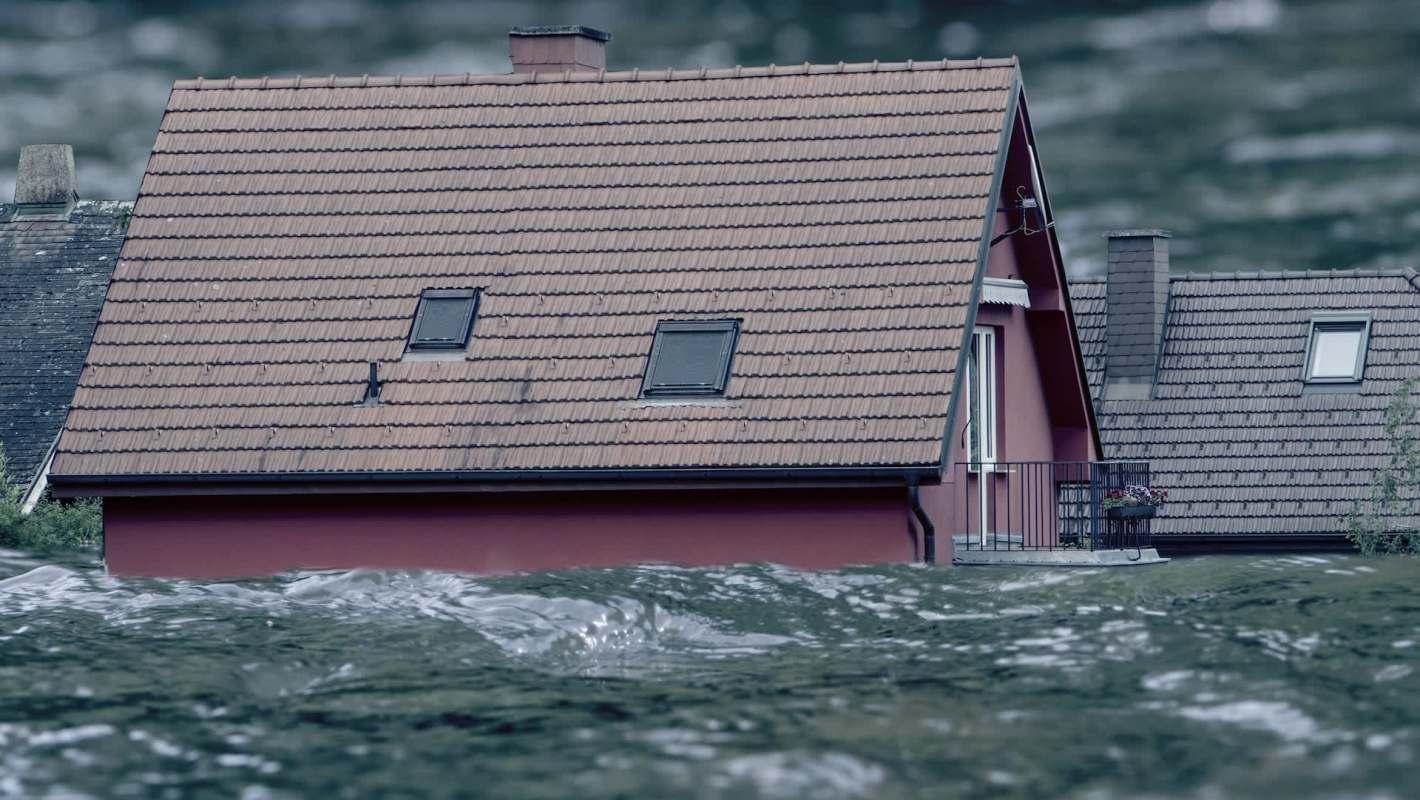
When it comes to the growing threat of rising seas, two new studies indicate that there's some bad news and, well, more bad news for at-risk coastal communities.
What's happening?
Yale Environment 360 analyzed how recent research shows many coastal areas are both further below sea level than thought and sinking faster than many conventional forecasts account for.
"Taken jointly, these two papers paint a considerably more concerning picture than either would in isolation," Franck Ghomsi, an oceanographer at the University of Cape Town, told Y360. "We are seeing an emerging body of research that rewrites the story of coastal vulnerability."
In a study published in the journal Nature, geographers Katharina Seeger and Philip Minderhoud found that the average global sea level is approximately 10 inches higher than widely accepted figures.
The reason for this is that many global models are missing the impacts of ocean currents and winds. While the research doesn't indicate that sea levels are rising faster than previously thought, it does show that the current baseline is far closer to dangerous territory.
Another study, also published in Nature, focused on river deltas. Led by Leonard Ohenhen, an earth system scientist, the findings indicate that subsidence — or, essentially, the sinking of land — is extremely high in many highly populated deltas.
TCD Picks » Quince Spotlight
💡These best-sellers from Quince deliver affordable, sustainable luxury for all




As land sinks amid rising tides, this could translate to huge flood risks in areas ranging from the deltas of the Nile to those of the Yellow River.
Why are these two studies especially concerning when put together?
The revelations of the two studies point to a worse status quo than many had assumed.
Results from the first study found that "48-68% more people ... would fall below sea level," increasing estimates to 77 million to 132 million people.
The second study revealed that many population centers near river deltas may face greater risks than those experiencing sea-level rise alone.
The combination of these factors disproportionately endangers the world's most vulnerable communities. Governments and organizations are acting to protect residents, but if they underestimate the severity or urgency of future flooding, their responses could be overwhelmed.
"We could see devastating impacts much earlier than predicted — particularly in the Global South," Matt Palmer, a sea-level rise specialist at the U.K. Met Office's Hadley Center for Climate Science, told Y360.
What's being done about sea-level rise?
Human activity is fueling both "land sinking" and rising seas.
Burning oil, coal, and gas contributes to sea-level rise by forming a blanket of pollution around the planet that warms Earth, melts glaciers, and drives ocean water expansion. Reining in pollution by transitioning to clean energy sources can help mitigate this warming.
Meanwhile, groundwater pumping and the construction of dams and levees can accelerate subsidence. Reshaping these practices could "change the tide."

Get TCD's free newsletters for easy tips, smart advice, and a chance to earn $5,000 toward home upgrades. To see more stories like this one, change your Google preferences here.







